Why Do Cold Properties Need Better Moisture Resistance With Closed Cell Spray Foam in Shawano WI?
Dan Passarella
August 19th, 2026
Homes and buildings in Shawano, WI sit squarely inside a cold, humid continental climate where winter temperatures routinely drop below zero and precipitation falls year-round. In these conditions, moisture is the biggest long-term threat to any structure. Warm indoor air carries water vapor, and when that vapor meets cold wall cavities, crawlspaces, or attic assemblies, it condenses into liquid water that rots framing, breeds mold, and degrades insulation performance. Closed Cell Spray Foam Practical Knowledge Guide addresses this problem directly because its closed-cell structure makes it both a thermal insulator and a vapor retarder in a single application. For property owners in Shawano, the right insulation strategy depends on the building type, its assembly details, and where the moisture risk is highest. Understanding why cold properties need this dual-function material, and where it matters most, is the first step toward protecting a building envelope that lasts decades.
TL;DR
Shawano County averages 31 very cold nights per year (below 0°F) and receives roughly 33 inches of annual precipitation, creating constant condensation risk inside wall and ceiling assemblies
Closed cell spray foam has a closed-cell structure where pores are not interconnected, making it vapor semi-impermeable and resistant to moisture absorption, unlike open-cell alternatives
Building science guidance classifies closed cell spray foam as a Class I or Class II vapor retarder, which cold climate zones (5 through 7) require on interior insulation surfaces to prevent condensation
Standard insulation materials like fiberglass and cellulose absorb and retain moisture, which reduces their R-value and promotes hidden rot in cold properties
Typical closed cell spray foam projects in our area range from $1,500 on the low end to an average of $6,000, depending on scope and access difficulty
Crawlspaces, rim joists, basement walls, and unvented attic assemblies are the highest-priority locations for moisture-resistant spray foam in Shawano properties
High-density spray foam is specifically recommended for very cold and subarctic regions due to its vapor semi-impermeable characteristics
The combination of air sealing and vapor retardation in a single material makes closed cell spray foam particularly effective for retrofit applications in older homes
Shawano’s Climate Creates a Moisture Challenge Unlike Warmer Regions
Shawano County experiences a humid continental climate with winters that push well below freezing. According to data from the Wisconsin State Climatology Office at UW-Madison, average winter low temperatures sit at 10.9°F, with the county recording approximately 31 very cold nights per year where the thermometer drops below 0°F. Precipitation is distributed across all four seasons, totaling about 33 inches annually, with 50 inches of snowfall. The region falls within IECC Climate Zone 5, a heating-dominated zone where the code requires specific vapor control measures that warmer zones do not.
What this means for buildings is straightforward: there is a massive temperature differential between the heated interior of a home and the freezing exterior for roughly five to six months of the year. That differential drives water vapor from the warm interior toward the cold exterior. When the vapor hits a surface below its dew point inside a wall, ceiling, or crawlspace assembly, it condenses. Over months and years, this condensation saturates wood framing, corrodes fasteners, and creates conditions for mold growth.
The building science principle is clear: in cold climates, water vapor moves from the warm side to the cold side of building assemblies, and the strategy must account for both keeping vapor out and letting any trapped moisture dry out. This is why the choice of insulation material matters far more in Shawano than it would in a mild or hot climate.
What Makes Closed Cell Spray Foam Different From Other Insulation
Understanding the material itself matters before evaluating where to apply it. Polyurethane foam insulation comes in two primary forms based on its cellular structure. Flexible foams have an open-cell structure where pores are interconnected, smaller, and irregularly shaped. Rigid polyurethane foams, which is what closed cell spray foam is, have a closed-cell structure where the pores are not interconnected. This distinction changes everything about how the material handles moisture.
The closed-cell structure means the gas bubbles within the foam are sealed off from one another. Water vapor cannot easily pass through the material. This gives closed cell spray foam a low vapor permeance rating, typically falling into the Class I or Class II vapor retarder category (below 1.0 perm) as defined by building insulation standards. By comparison, fiberglass batts, blown-in cellulose, and open-cell spray foam are all vapor permeable, meaning they allow moisture to pass through freely. When warm, humid interior air reaches these permeable insulations inside a cold wall cavity, condensation occurs on the cold sheathing or framing behind them.
According to the Building Science Corporation in their guide BSD-106: Understanding Vapor Barriers, vapor barriers and retarders are fundamentally cold climate artifacts. Their guidance specifically recommends high-density spray foam in very cold regions due to its vapor semi-impermeable characteristics, and notes that cold climate zones require Class II or lower vapor retarders on the interior surface of insulated wall and floor assemblies.
Property
Closed Cell Spray Foam
Open Cell Spray Foam
Fiberglass Batts
Blown-In Cellulose
Cell Structure
Closed, non-interconnected
Open, interconnected
Fibrous, porous
Fibrous, porous
Vapor Permeance
Low (Class I-II retarder)
High (vapor permeable)
High (vapor permeable)
High (vapor permeable)
Air Sealing
Acts as air barrier
Partial air barrier
No air sealing
No air sealing
Moisture Absorption
Minimal, resists water absorption
Can absorb and hold moisture
Absorbs moisture when wet
Absorbs moisture when wet
R-Value Per Inch
Higher (approximately R-6 to R-7)
Lower (approximately R-3 to R-4)
Approximately R-3.1 to R-3.8
Approximately R-3.2 to R-3.8
Best Cold Climate Use
Crawlspaces, rim joists, basement walls, unvented attics
Interior walls (non-moisture-critical)
Walls with proper vapor retarder
Attic floors with ventilation
Where Closed Cell Spray Foam Matters Most in Cold Properties
Not every cavity in a Shawano home needs closed cell spray foam. The material should be deployed where the moisture risk is highest and where its dual function as both insulator and vapor retarder provides the most value.
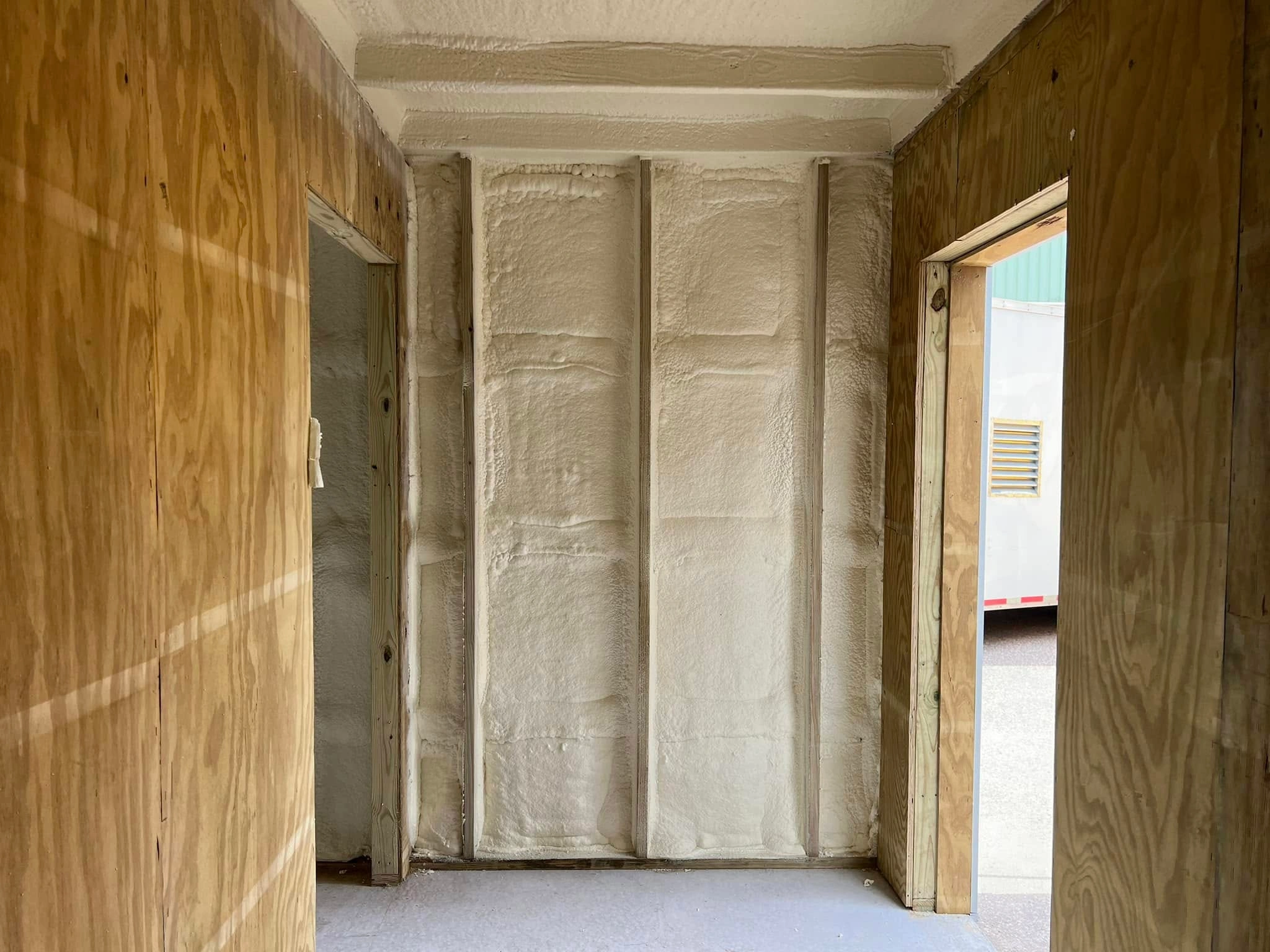
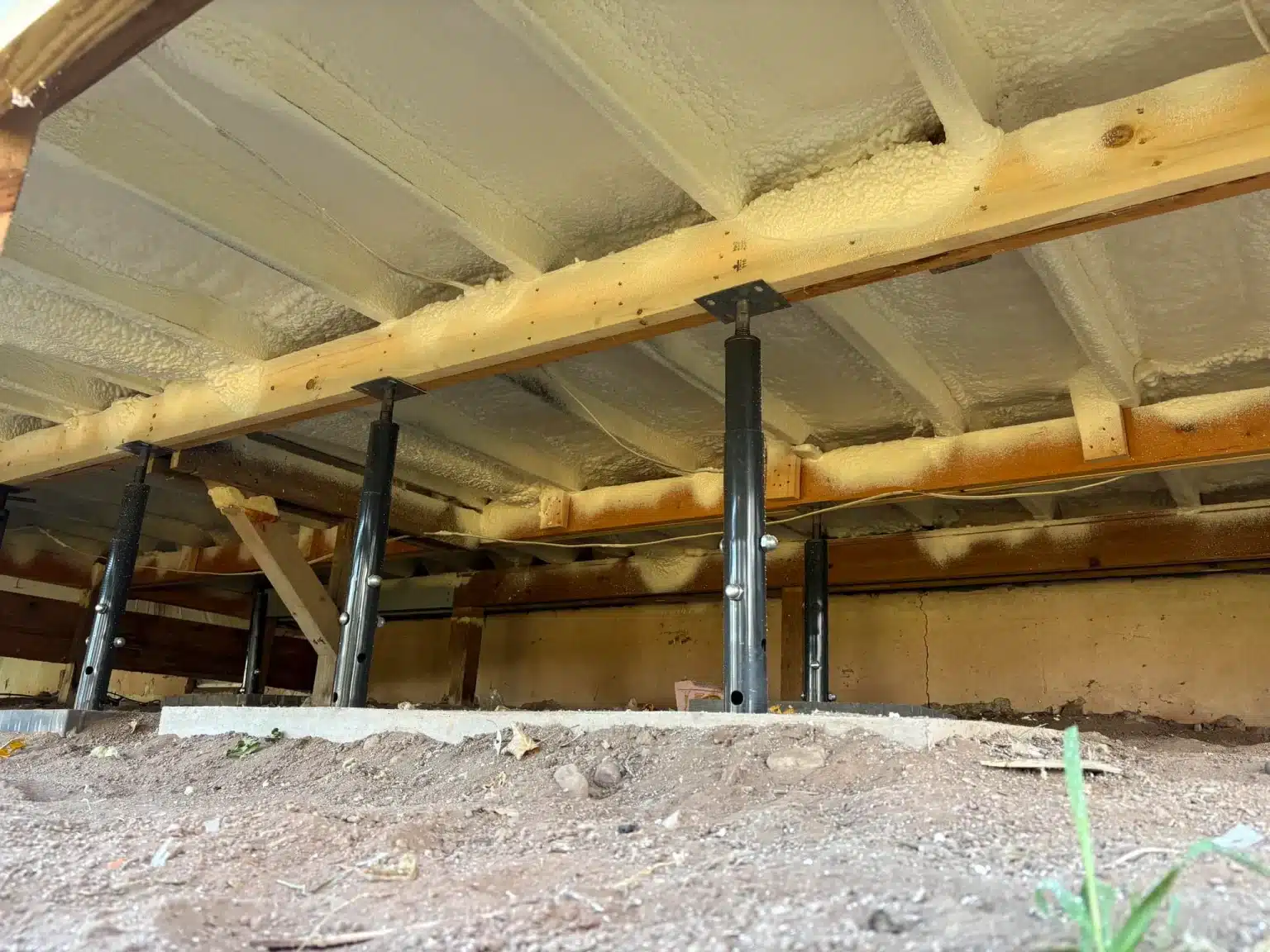
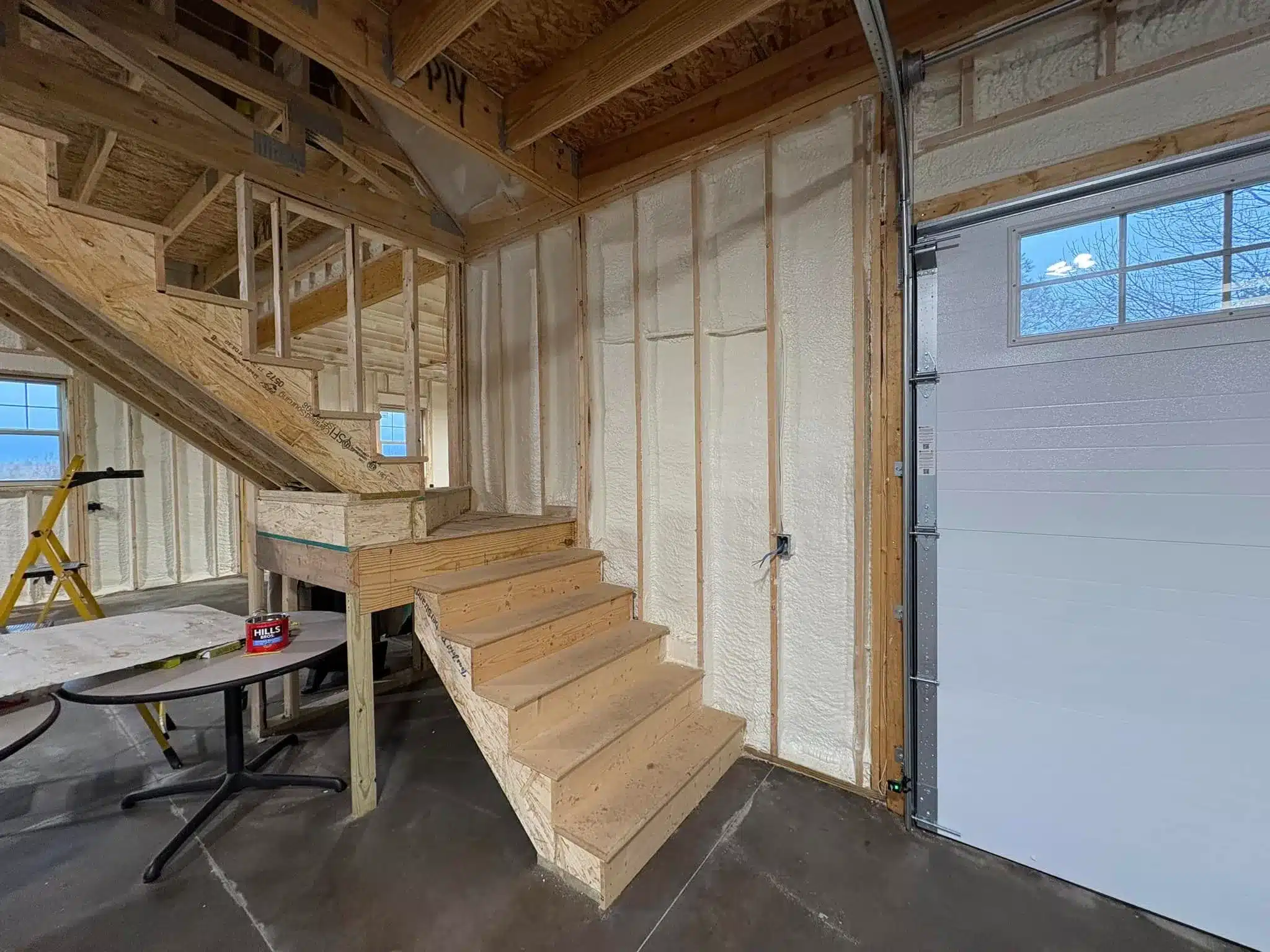
Crawlspaces and basement walls are consistently the most moisture-vulnerable areas in cold climate homes. Soil moisture evaporates into the crawlspace or basement year-round, and when that humid air contacts cold rim joists or foundation walls, condensation forms rapidly. Closed cell spray foam performs best for maximum insulation efficiency when applied to crawlspace walls and rim joist assemblies, where it seals the air leaks, insulates the framing, and blocks vapor from reaching cold surfaces. This is a location where permeable insulations often fail because they cannot stop the vapor drive.
Unvented attic assemblies have become more common in new construction and deep energy retrofits. Building science guidance for cold climate zones requires that unvented roof and attic assemblies have a Class II or lower vapor retarder on the interior, with the condensing surface maintained above the dew point. Closed cell spray foam applied directly to the underside of the roof deck provides both the insulation layer and the required vapor control in one step.
Rim joist and band joist areas at the floor framing perimeter are notorious for air leakage and condensation in cold climates. These areas are difficult to insulate properly with rigid batts or fiberglass because of the irregular framing geometry. Spray foam expands to fill gaps, seals around penetrations, and creates a continuous thermal and moisture barrier.
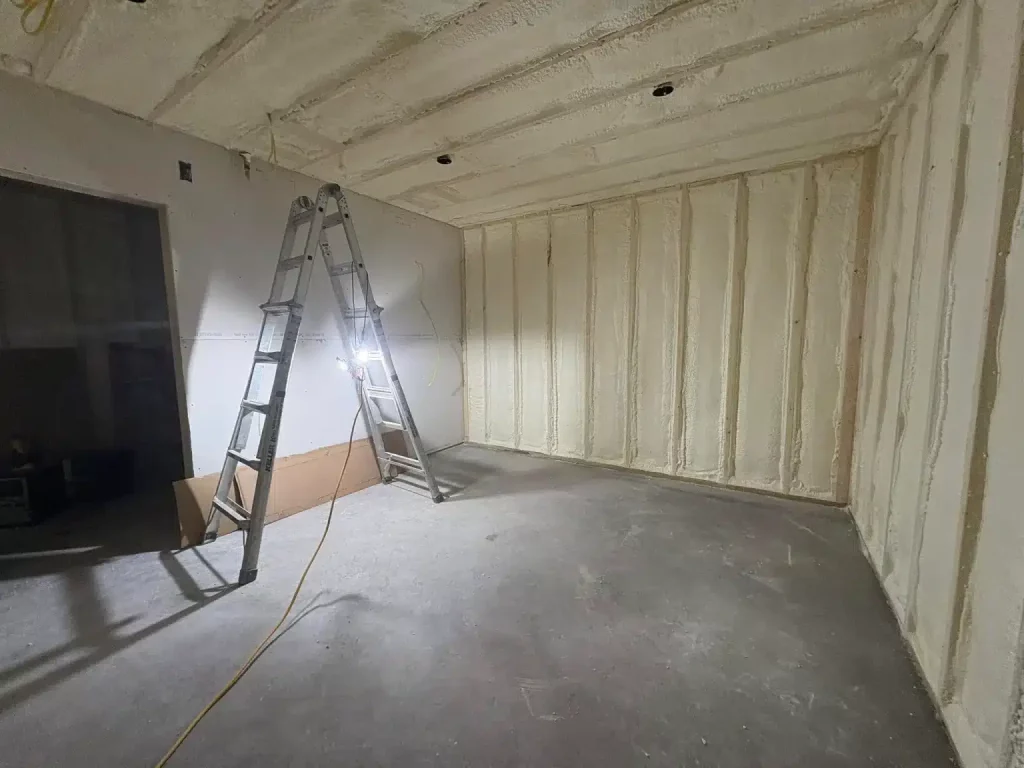
Exterior wall cavities in retrofit applications can also benefit, particularly in older Shawano homes that may lack proper vapor retarders. When existing insulation is removed and closed cell spray foam is installed, it provides the code-required vapor control while dramatically improving thermal performance.
How Moisture Damages Standard Insulation in Cold Climates
The problem with using vapor-permeable insulation in cold assemblies goes beyond simple condensation. When fiberglass or cellulose insulation becomes damp, its thermal conductivity increases. Research cited in building science literature shows that changing humidity from 0% to high levels can increase thermal conductivity in some insulation materials by as much as 2% to 45%, depending on the material type. Wet insulation simply does not insulate effectively.
More importantly, moisture trapped in wall or ceiling cavities cannot easily dry out when vapor-permeable insulation is packed against cold exterior sheathing. The sheathing itself, often OSB or plywood, can remain saturated for extended periods, leading to fungal decay that compromises structural integrity. Building science reports have linked insufficient moisture control in building assemblies to significant percentages of building damage, with mold problems accounting for a meaningful share of reported damage cases.
Closed cell spray foam prevents this cycle in two ways. First, its low permeance keeps interior vapor from reaching cold surfaces where it would condense. Second, the material itself does not absorb and retain moisture, so even if minor condensation occurs at an interface, the foam does not become a reservoir for water the way fiberglass or cellulose would.
Recommendations by Building Type and Situation
Building Scenario
Recommended Approach
Reason
New construction crawlspace
Closed cell spray foam on walls and rim joist
Seals air leaks, provides vapor retarder, prevents soil moisture condensation
Older home with unconditioned attic
Closed cell spray foam on attic floor and rim joist
Upgrades air sealing and vapor control where missing, improves thermal boundary
New construction unvented attic
Closed cell spray foam directly on roof deck underside
Meets Class II vapor retarder requirement for unvented roof assemblies in Zone 5
Basement with moisture history
Closed cell spray foam on rim joist and below-grade walls
Blocks vapor drive, resists moisture absorption, seals air infiltration
Pole barn or metal building
Closed cell spray foam on walls and ceiling
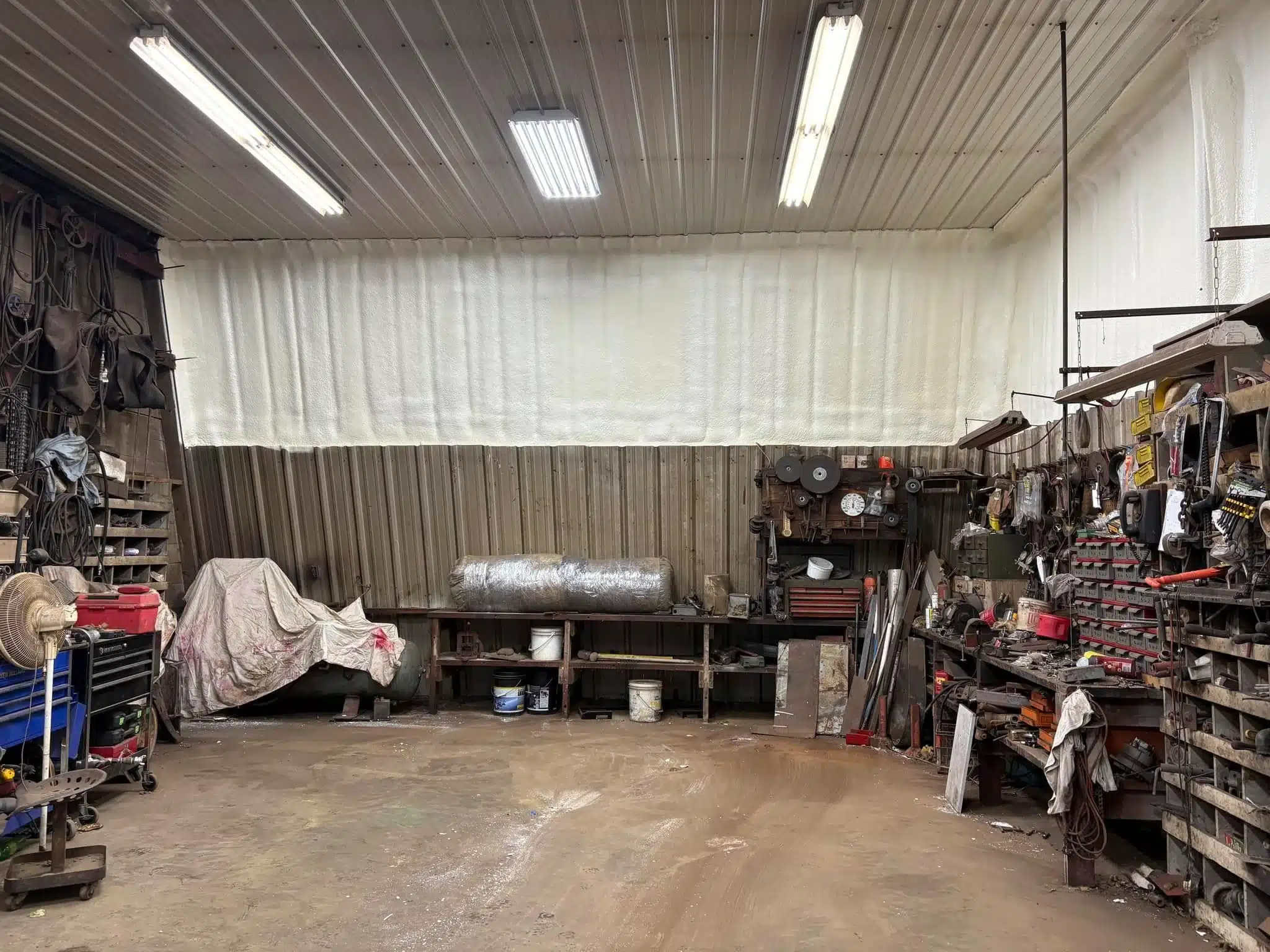
Controls condensation on metal surfaces, provides both insulation and vapor barrier
Interior wall retrofit (dry climate)
Open cell or fiberglass may suffice
Lower moisture risk in conditioned spaces with no exterior exposure
Signs You Have Found the Right Insulation Approach
Choosing the right contractor and material matters as much as the product itself. A few indicators signal that the approach is sound. An expert spray foam contractor in Shawano, WI, should be able to explain why closed cell spray foam is recommended for your specific assemblies rather than simply quoting a price. They should discuss vapor retarder class requirements for your climate zone and explain how the foam addresses both thermal and moisture control. The scope of work should target the highest-risk areas first: crawlspaces, rim joists, and any unvented roof assemblies. A thorough proposal will identify difficult access areas and explain how they plan to handle them, since this is a factor that directly affects project pricing.
Ready to Protect Your Property From Cold Climate Moisture
Proseal Spray Foam has extensive experience insulating homes, pole barns, and commercial buildings across Shawano and the surrounding region, and we understand what this climate demands from a building envelope. Whether you are dealing with a drafty crawlspace, condensation on basement walls, or an under-insulated attic, our team evaluates each property individually and recommends the right application for your specific conditions. Contact us at [email protected] or call (715) 227-6295 to discuss your project.
Does closed cell spray foam completely eliminate moisture problems?
No material eliminates moisture entirely, but closed cell spray foam significantly reduces the risk by acting as a vapor retarder and air barrier. Proper ventilation and mechanical systems must work alongside insulation for complete moisture management.
Can closed cell spray foam be installed in existing older homes?
Yes, it works well in retrofit applications. Our team can install it in crawlspace areas, rim joists, attics, and wall cavities of existing Shawano homes to upgrade both thermal performance and moisture resistance.
How does closed cell spray foam compare to fiberglass for cold climate insulation?
Closed cell spray foam provides both insulation and vapor retardation in one application, while fiberglass only insulates. In cold climates like Shawano, fiberglass alone cannot prevent condensation within wall or ceiling assemblies.
Is closed cell spray foam worth the investment for a pole barn?
In cold, humid climates, pole barns and metal buildings experience severe condensation. Closed cell spray foam controls this by insulating and blocking vapor drive against cold metal surfaces, protecting contents and structure from moisture damage.
What areas of my Shawano home should be prioritized for closed cell spray foam?
Crawlspaces, rim joists, basement walls, and unvented attic assemblies should be prioritized. These locations face the greatest temperature differentials and condensation risk during Shawano’s cold winters.
Building Insulation – Wikipedia – Comprehensive reference on building insulation materials, types, and climate-specific requirements including cold climate strategies and ASHRAE standards.
Thermal Insulation – Wikipedia – Reference on thermal insulation principles including how foam materials trap gas to reduce heat transfer and their applications in building envelopes.
Polyurethane Foam – Wikipedia – Technical reference on polyurethane foam classification explaining the difference between open-cell and closed-cell structures and their properties for thermal insulation applications.
I’m Dan Passarella, owner of Proseal Spray Foam, serving Wisconsin since July. I provide spray foam solutions for residential, commercial, and industrial properties, focusing on efficiency, comfort, and quality workmanship.
Better insulation supports consistent indoor temperatures in Ashwaubenon, WI by slowing heat transfer through your attic, walls, floors, and crawlspaces…