What Causes Concrete Slabs to Lose Their Level, and When Is Concrete Lifting Worth It?
Concrete slabs usually lose their level when the soil, base, or other support beneath them settles, shrinks, erodes, or loses…

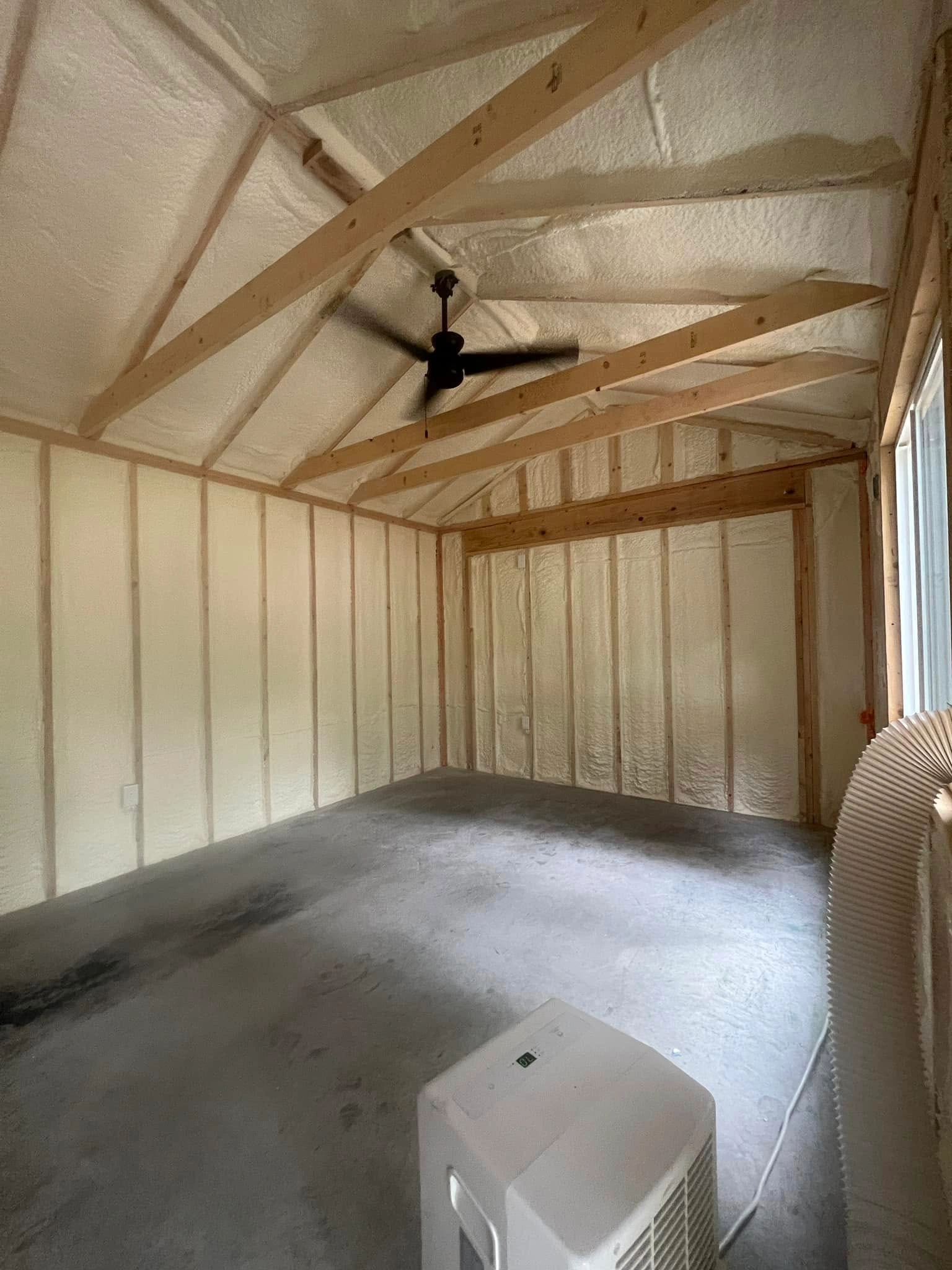
If you have ever felt a cold draft in the middle of January despite your furnace running nonstop, or noticed your summer cooling bills climbing higher each year, the problem might not be your HVAC system. It might be the air you are paying to condition escaping through gaps, cracks, and poorly insulated cavities in your walls, attic, and foundation. We have seen this exact scenario play out in hundreds of homes across Wisconsin, and the fix almost always comes down to one thing: sealing and insulating the building envelope properly.
Closed cell spray foam is one of the most effective insulation materials available for doing exactly that. It insulates, air seals, and acts as a moisture barrier all in a single application. When you understand how it works, where it belongs, and what makes it different from other insulation types, you are in a far better position to make smart decisions about your home or building project.
Closed cell spray foam is a medium-density, spray-applied polyurethane insulation that expands and hardens into a rigid, continuous material. It belongs to a family of products known as spray polyurethane foam (SPF), which are created by mixing and reacting two liquid chemical components, commonly called Side A and Side B. Side A contains isocyanates, and Side B contains polyol resins along with catalysts, surfactants, blowing agents, and fire retardants, according to Wikipedia’s overview of spray foam.
When these two liquids meet at the tip of a spray gun, a rapid chemical reaction occurs. The mixture expands 30 to 60 times its original liquid volume and hardens into a stiff, lightweight foam. The “closed cell” part of the name refers to the microscopic structure of the foam after it cures. Unlike open cell foam where the internal gas bubbles rupture and leave interconnected voids, closed cell foam retains over 90% of its cells sealed, trapping insulating gases inside each individual pocket. This cell structure is what gives closed cell spray foam its distinctive combination of high R-value, moisture resistance, and structural rigidity.
The blowing agents used in closed cell formulations are different from those in open cell foam. The U.S. Department of Energy’s Building America guide explains that closed cell foam primarily uses hydrofluorocarbon (HFC) blowing agents, while open cell foam uses water as its primary blowing agent. This difference in chemistry is what produces the denser, more compact cell structure of closed cell foam.
Spray foam as a building insulation has been around since the late 1970s, but advances in formulation and application equipment have made it far more accessible and effective in recent decades. Today it is used in everything from new residential construction and retrofit insulation projects to commercial buildings, pole barns, and specialized applications like boat insulation and crawl space encapsulation.
To appreciate why closed cell spray foam performs so well, it helps to understand the three ways heat moves through a building envelope: conduction, convection, and radiation.
Conduction is the direct transfer of thermal energy through a solid material, like heat passing through a wall stud from the warm side to the cold side. Closed cell foam resists conductive heat transfer because its cells are filled with low-conductivity gases rather than regular air. This is reflected in its R-value, which measures thermal resistance.
Convection is heat carried by moving air. This is where spray foam delivers one of its biggest advantages over traditional insulation. Gaps around studs, wiring holes, plumbing penetrations, and construction joints allow conditioned air to escape and outside air to enter. The Department of Energy reports that as much as 40% of a building’s energy loss comes from air infiltration through these types of gaps. Closed cell spray foam expands into every crack and void as it is applied, creating an airtight seal that eliminates convective heat loss.
Radiation is heat transfer through electromagnetic waves, similar to how sunlight warms a surface. Foam insulation is opaque to thermal radiation, so it blocks radiant heat transfer as well.
No other common insulation material addresses all three forms of heat transfer as thoroughly in a single application. Fiberglass and cellulose resist conduction reasonably well but do almost nothing to stop air movement. Closed cell spray foam handles all three simultaneously.
Understanding the numbers behind closed cell spray foam helps you evaluate whether it is the right choice for your project. Here are the properties that matter most:
| Property | Closed Cell Spray Foam | Open Cell Spray Foam |
|---|---|---|
| Density | ~2.0 lb/ft³ | ~0.5 lb/ft³ |
| R-Value per Inch | R-6.0 to R-6.5 | R-3.6 to R-3.8 |
| Vapor Permeance | Less than 1 perm at 1.5″ thickness | 5 to 10 perms at 5″ thickness |
| Air Barrier | Yes (at 1″ thickness or greater) | Yes (at 3.75″ thickness or greater) |
| Vapor Barrier | Yes (at 1.5″ thickness or greater) | No |
| Water Absorption | Hydrophobic, does not absorb water | Can absorb and hold up to 1/3 volume |
| Compressive Strength | ~22 psi | Less than 2 psi |
| Tensile Strength | ~28 psi | Less than 4 psi |
| Closed Cell Content | Greater than 90% | Less than 10% |
| Expansion Ratio | 30 to 50 times liquid volume | Up to 150 times liquid volume |
| Flexibility After Curing | Rigid | Semi-flexible, sponge-like |
These numbers come from the DOE Building America report and represent typical values for medium-density closed cell SPF products used in residential and light commercial construction.
The R-value difference is substantial. Closed cell foam at R-6 per inch means that a 3-inch application achieves approximately R-18 in a single layer. A comparable R-18 with open cell foam would require about 5 inches of material. In wall cavities where framing depth is limited, closed cell foam can deliver higher total R-value within the same space.
The vapor barrier capability is equally important. At 1.5 inches of thickness or greater, closed cell spray foam has a perm rating below 1.0, classifying it as a Class II vapor retarder. This means it blocks moisture vapor from passing through the insulation, which is a critical function in cold climates where warm interior air carries moisture that can condense inside wall cavities.
TL;DR:
We often get asked which type of spray foam is “better.” The honest answer is that neither is universally superior. They are different products suited to different situations. Here is a practical breakdown of when closed cell is the right call and when open cell might make more sense.
When closed cell spray foam is the preferred choice:
When open cell spray foam might be preferred:
Expert Tip: In cold climates like ours in Wisconsin, we almost always recommend closed cell foam for any application where moisture control matters. The cost difference is real, but the risk of condensation, mold, and structural damage from trapped moisture in a wall cavity far outweighs the upfront savings of open cell foam in these conditions.
One of the things that makes closed cell spray foam so versatile is the wide range of areas within a building where it can be installed. Here is a breakdown of the most common and effective applications.
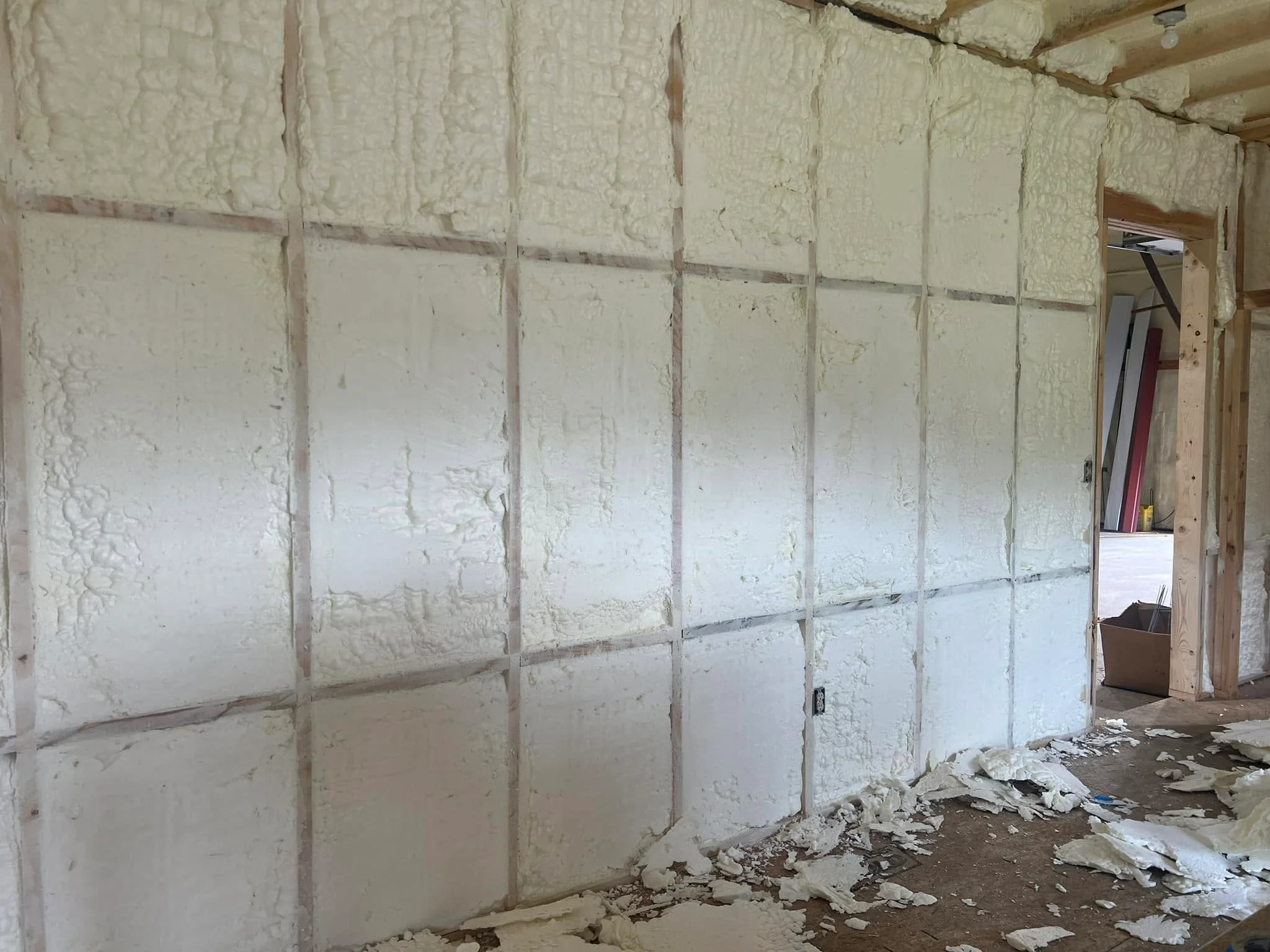
In frame wall cavities, closed cell foam fills the entire space, sealing around every stud, wire, pipe, and electrical box. This eliminates the air leakage paths that traditional batt insulation simply cannot address. Band joists, the areas where floor framing meets the exterior wall, are notoriously difficult to insulate with standard materials. Closed cell foam is ideal for these areas because it seals and insulates in one step and can be left exposed in concealed locations per most building codes.
Applying closed cell spray foam to the underside of the roof deck creates an unvented attic assembly. This approach brings the attic into the conditioned space of the home, which eliminates ice dams, reduces duct losses, and makes the entire building envelope more airtight. For cathedral ceilings with limited rafter depth, closed cell foam provides the R-value needed to meet code requirements where other insulation types fall short.
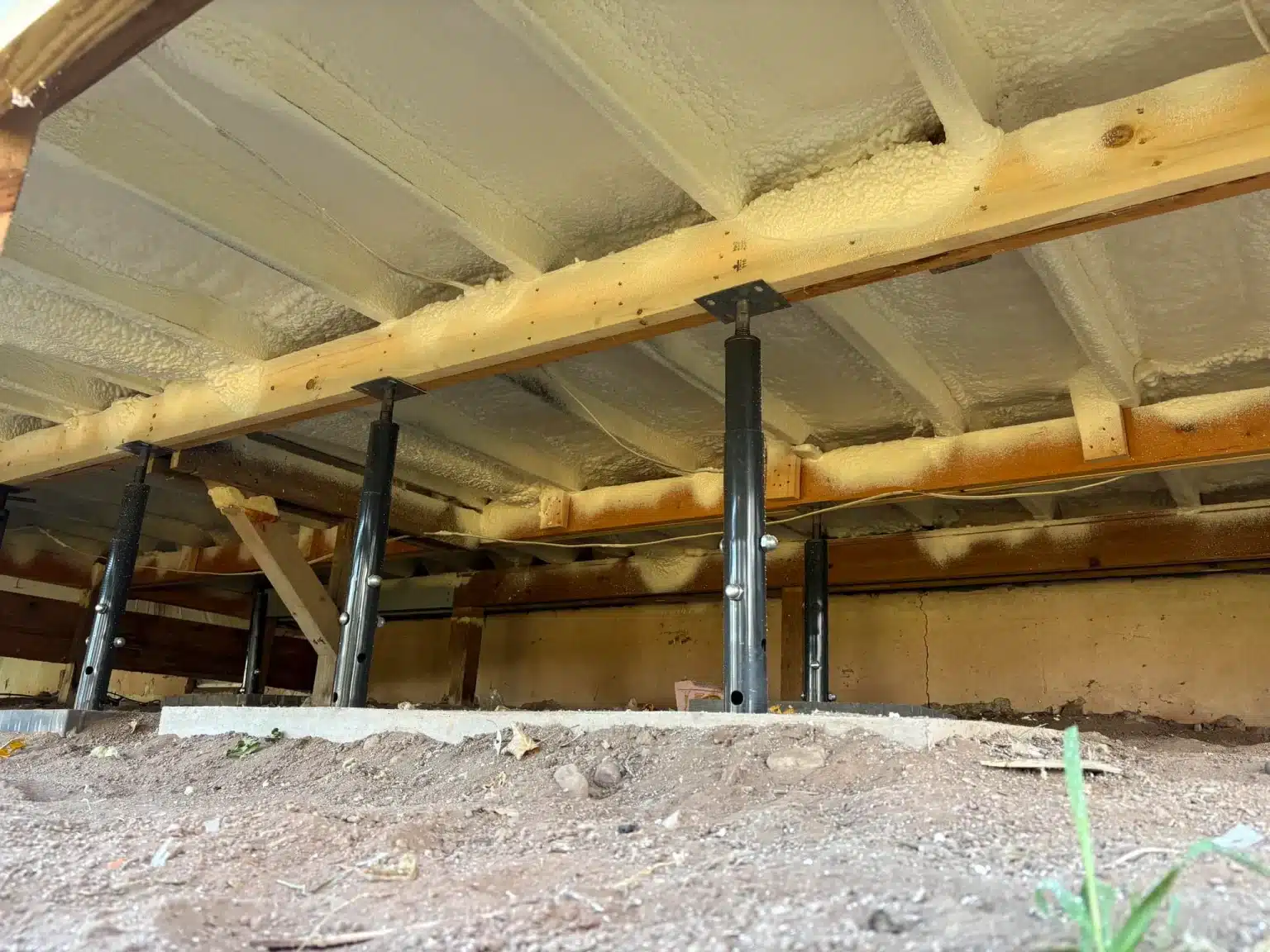
Closed cell spray foam is the recommended spray foam choice for basement walls and crawlspaces because it is hydrophobic and will not absorb water. Applied directly to the interior surface of foundation walls, it seals against air infiltration and provides a continuous layer of insulation. In crawlspaces, it can be combined with a polyethylene vapor barrier on the floor for a complete moisture management system.
Metal buildings and pole barns present unique insulation challenges because metal transfers heat rapidly and there is often no cavity to fill with traditional insulation. Closed cell spray foam applied directly to the interior surface of metal panels creates an insulated, sealed envelope. Its adhesive properties also help reduce the condensation problems that plague uninsulated metal buildings.
The rim joist area where the floor system meets the foundation is one of the most air-leak-prone locations in any building. Closed cell foam seals these areas completely, and its rigidity provides additional structural support to the assembly. Cantilevered floor sections over unconditioned space benefit similarly from the combination of air sealing, insulation, and vapor control.
The climate where a building is located has a direct impact on which insulation strategy works best. The DOE Building America guide provides detailed guidance on how climate zone affects spray foam performance and application decisions.
In cold climates (Climate Zones 5 through 7, which includes much of the upper Midwest), the temperature difference between the conditioned interior and the exterior can be dramatic. During winter, warm indoor air holds moisture. When that moisture-laden air passes through the insulation and reaches a surface below the dew point, condensation forms inside the wall cavity. This can lead to mold growth, wood rot, and significant structural damage over time.
Closed cell spray foam addresses this problem in two ways. First, its high R-value keeps the temperature of the interior surfaces above the dew point. Second, at 1.5 inches or more, it functions as a vapor retarder, preventing moisture from migrating through the assembly in the first place. The DOE guide recommends a minimum of 1.5 inches of closed cell foam in hybrid wall assemblies for most climates, and 2 inches or more in climates above 6,000 heating degree days.
In hot-humid climates (Climate Zones 1A through 3A), the moisture drive reverses. Warm, humid outdoor air pushes moisture toward the cooler, air-conditioned interior. Closed cell foam applied at the exterior side of the wall assembly in these climates provides an effective moisture barrier. The DOE guide specifically warns against using interior vapor retarders in hot-humid climates when closed cell foam is used, because creating a double vapor retarder can trap moisture inside the cavity.
Expert Tip: When planning insulation for a mixed or transitional climate, always consider the direction of the vapor drive in both summer and winter. In Wisconsin, winter moisture drive from the interior is the dominant concern, making closed cell foam the safer, more conservative choice for most applications.
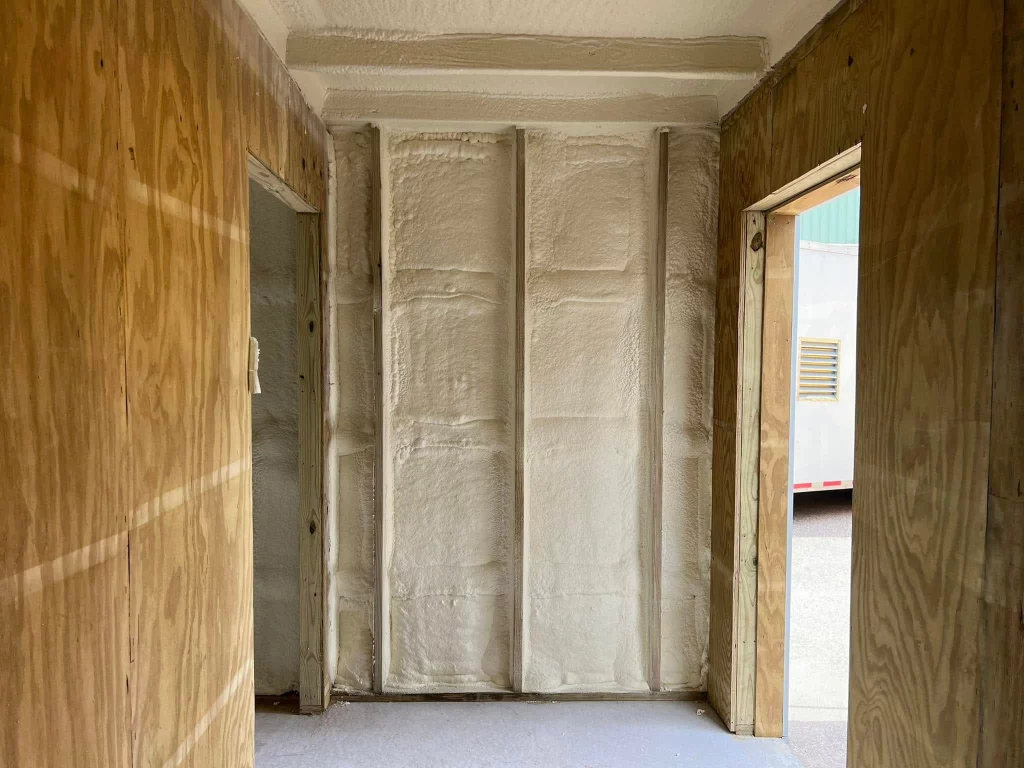
Understanding what happens during a spray foam installation helps you prepare properly and know what to expect. Here is a step-by-step overview of how we approach a typical closed cell spray foam project.
Before any foam is sprayed, the area needs to be prepped. This includes covering any surfaces that should not receive foam, removing debris from cavities, and ensuring the substrate is clean and dry. In retrofit applications, existing insulation may need to be removed. Electrical components, HVAC equipment, and any combustible materials near the spray zone are protected.
Spray foam application is sensitive to ambient conditions. The substrate temperature should generally be above 40 degrees Fahrenheit for proper adhesion and expansion. In cold weather installations, temporary heating may be required. Humidity also matters because excessive moisture on the substrate can interfere with the foam’s ability to bond properly.
Professional installers use either high-pressure or low-pressure spray rigs. High-pressure systems are used for large-scale applications like walls, attics, and roofs. Low-pressure systems are better suited for smaller areas, retrofits, and targeted sealing. The two chemical components are kept in separate heated tanks and delivered through heated hoses to the spray gun.
The installer sprays the foam in layers, typically 1 to 2 inches per pass. Closed cell foam expands rapidly upon contact and begins curing within seconds. Multiple passes are used to build up to the target thickness. The foam expands into and seals around every penetration, gap, and irregular surface, creating a monolithic layer of insulation.
After application, the foam continues to cure for 24 to 72 hours depending on the formulation, thickness, and ambient conditions. Once fully cured, any excess foam that has expanded beyond the cavity is trimmed flush with the framing. At this point, the foam is completely inert and non-toxic.
Because spray polyurethane foam is classified as a combustible material, building codes require it to be covered by a thermal barrier in habitable spaces. This is typically a 15-minute thermal barrier equivalent to half-inch gypsum board, as defined by the International Residential Code. In some attic and crawlspace applications where the space is not used for storage, an ignition barrier may be acceptable instead.
TL;DR:
The energy savings potential of closed cell spray foam is one of the primary reasons homeowners and builders choose it. According to the Spray Polyurethane Foam Alliance’s educational resource at whysprayfoam.org, spray foam insulation can reduce energy bills by 5% to 30% per year. This range depends on the existing insulation levels, the climate, and how much of the building envelope is treated.
Several factors contribute to these savings. The air sealing alone eliminates a major source of energy waste. The DOE data cited on Wikipedia confirms that up to 40% of a home’s energy is lost through air infiltration. When closed cell spray foam seals those leaks while simultaneously providing high R-value insulation, the combined effect is significant.
Additionally, because spray foam creates such a tight building envelope, HVAC equipment can often be downsized in new construction. The whysprayfoam.org resource notes that HVAC sizing can be reduced by up to 35% in homes insulated with spray foam. A smaller, properly sized system costs less to install and operates more efficiently than an oversized unit cycling on and off frequently.
The cost of a closed cell spray foam project depends on several factors. The scope of the project is the single biggest driver. A small rim joist seal-up will cost considerably less than insulating an entire home’s walls and attic. Here is a look at typical project ranges based on the work we perform:
| Service | Typical Project Range |
|---|---|
| Closed Cell Spray Foam | $1,500 to $10,000 |
| Attic Insulation | $3,000 to $30,000 |
| Pole Barn Insulation | $5,000 to $60,000 |
| Blown-in Cellulose | $2,000 to $10,000 |
Pricing varies based on the area being insulated, the thickness required to meet R-value targets, and site conditions. Projects with difficult access, such as tight crawlspaces or multi-story buildings, typically cost more. The turnaround rate can affect pricing as well, with faster timelines sometimes commanding a premium.
Expert Tip: Do not compare spray foam pricing purely on cost per square foot. The total installed R-value, the air sealing benefit, and the vapor barrier function all factor into the real value. A closed cell application that costs more per board foot than open cell may deliver better overall performance and durability when you account for these additional functions.
There is also a financial incentive beyond monthly energy savings. The federal 25C tax credit provides a 30% credit, up to $1,200 annually, for homeowners who install qualifying energy-efficient insulation, including spray foam. This credit is available through 2032. For new construction, the 45L tax credit offers $2,500 to $5,000 per home that meets Energy Star or DOE Zero Energy Ready Home standards, both of which spray foam insulation can help achieve. Homeowners can apply using IRS Form 5695.
A benefit of closed cell spray foam that often surprises people is its ability to add structural strength to a building. When sprayed into wall cavities, closed cell foam bonds to both the interior and exterior surfaces, essentially gluing the assembly together. Studies referenced in the DOE Building America guide have shown that frame walls insulated with closed cell spray foam exhibit substantially increased racking strength compared to those with conventional insulation. This is particularly valuable in areas prone to high winds or seismic activity.
In roof assemblies, closed cell foam applied to the underside of the roof deck bonds the decking to the rafters or trusses. University of Florida research has documented that this connection significantly improves resistance to wind uplift during hurricanes and severe storms. The foam essentially acts as a structural adhesive across the entire roof surface.
The compressive strength of closed cell foam, roughly 22 psi, is more than enough to resist the loads it encounters in normal building applications. It will not settle, sag, or compress over time the way some loose-fill insulations can. This means the R-value you start with is the R-value you keep for the life of the building.
Moisture management is arguably the most critical function of a building envelope system, and closed cell spray foam excels at it. In a properly designed assembly, closed cell foam prevents both liquid water and water vapor from penetrating the building envelope, while also blocking the air movement that carries moisture.
In crawlspaces, applying closed cell foam to the foundation walls and rim joist, combined with a ground-moisture vapor barrier on the floor, creates a dry, conditioned space below the home. This eliminates the moisture that would otherwise rise into the living space through floor penetrations and around ductwork. The result is better indoor air quality, reduced allergen levels, and lower risk of mold growth.
In attics, closed cell foam applied to the roof deck brings the attic into the conditioned space, eliminating the temperature and humidity extremes that cause condensation on cold surfaces during winter. This approach also keeps ductwork and HVAC equipment inside the conditioned envelope, where they operate more efficiently.
Expert Tip: When retrofitting an existing home with closed cell spray foam, pay special attention to ventilation. A much tighter building envelope means less natural air exchange. Make sure your mechanical ventilation strategy (such as an HRV or ERV) is adequate to maintain good indoor air quality after the foam is installed.
Spray foam insulation is safe once it has fully cured, but the installation process requires careful attention to safety. The chemical components, particularly the isocyanates in Side A, are powerful respiratory and skin irritants during application. Professional installers wear full personal protective equipment, including respiratory protection, during the spraying process.
The EPA and the spray polyurethane foam industry have established guidelines for safe installation practices, including requirements for protective equipment, ventilation, and re-occupancy timelines. Building occupants should not be present during the application and should wait until the foam has fully cured and the area has been ventilated before returning.
Once cured, spray foam is an inert, non-toxic material. It does not off-gas or release harmful chemicals under normal conditions. This is confirmed by both manufacturer testing and independent research. The concern about chemical exposure applies to the installation phase, not to the finished product.
Closed cell spray foam is classified as a combustible material, which means it will burn if exposed to sufficient heat and flame. For this reason, building codes require it to be covered with a 15-minute thermal barrier in most occupied spaces. Closed cell formulations include fire retardants that limit flame spread and smoke development, and most products achieve a flame spread index below 25 and a smoke developed index below 450 when tested under ASTM E84.
Older formulations of closed cell spray foam used blowing agents with high global warming potential. Through international agreements like the Montreal Protocol and the Kigali Amendment, the industry has been transitioning to lower-impact blowing agents. Modern formulations use hydrofluoroolefin (HFO) blowing agents that have dramatically reduced environmental impact compared to earlier HFC-based products. Wikipedia notes that this transition has been underway since around 2017.
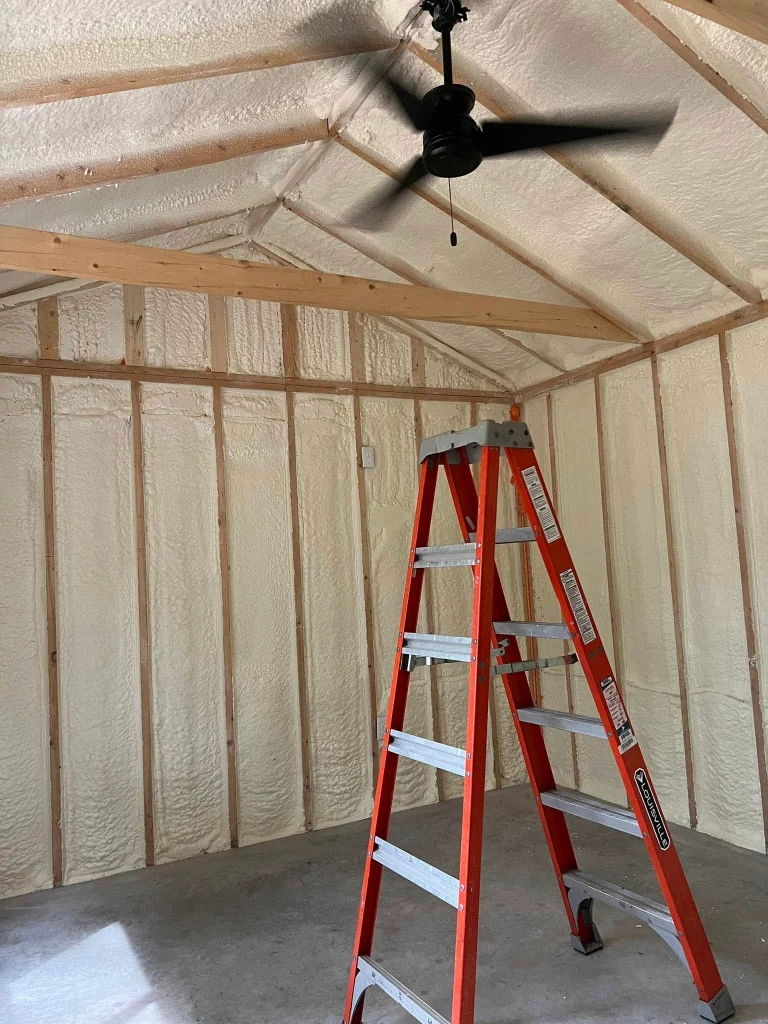
After years of installing spray foam, we have seen the same mistakes repeated by homeowners and less experienced installers. Here are the most common ones and how to avoid them.
Applying open cell foam in wet or below-grade locations. Open cell foam absorbs and holds water. Using it in crawlspaces, basements, or anywhere moisture is present is a recipe for problems. Always use closed cell foam in these locations.
Skipping the vapor analysis in cold climates. In hybrid assemblies where a thin layer of closed cell foam is paired with fiberglass or blown-in insulation, the foam must be thick enough to keep the interior surface above the dew point. Below 1.5 inches, this may not happen in very cold climates. The DOE guide recommends 2 inches or more in regions with over 6,000 heating degree days.
Ignoring ventilation after air sealing. Tightening a building envelope without addressing mechanical ventilation can lead to moisture buildup, stale air, and indoor air quality problems. Every spray foam project should include an assessment of the home’s ventilation needs.
Improper substrate preparation. Foam needs a clean, dry surface to bond properly. Dust, frost, standing water, or loose debris can prevent adhesion and create voids in the insulation layer.
Exceeding maximum pass thickness. Closed cell foam generates heat as it cures (exothermic reaction). Applying too much in a single pass can cause the foam to overheat, char, or even ignite. Professional installers limit each pass to 1 to 2 inches and allow the foam to cool between layers.
Expert Tip: If you are building a new home, involve your spray foam installer early in the design process. Small changes to framing details, mechanical ventilation design, and electrical routing can significantly improve the quality and efficiency of the final insulation installation.
When properly installed, closed cell spray foam is a permanent insulation solution. It does not settle, degrade, or lose R-value over time. The foam bonds to the substrate and maintains its physical and thermal properties for the life of the building.
No. At 1.5 inches or more of thickness, closed cell spray foam functions as a Class II vapor retarder on its own. Adding a separate polyethylene vapor barrier is not only unnecessary but can create a double vapor retarder condition that traps moisture. Check with your installer and local code official for specific requirements in your area.
Once fully cured, closed cell spray foam is inert and non-toxic. During installation, occupants should not be in the home. After the foam cures and the area is ventilated, there are no ongoing emissions or health risks from the material itself.
Yes, through a process called wall injection. Small holes are drilled through the exterior or interior wall sheathing, and a low-expansion foam is injected into each stud cavity. This is more commonly done with water-based injection foam than with traditional spray polyurethane foam, but it achieves a similar air sealing and insulation effect for retrofit applications.
No. Closed cell foam has no nutritional value for insects or rodents, and its rigid structure does not provide nesting material. Unlike fiberglass insulation, which pests can tunnel through and use for nesting, closed cell spray foam does not support pest activity.
R-value requirements vary by climate zone and are specified in the International Energy Conservation Code (IECC). In Climate Zones 5 and 6, which cover most of Wisconsin, wall assemblies typically need R-20 or higher and attic assemblies need R-49 or higher. Closed cell spray foam’s high R-value per inch makes it easier to achieve these targets within standard framing depths.
Closed cell spray foam is not the cheapest insulation option on the market, but it is one of the most complete. It insulates, air seals, controls moisture, and adds structural strength in a single application. No other insulation material does all of these things simultaneously.
If you are building a new home, retrofitting an existing one, or insulating a commercial building, the decision comes down to this: do you want an insulation system that addresses every path of heat loss, or one that only handles part of the problem? For cold climates, below-grade spaces, metal buildings, and any application where moisture control is critical, closed cell spray foam is the clear choice.
Use this guide as your reference as you plan your project. The information here covers the technical fundamentals, practical application knowledge, and common pitfalls to watch for. When you are ready to move forward with a specific project, reach out to a qualified installer who can assess your building and recommend the right approach.
Proseal Spray Foam has been helping homeowners and builders in the Waupaca, Wisconsin area insulate their buildings with closed cell spray foam for years. Whether you are planning a new construction project, retrofitting an existing home, or need insulation for a pole barn or commercial building, our team is here to answer your questions and provide a detailed assessment. Get in touch with us at [email protected] or call (715) 227-6295 to discuss your project.