

A wet, ignored crawl space quietly works against your home, feeding moisture into the framing and the air your family breathes. Waupaca, WI, property owners who deal with these hidden problems early protect both their investment and their health. Our crawl space encapsulation service seals the area off from the soil and the outdoor air for good, stopping moisture at its source and leaving you with a dry, protected foundation.
Our approach treats the crawl space like a sealed room instead of a forgotten gap under the floor. Before any material goes down, our crew clears out debris, addresses standing water, and corrects drainage issues so the new system sits on a stable, dry base. From there, we build a layered system that turns a cold, clammy space into a clean, dry zone that no longer drains heat from the rooms above.
Moisture control sits at the heart of this design. Soil constantly releases water vapor, and once that vapor builds up, mold, wood rot, and pests follow close behind. Sealing the ground and walls also calms the stack effect, the airflow pattern that pulls air from the foundation upward into your living space. Doubts about this process are common, and threads like this Quora discussion on whether crawl space encapsulation really works and is worth the money show it. The answers from experienced installers stay consistent: the system works when water problems are fixed first and every seam gets sealed properly.
Investing in professional crawl space encapsulation pays back well beyond simple moisture resistance, improving comfort right away while trimming long-term repair bills. Homeowner forums make this easy to see. In one r/homeowners thread asking if crawlspace encapsulation is worth it, people who finished the work describe warmer floors in winter, shorter HVAC cycles, and the relief of a musty smell finally gone. Skeptics in the same thread usually trace bad results to shortcuts: thin plastic with untapped seams, vents left open, or a barrier laid directly over active water.
Air quality often improves the fastest. Much of the air on your first floor starts below it, so removing mold spores and dampness underneath brings noticeable relief for anyone with allergies or asthma. Crawl space mold encapsulation deals with existing growth as part of the process, and a sealed, dry space keeps it from coming back.
What a Sealed Crawl Space Delivers:
Our crawl space waterproofing services adapt to nearly any structure or site condition. Work focuses on the floor and foundation walls, but related areas matter too if the goal is one continuous, unbroken seal. Our crew surveys every site first, mapping out horizontal coverage across the ground and vertical sealing along the perimeter walls and piers.
The principle stays the same no matter the building: wrap the entire foundation in a sealed envelope that blocks both air and vapor exchange. This also protects furnaces, ductwork, and plumbing that run beneath the main living areas.
What We Seal and Insulate:
Our work travels well beyond Waupaca, too. Owners searching for crawl space encapsulation Oshkosh, crawl space encapsulation Appleton, crawl space encapsulation Green Bay, or crawl space encapsulation Sheboygan get the same careful site prep and sealed installation, and our crews also serve clients needing crawl space encapsulation Eau Claire WI, crawl space encapsulation New Richmond WI, crawl space encapsulation Superior WI, and crawl space encapsulation Ashland WI.
Long-term results come down to the quality of the barriers themselves. Our crawl space vapor barrier installation relies on two proven materials: heavy-duty Polyethylene plastic sheet and high-performance Closed-cell spray foam. The polyethylene sheeting runs across the floor and up the foundation walls, creating one continuous, tear-resistant surface that stops vapor rising out of the ground.
The science backs this up. Researchers at Building Science Corporation describe a properly built crawl space as a mini-basement, insulated on its perimeter and covered with a continuous, taped polyethylene ground cover. Mold, meanwhile, only needs moisture to grow, and the EPA's mold guidance stresses that controlling dampness is the way to control growth. That is why we refuse to cut corners on liner thickness, seam taping, or wall attachment.
Materials
For thermal protection, our crawl space insulation solutions add Closed-cell spray foam at the rim joists and foundation walls. The foam is rigid and dense, so it insulates, blocks air, and even stiffens the structure. It expands into every gap, which is what makes the seal complete.
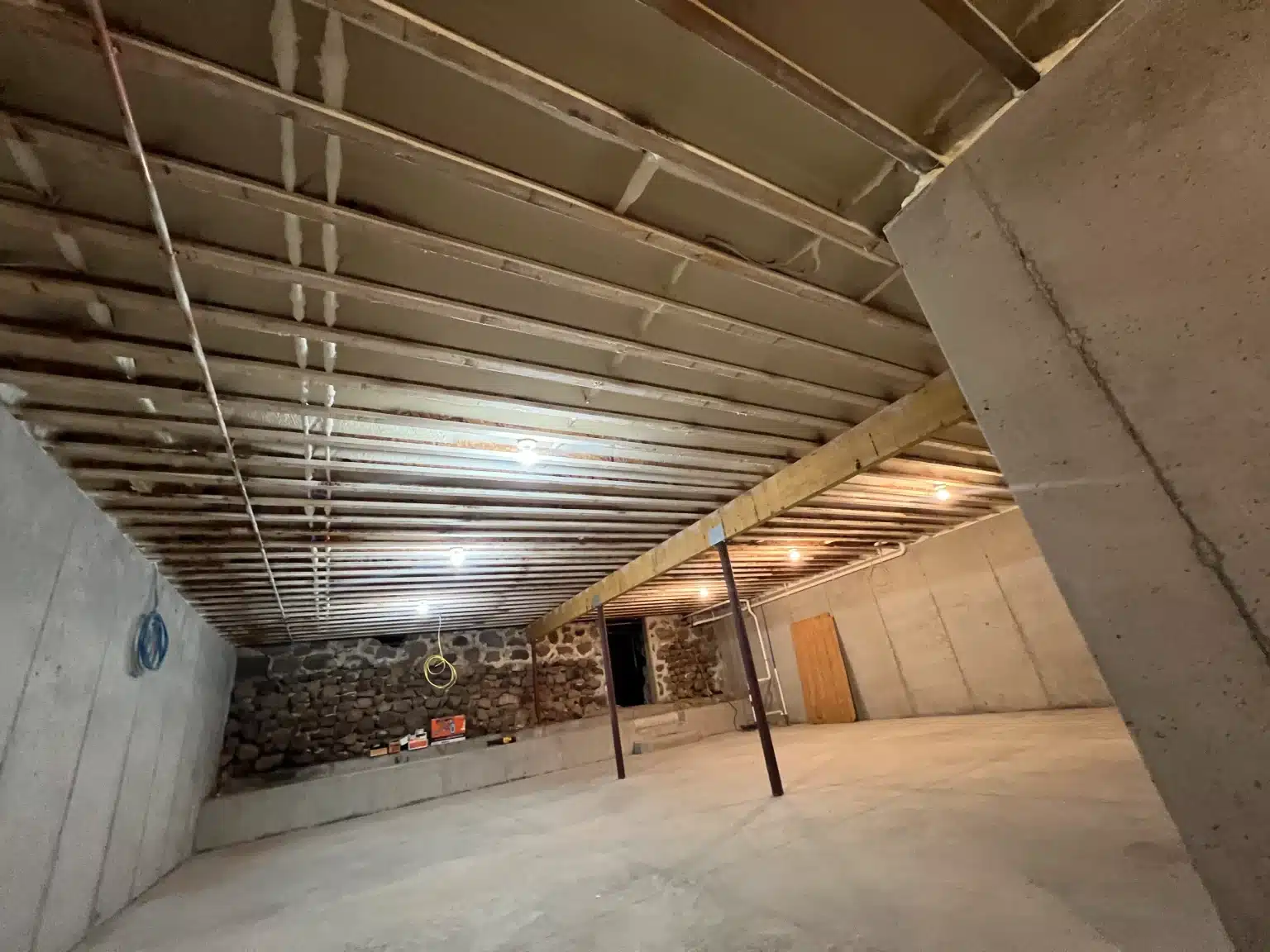
Vented crawl spaces were once believed to dry out on their own, but homeowner experience tells a different story. Open vents pull hot, humid air inside during summer, and that moisture condenses on cool framing and ductwork. Encapsulation closes the vents and separates the space from outdoor conditions entirely, which is the standard Building Science researchers recommend.
One tip shows up again and again in homeowner discussions: keep an inexpensive hygrometer in the sealed space and aim for relative humidity around 50 percent. A dedicated dehumidifier handles that job in most Wisconsin homes, and monitoring the reading tells you the system is doing its work.
Feature | Professional Encapsulation | Traditional Vented Crawl Space |
Moisture Control | Sealed liner, taped seams, closed vents (Excellent) | Depends on outdoor humidity (Poor) |
Energy use | Steady temperature lowers utility bills | Outside air drafts raise costs |
Pest defense | Closed perimeter blocks entry | Open vents invite rodents and insects |
Wood lifespan | Dry framing resists rot for decades | Damp framing decays early |
A thermal crawl space encapsulation contractor needs more than a roll of plastic and a staple gun. Proseal Spray Foam concentrates on moisture and air sealing systems, so our crew knows substrate preparation, seam integration, and wall attachment down to the details that decide whether a system lasts five years or thirty.
We treat airflow, insulation, and moisture management as one connected job from the first site assessment to the final inspection. Homeowner forums are full of cautionary tales about partial jobs that left vents open or ignored standing water, and those stories shape how carefully we plan each project before installation ever begins.
Waupaca, WI weather pushes homes hard in both directions. Bitter winters demand a real thermal break at the foundation, or floors above the crawl space stay cold and the furnace runs constantly. Skip the work, and the foundation becomes the weakest link in your entire building envelope, driving up monthly bills all season long.
Summers bring the opposite threat. Humid air pouring through open vents condenses in the cool space below, and mold follows within weeks. Our encapsulation system is built for exactly these swings, resisting water wicking up from the soil and vapor pushing in from outside. The result is a foundation area that stays dry, stable, and comfortable through every season.
Hidden moisture never fixes itself, and the damage only grows with time. Contact Proseal Spray Foam to schedule a detailed site assessment for your Waupaca property. Call us today at (715) 227-6295 and get a customized encapsulation plan built for your home and get a free quote.
Most homes are completed within two to five days, depending on the size of the space and its existing condition.
It forms a dense, rigid air barrier with high thermal resistance that also blocks moisture from reaching the foundation walls.
Upkeep is minimal, limited to occasional visual checks of the vapor barrier and any dehumidifier equipment.
Sealing blocks humid air, mold spores, and soil gases below from cycling upward into your main living areas.
Encapsulation creates a complete moisture and air seal that conditions the space, while insulation alone leaves vapor and humidity problems untouched.