What Makes Spray Foam Insulation in Berlin, WI a Practical Solution for Hard-to-Insulate Spaces?
Dan Passarella
August 19th, 2026
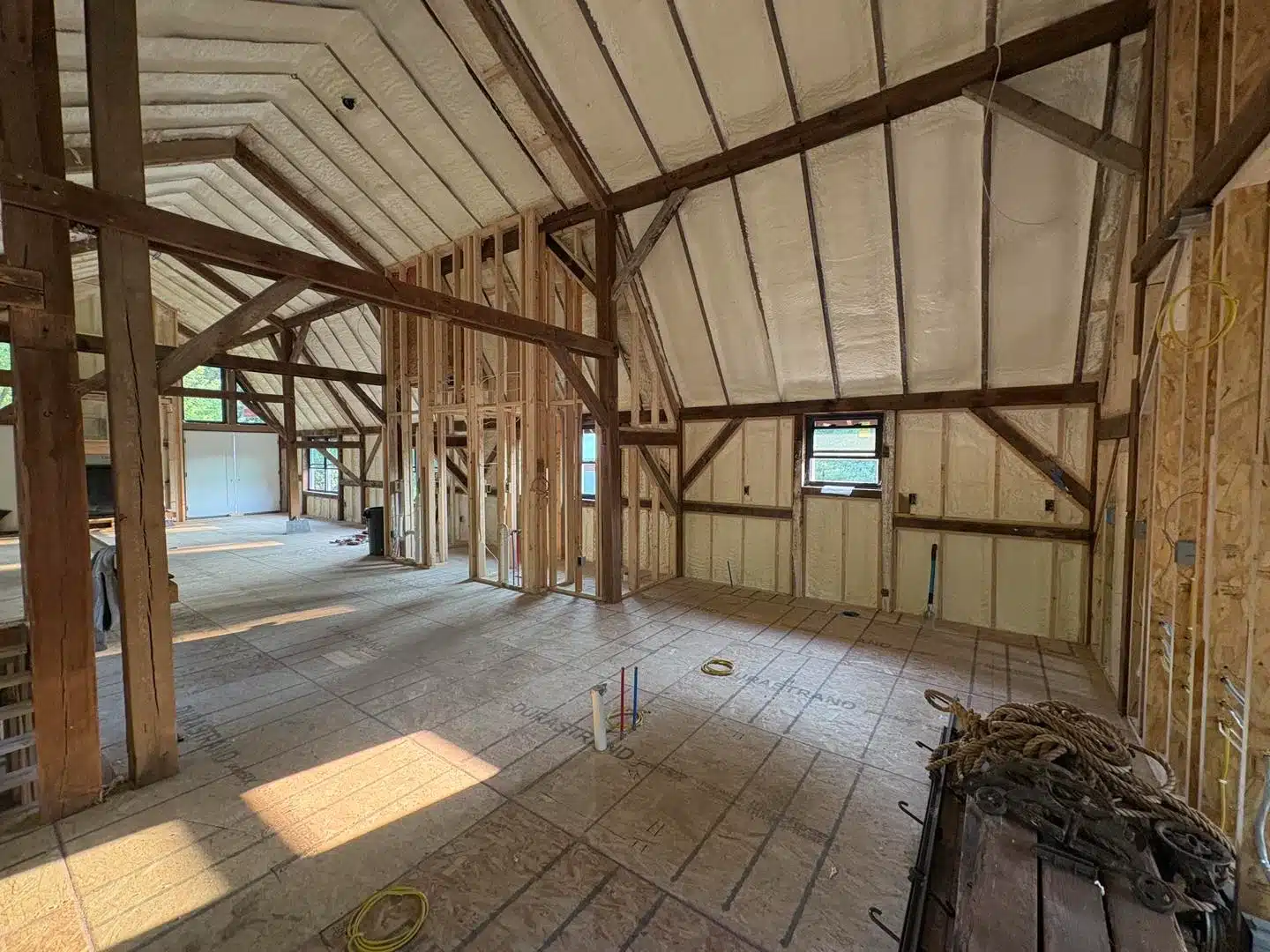
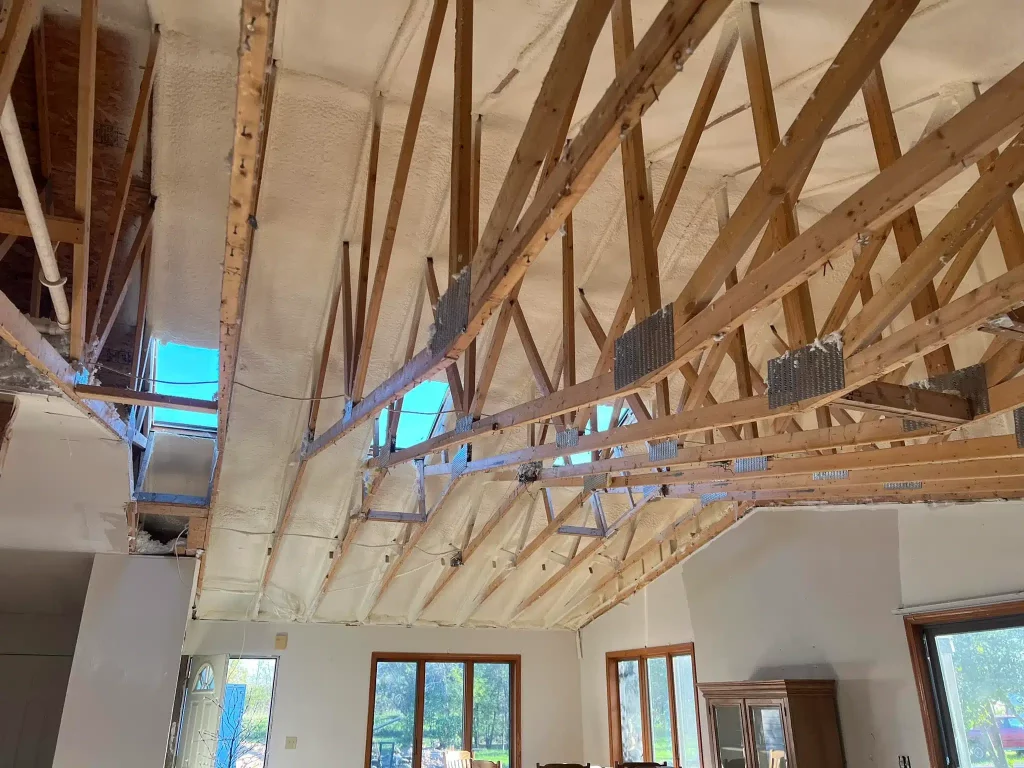
Spray foam insulation earns its reputation in Berlin, WI because it solves problems that other insulation types simply cannot. In a Wisconsin climate where winter temperatures regularly drop well below freezing, and summers bring humid heat, the building envelope faces constant thermal stress. Homes and buildings with tight crawlspaces, irregular wall cavities, vaulted ceilings, pole barns, and rim joists pose challenges for traditional materials like fiberglass batts or blown-in cellulose. One of the key Spray Foam Insulation Benefits is its ability to adapt to these challenging spaces. Spray foam expands on application to fill gaps, seal air leaks, and conform to irregular shapes, which is exactly why it works where other materials fall short.
TL;DR
Closed-cell spray foam delivers the highest per-inch R-value among common insulation materials, ranging from R-5.5 to R-6.5 per inch, according to the Wikipedia R-value reference table, making it ideal for spaces where thickness is limited.
Spray foam provides a dual benefit of thermal insulation and air sealing in a single application, reducing convective heat loss that batt insulation cannot address.
Closed-cell spray foam projects in Berlin, WI typically range from $1,500 on the low end to $10,000 on the high end, with most residential jobs averaging around $6,000.
Difficult access is the single biggest factor that affects pricing, followed by removal of old insulation and greater thickness requirements.
Moisture resistance matters in Wisconsin, and closed-cell spray foam acts as a vapor retarder, helping prevent the mold and condensation problems the EPA identifies as direct consequences of uncontrolled moisture.
Around 40% of building energy consumption goes to heating and cooling, and insulation is one of the most effective ways to reduce that demand.
Our minimum project threshold is $1,500, and driving distance from our Waupaca, WI base does factor into pricing for Berlin area projects.
Why Berlin, WI Homes Face Unique Insulation Challenges
Berlin, WI sits in Climate Zone 6, a classification that requires substantial insulation performance for both walls and attics. The Wikipedia building insulation article notes that ASHRAE 90.1 standards for this zone call for cavity insulation of R-20 plus continuous insulation for wood-framed walls in residential construction. Meeting that standard with fiberglass batts alone often requires thicker framing cavities than many older homes in the Berlin area actually have.
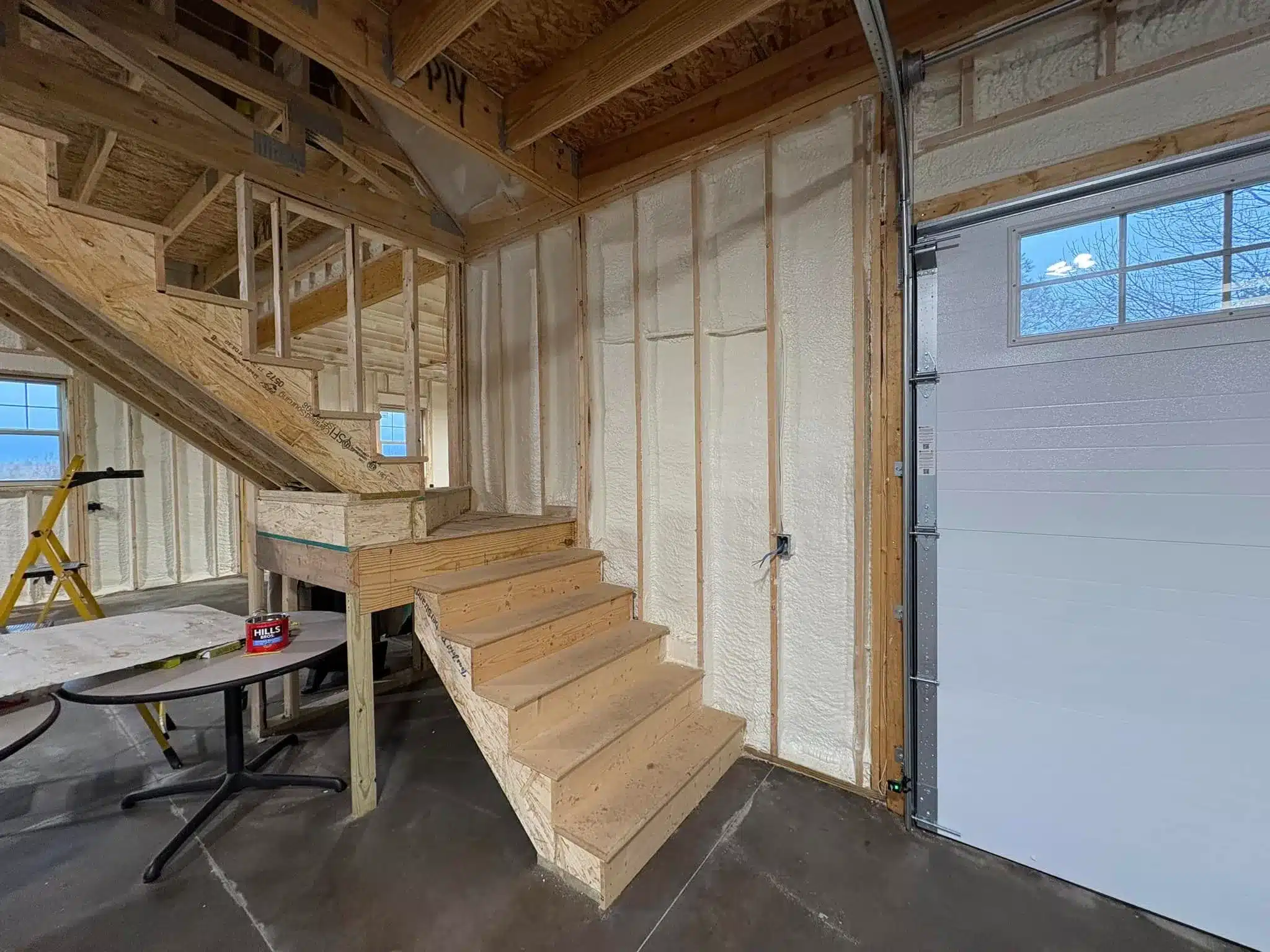
Many homes in this region were built decades ago with minimal wall insulation, vented attics with little more than a few inches of loose-fill, and crawlspaces that were left completely uninsulated. These are precisely the hard-to-insulate spaces where spray foam delivers the most practical value.
Common hard-to-insulate areas in Berlin, WI homes include:
Rim joists and band joists: Narrow, awkward cavities where air infiltration through framing gaps is constant
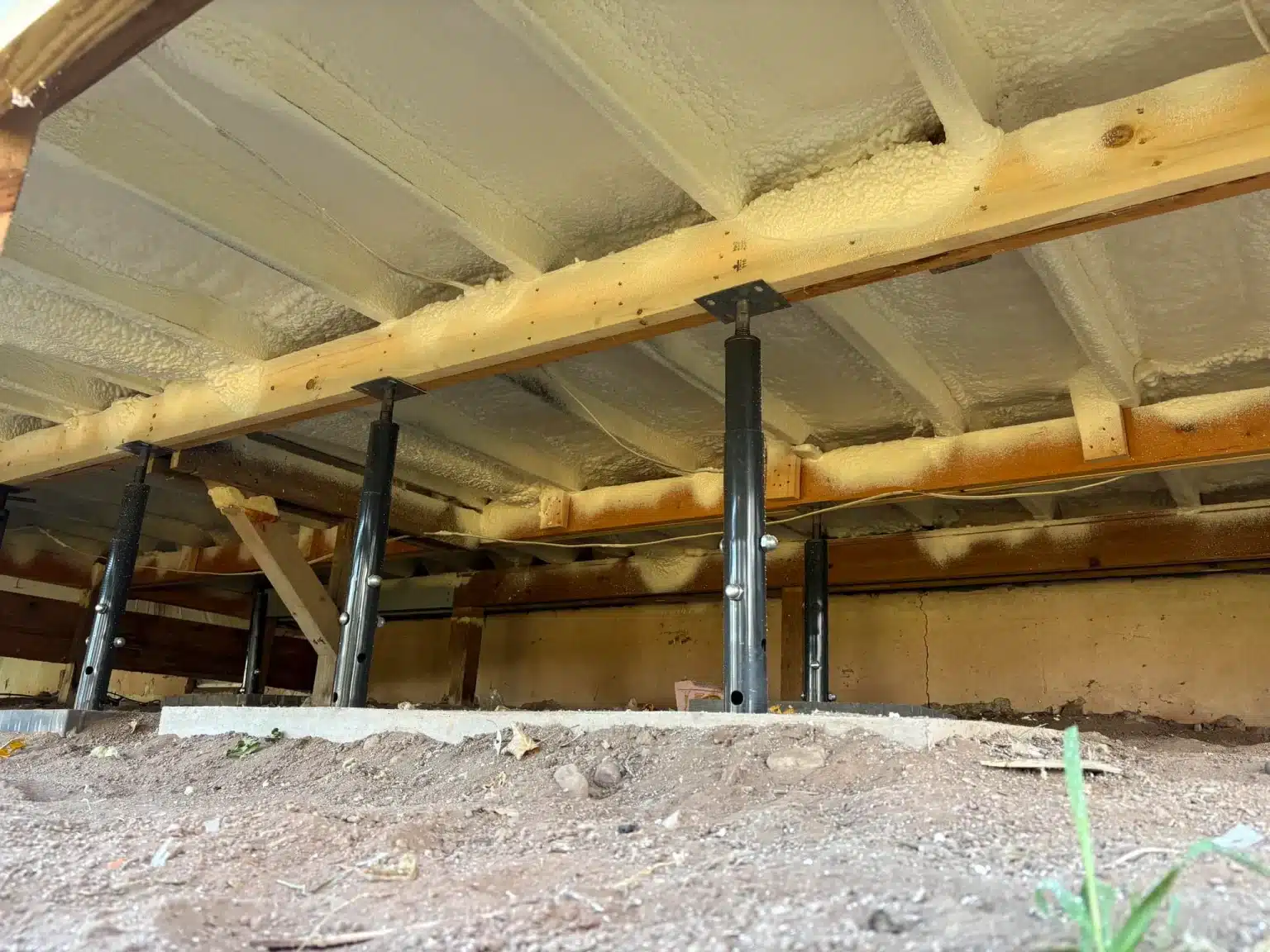
Crawlspace walls and ceilings: Damp, irregular spaces where batt insulation sags and absorbs moisture
Vaulted and cathedral ceilings: Limited rafter depth leaves no room for thick insulation layers
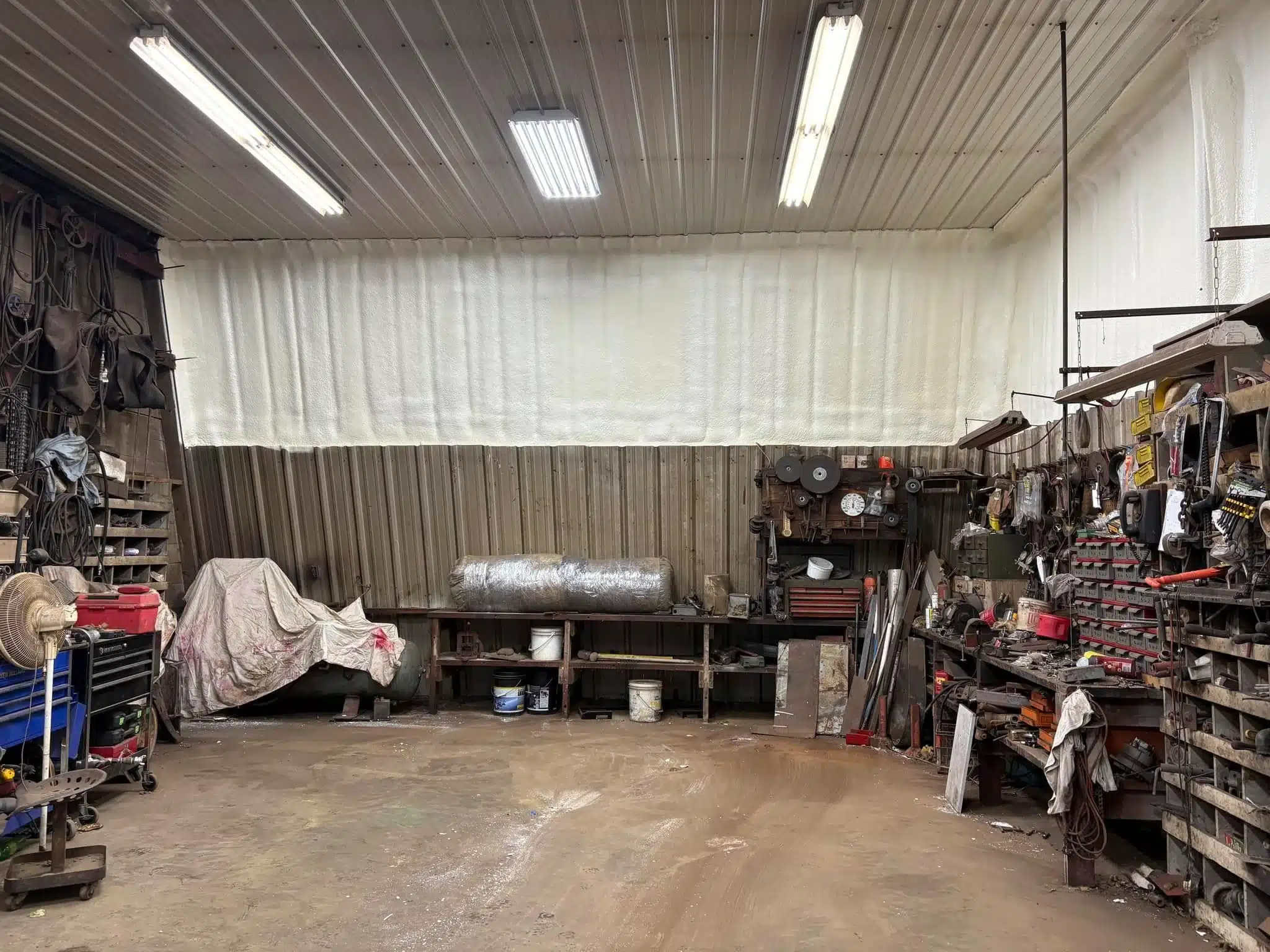
Pole barns and metal buildings: Exposed framing with no traditional wall cavities
Attic knee walls and bonus rooms: Short walls with complex angles and multiple penetrations
How Spray Foam Outperforms in Difficult Spaces
Superior R-Value Per Inch
When cavity depth is limited, the insulation material with the highest R-value per inch wins. The R-value reference data from Wikipedia lists closed-cell polyurethane spray foam at R-5.5 to R-6.5 per inch. Compare that to fiberglass batts at R-3.1 to R-4.3 per inch and blown-in cellulose at R-3.0 to R-3.8 per inch. In a 2×4 wall cavity (3.5 inches of depth), spray foam achieves roughly R-19 to R-23 where fiberglass would deliver only R-11 to R-15.
This matters in older Berlin homes where wall cavities may be even shallower than modern framing. When you cannot add depth, you need material that works harder per inch.
Air Sealing Built In
The DOE Weatherization Assistance Program identifies air sealing as one of the most cost-effective energy efficiency measures available. Spray foam insulation provides air sealing and thermal insulation simultaneously. When sprayed into a cavity, it expands to fill gaps around wiring, plumbing, framing joints, and irregular surfaces. This eliminates the convective heat loss that occurs when warm air moves through cracks and gaps, a problem that batt insulation does nothing to address.
Moisture Control and Mold Prevention
The EPA’s mold guidance states clearly that the key to mold control is moisture control. In Wisconsin, the combination of cold exterior temperatures and warm, humid interior air creates conditions where condensation can form inside wall cavities and crawlspaces. When fiberglass insulation gets damp, it loses thermal effectiveness and can become a medium for mold growth.
Closed-cell spray foam has a low moisture permeability rating and acts as a vapor retarder when applied at sufficient thickness. This means it keeps warm, moist indoor air from reaching cold surfaces where condensation would form. In crawlspaces and basements around Berlin, where groundwater and soil moisture are constant concerns, this property alone makes spray foam a practical choice.
Thermal Bridging Reduction
The Wikipedia building insulation article explains that thermal bridges are points in the building envelope that allow heat conduction to bypass insulation. Common thermal bridges include wood studs, steel fasteners, and framing at wall corners. When spray foam fills the full cavity and adheres directly to framing members, it reduces the effect of these bridges better than batt insulation that leaves gaps at stud edges and corners.
Closed Cell vs. Open Cell: Which Works Where
Not all spray foam performs the same way. Homeowners in Berlin frequently ask us about the difference between open and closed cell formulations, and the answer depends on the application.
Feature
Closed Cell Spray Foam
Open Cell Spray Foam
R-value per inch
R-5.5 to R-6.5
R-3.6 per inch
Air sealing
Excellent
Good
Moisture/vapor retarder
Yes, at sufficient thickness
No, vapor permeable
Density
Higher (rigid)
Lower (flexible)
Best applications
Crawlspace walls, rim joists, metal buildings, pole barns, exterior walls
Open wall cavities, attics, sound deadening
Practical advantage
Structural reinforcement, moisture resistance, higher R-value in less space
Lower material cost, easier to retrofit in large open areas
For the hard-to-insulate spaces common in Berlin, spray foam drafts around window and wall areas can be addressed effectively with the right insulation approach. Closed-cell spray foam is usually the more practical choice. Crawlspaces, rim joists, and pole barns benefit from its moisture resistance and structural rigidity. Open-cell has its place in large open attic floors and interior wall cavities where vapor permeability is acceptable.
Our Services for Hard-to-Insulate Spaces
Closed-cell spray foam: High R-value insulation with built-in air sealing and moisture resistance for crawlspaces, rim joists, walls, and pole barns.
Blown-in cellulose: Effective attic floor insulation for larger open areas where spray foam is not required.
Attic insulation: Complete attic solutions including air sealing, baffles, and insulation for both flat and vaulted ceilings.
Pole barn insulation: Full envelope insulation for metal and post-frame buildings in the Berlin area.
Commercial insulation: Large-scale insulation projects for businesses and commercial properties.
Pricing Considerations for Berlin, WI Projects
Based on our project data, closed-cell spray foam is our primary growth service, and the scope of the project is the biggest factor in determining final cost. Several variables influence pricing:
Factors that increase pricing:
Difficult access (tight crawlspace entries, confined attic spaces, high ceilings)
Removal of old insulation before new application
Greater thickness or higher R-value requirements
Travel distance from our Waupaca base to Berlin
Factors that lower pricing:
Fast turnaround rate and flexible scheduling
Accessible work areas with clear entry points
New construction with no demolition needed
Service
Typical Low
Typical Average
Typical High
Closed cell spray foam
$1,500
$6,000
$10,000
Blown-in cellulose
$2,000
$4,000
$10,000
Attic insulation
$3,000
$6,000
$30,000
Pole barn insulation
$5,000
$15,000
$60,000
What to Look for in a Spray Foam Installer
Choosing the right installer matters as much as choosing the right material. Here are signs that you have found a qualified team:
Thorough on-site assessment before quoting: A crew that inspects the space, identifies air leakage points, and measures cavity depths before providing a quote is more likely to deliver correct results.
Clear explanation of open vs. closed cell: If the installer asks about moisture conditions and usage of the space before recommending a product, they are considering your specific situation rather than defaulting to a one-size-fits-all approach.
Attention to preparation: Proper substrate cleaning, moisture testing, and temperature verification before application indicate professional standards.
Willingness to address off-gassing concerns: Homeowners in Berlin frequently ask about smell and off-gassing. A trustworthy installer explains curing times, ventilation recommendations, and occupancy timelines without dismissing the question.
Detailed written scope: The quote should specify areas to be insulated, expected thickness, R-value targets, and preparation work included.
Signs Spray Foam Is the Right Solution for Your Space
How do you know if spray foam is worth considering for your Berlin property? Consider these indicators:
Your home has rooms that stay cold in winter despite the thermostat running constantly, which often indicates air infiltration through rim joists and wall cavities.
You can see daylight through gaps in your crawlspace or attic floor around plumbing and electrical penetrations.
Fiberglass batts in your basement or crawlspace have fallen, sagged, or show signs of moisture damage.
Your energy bills are noticeably higher than neighbors with similar-sized homes.
You are building a pole barn or metal structure and need insulation that also seals against air and moisture.
Ready to Insulate Your Hard-to-Insulate Spaces
Proseal Spray Foam serves the Berlin, WI area from our base in Waupaca (54981), bringing professional spray foam installation to homes, barns, and commercial buildings that need more than what standard insulation can deliver. Whether you are dealing with a damp crawlspace, a drafty rim joist, or a pole barn that loses heat faster than it holds it, our team will assess your space and recommend the right approach with spray foam insulation in Berlin, WI. Request a Quote or call us at (715) 227-6295 to schedule an on-site evaluation. You can also email [email protected] with details about your project.
Closed-cell spray foam typically cures within 24 hours, with the bulk of off-gassing occurring in the first few hours. We recommend ventilating the area during and immediately after application.
Can spray foam be installed over existing fiberglass insulation?
In most cases, we remove old insulation before applying spray foam to ensure proper adhesion and eliminate any trapped moisture, mold, or pest debris behind the existing material.
Does spray foam help with humidity and moisture in crawlspaces?
Yes, closed-cell spray foam acts as a vapor retarder and air barrier, which significantly reduces moisture transmission from the soil into the crawlspace air and living space above.
Is spray foam a good choice for pole barns in Wisconsin winters?
It is one of the most effective options because it seals the numerous gaps in post-frame construction while delivering high R-value in thin wall cavities where space is limited.
Will spray foam insulation reduce my energy bills?
By sealing air leaks and adding thermal resistance, spray foam reduces the heating and cooling load on your HVAC system, which is the largest energy consumer in most homes according to the EPA’s indoor air quality guidance.
Sources
Wikipedia – Building Insulation – Comprehensive reference on building insulation materials, climate zone requirements (ASHRAE 90.1), thermal bridging, and the relationship between insulation, energy consumption, and building damage prevention.
Wikipedia – R-value (Insulation) – Detailed reference table listing R-values per inch for all major insulation types, including closed-cell and open-cell spray foam, fiberglass, cellulose, and rigid foam boards.
EPA – Indoor Air Quality (IAQ) – Overview of indoor air quality factors including source control, ventilation, and filtration, with data on the percentage of time spent indoors and health impacts on vulnerable populations.
EPA – Mold – Federal guidance on mold prevention and moisture control in homes, schools, and commercial buildings, emphasizing that the key to mold control is moisture control.
I’m Dan Passarella, owner of Proseal Spray Foam, serving Wisconsin since July. I provide spray foam solutions for residential, commercial, and industrial properties, focusing on efficiency, comfort, and quality workmanship.
Better insulation supports consistent indoor temperatures in Ashwaubenon, WI by slowing heat transfer through your attic, walls, floors, and crawlspaces…