How Can Spray Foam Insulation Help Stop Drafts Around Windows and Wall Openings?
Dan Passarella
August 19th, 2026
Spray foam insulation is one of the most effective materials available for stopping drafts around windows and wall openings because it expands on application to fill gaps, cracks, and irregular spaces that other insulation types simply cannot reach. By creating a continuous air seal, spray foam addresses both conductive and convective heat loss, the two primary ways buildings lose energy through their envelope. The right approach depends on whether the gap is in a new construction rough opening, an existing retrofit window, or a wall penetration like pipes and electrical outlets. Understanding how Complete Guide to Spray Foam Insulation Types works in each scenario helps homeowners and builders make informed decisions about where to invest in air sealing for the greatest comfort and efficiency gains.
TL;DR
Spray foam expands to fill irregular gaps and cracks around windows and wall openings that fiberglass batts and rigid boards cannot reach.
Closed-cell spray foam acts as both an insulator and an air barrier in a single application, blocking convective drafts and conductive heat transfer simultaneously.
Oak Ridge National Laboratory research shows that air leakage through unsealed gaps around wall openings can account for up to 27% of a home’s total air leakage, even in homes that already meet code.
Leaky walls with higher air infiltration showed up to 54% higher heat flux compared to tightly sealed walls, according to ORNL field testing.
Rough openings around windows and doors, wall-to-foundation joints, and wall-to-ceiling transitions are the most common and most overlooked draft sources in residential construction.
Proper air sealing with spray foam reduces the load on HVAC systems, leading to measurable energy savings and improved indoor comfort year-round.
Moisture management must be considered when tightening a building envelope; adequate mechanical ventilation should accompany any significant air sealing work.
Why Drafts Around Windows and Wall Openings Matter
Drafts are not just a winter annoyance. They represent a continuous exchange of conditioned indoor air with unconditioned outdoor air, driving up heating and cooling costs and creating uneven temperatures throughout a home. Weatherization, the practice of sealing a building against the elements, primarily targets this convective heat flow, while insulation targets conductive flow. The two work together, and one is far less effective without the other.
According to the Wikipedia article on weatherization, typical procedures include “sealing bypasses (cracks, gaps, holes), especially around doors, windows, pipes and wiring that penetrate the ceiling and floor” using caulk, foam sealant, and weather-stripping to reduce infiltration. These gaps may seem small individually, but they add up. In the United States, buildings use roughly one third of all energy consumed, and air leakage is a major contributor to that demand.
Research from Oak Ridge National Laboratory quantifies the problem: infiltration in residential buildings was responsible for 2.85 quads of energy in 2010 alone, about 3% of total U.S. energy consumption. The same ORNL study found that unsealed leakage sites around wall-to-roof joints, wall-to-foundation joints, wall-to-ceiling joints, and penetrations like electrical outlets can account for 27% or more of a home’s total air leakage, even in homes that otherwise meet code. In tighter homes with lower overall air change rates, these unsealed openings can represent an even larger share of the problem, reaching up to 80% of total leakage in homes with an ACH50 of 1.
How Spray Foam Insulation Works to Seal Drafts
Spray foam insulation is a polyurethane-based material that is sprayed as a liquid and expands into a solid foam, filling cavities and sealing gaps in a single application. As described in the Wikipedia article on polyurethane foam, rigid polyurethane foams have a closed-cell structure where the pores are not interconnected, making them excellent thermal insulators with low thermal conductivity. This closed-cell structure is what gives spray foam its air-sealing capability: the foam physically blocks the movement of air through cracks and gaps while also providing a high R-value per inch.
When applied around window rough openings, Spray Foam Insulation vs Traditional Insulation can be considered when filling the irregular spaces between the window frame and the rough framing. These gaps are often uneven, with some areas wider than others, and fiberglass batts or traditional insulation cannot conform to these shapes effectively. Spray foam expands into every corner and crevice, creating a custom-fit seal around the entire perimeter.
There are two primary types of spray foam used in residential and light commercial applications:
Foam Type
Cell Structure
R-Value per Inch
Air Barrier
Best Application
Closed-cell
Closed (non-interconnected pores)
R-6 to R-7
Yes, acts as vapor retarder too
Window rough openings, wall penetrations, rim joists, basements
Closed-cell foam is generally the preferred choice for sealing around windows and wall openings because it provides a higher R-value in less space, serves as a vapor retarder, and adds structural rigidity. Open-cell foam still seals air effectively but allows moisture vapor to pass through, which can be beneficial in certain wall assembly designs.
Common Draft Locations and How Spray Foam Addresses Each
Window and Door Rough Openings
The gap between a window or door frame and the structural framing is one of the most persistent draft sources in any building. During construction or replacement, this gap is often left partially unsealed or sealed with materials that shrink, crack, or separate over time. Spray foam applied to the rough opening before the window is set, or as a retrofit seal around the exterior, fills these gaps completely and adheres to both the framing and the window frame.
Wall Penetrations
Every pipe, wire, and conduit that passes through a wall creates a potential air leakage path. The ORNL air leakage study specifically measured airflow through electrical outlets with weatherproof covers and found that leakage through these points was often greater than through wall-to-roof or wall-to-foundation joints. Spray foam seals around these penetrations, closing the pathways that air uses to infiltrate.
Wall-to-Foundation and Wall-to-Ceiling Joints
The transitions between walls and other building assemblies, such as the foundation below or the ceiling above, are consistently among the largest sources of air leakage. These joints are difficult to seal with rigid materials because of uneven surfaces and multiple material interfaces. Spray foam conforms to these irregular conditions, creating a continuous seal.
Rim Joists and Band Joists
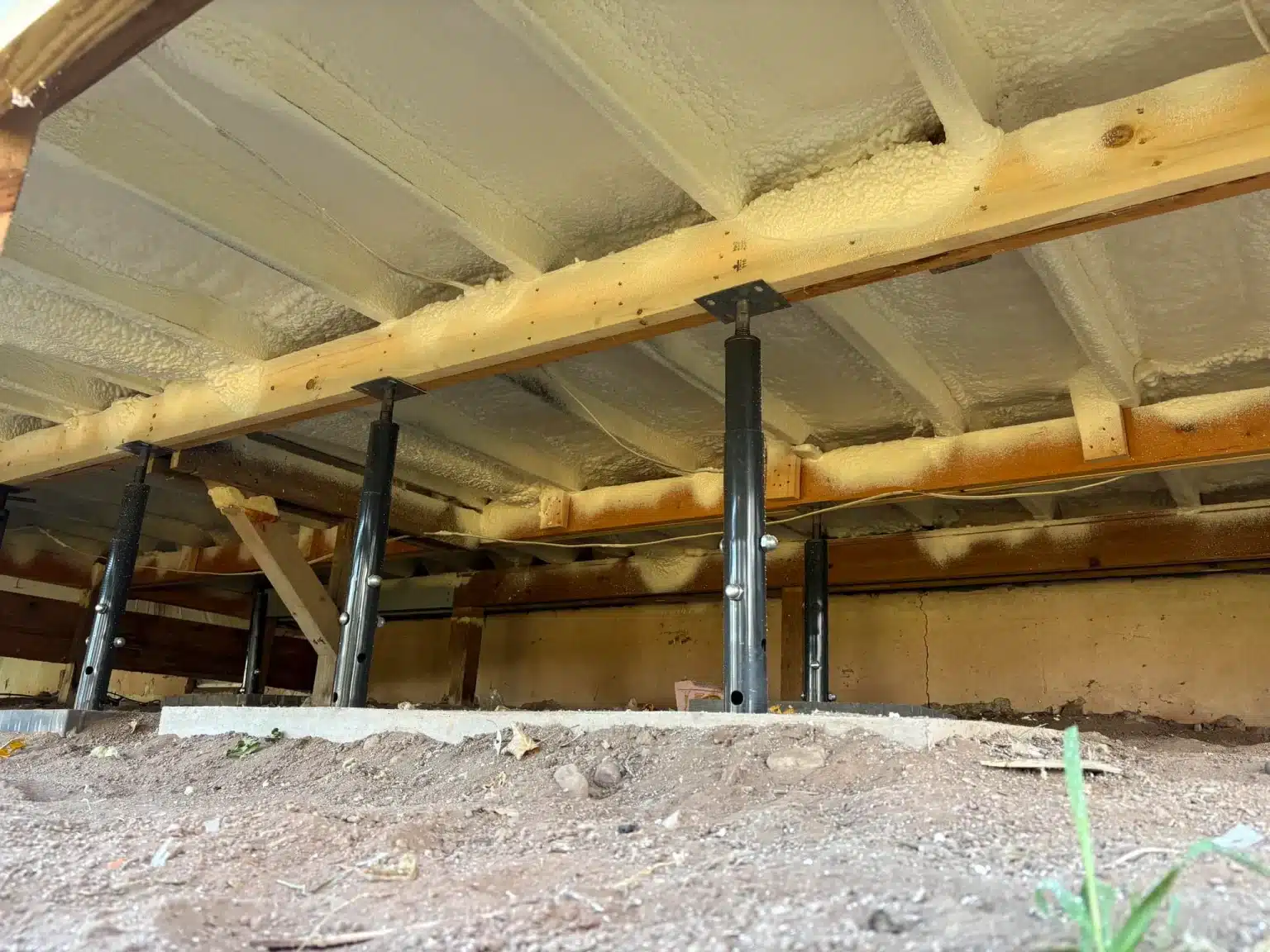
The area where the floor framing meets the exterior wall, known as the rim joist or band joist, is notoriously leaky. Spray foam applied to this area seals both the gaps between framing members and any cracks in the foundation wall sill plate, eliminating one of the largest single sources of air infiltration in a home.
The Energy Impact of Proper Air Sealing
The difference between a sealed and unsealed building envelope is not marginal. ORNL field testing, detailed in their building envelope durability research, monitored wall assemblies with varying levels of airtightness over a full year. Walls with higher air leakage (Level 3) showed heat fluxes up to 54% higher than the tightest walls (Level 1) during peak winter months. Even walls with moderate leakage (Level 2) showed heat fluxes up to 11% higher than the tightest assemblies.
As building insulation research explains, thermal insulation reduces the heat exchange through the building envelope, allowing heating and cooling systems to maintain desired indoor temperatures with less energy. When insulation and air sealing are combined, the results are compounded. Spray foam is unique in delivering both functions in a single material, which is why it has become a preferred choice for high-performance building envelopes.
The practical takeaway: if you seal the gaps around your windows and wall openings with spray foam, you are addressing some of the most concentrated sources of air leakage in your home. This translates directly to reduced energy consumption, lower utility bills, and more consistent indoor temperatures.
Recommendations by Project Type
Project Type
Recommended Approach
Key Considerations
New construction
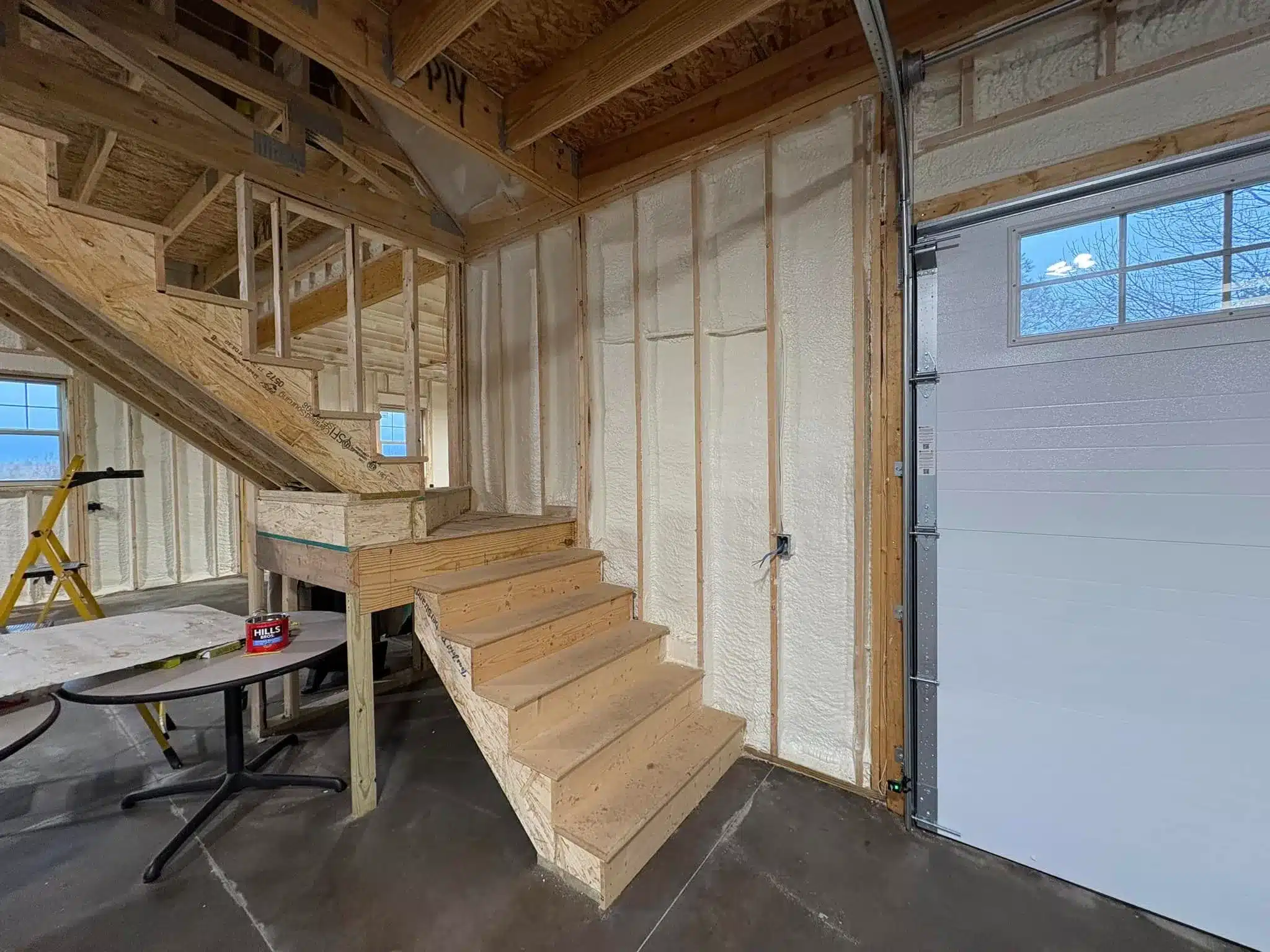
Closed-cell spray foam in all rough openings, rim joists, and penetrations
Most cost-effective time to seal; foam applied before finishes go up
Window replacement
Spray foam around the new window frame and existing rough opening
Remove old, failed caulking first; foam both interior and exterior
Retrofit / existing home
Targeted spray foam at known leak points identified through blower door testing
Focus on rim joists, window perimeters, and wall penetrations for highest return
Basement / crawlspace
Closed-cell spray foam on rim joist and foundation sill plate
Closed-cell provides the vapor retarder needed in below-grade applications
Signs You Have Found the Right Insulation Contractor
Choosing the right professional to handle spray foam installation matters as much as choosing the material itself. Here are indicators of a qualified contractor:
They conduct a thorough assessment of your home before quoting, rather than offering a one-size-fits-all price.
They explain the difference between open-cell and closed-cell foam and recommend the appropriate type for each area of your home.
They understand that air sealing and insulation work together and address both, not just one.
They account for ventilation needs, recognizing that a tighter building envelope requires adequate mechanical ventilation to maintain indoor air quality.
They are transparent about project scope, timeline, and factors that could affect pricing, such as difficult access or the need to remove old insulation.
Get a Professional Assessment From Proseal Spray Foam
Proseal Spray Foam serves the Waupaca, Wisconsin area with professional spray foam insulation services for new construction, retrofit homes, crawlspaces, and commercial buildings. Our team evaluates each project individually, recommends the right foam type for every application, and seals the gaps that drive up your energy bills and compromise your comfort. Whether you are dealing with drafty windows, an uninsulated rim joist, or a full-scale insulation retrofit, we are ready to help.
Call us at (715) 227-6295 or email [email protected] to discuss your project. We start with a $1,500 minimum and work with homes ranging from 1,500 to over 4,000 square feet.
Frequently Asked Questions
Can spray foam be used around existing windows without removing the window?
Yes. Spray foam can be injected into the gap between the window frame and the rough framing from either the interior or exterior, sealing drafts without removing the window unit.
Does spray foam insulation shrink or settle over time like other insulation materials?
No. Once cured, spray foam maintains its shape and does not settle, shrink, or degrade, which means the air seal it creates remains effective for the life of the building.
Will sealing around windows with spray foam cause moisture problems?
When applied correctly with closed-cell foam at rough openings, spray foam actually helps prevent moisture intrusion by blocking humid air from entering wall cavities. Proper mechanical ventilation should accompany any significant air sealing work.
Is spray foam insulation safe for indoor air quality?
After curing, spray foam is inert and does not off-gas. During installation, the area should be ventilated, and occupants should follow the installer’s guidelines for re-entry timing.
How long does a typical spray foam project take?
Most residential projects are completed within a single day, depending on the scope of work and the areas being sealed. Larger commercial projects may require additional time.
Sources
Wikipedia – Building Insulation – Comprehensive reference on thermal insulation materials, R-values, heat transfer modes, and building energy performance.
Wikipedia – Polyurethane Foam – Detailed overview of closed-cell and open-cell foam structures, thermal properties, and spray foam applications in construction.
Wikipedia – Weatherization – Information on sealing bypasses around windows, doors, and wall penetrations, and the role of weatherization in reducing building energy consumption.
I’m Dan Passarella, owner of Proseal Spray Foam, serving Wisconsin since July. I provide spray foam solutions for residential, commercial, and industrial properties, focusing on efficiency, comfort, and quality workmanship.
Better insulation supports consistent indoor temperatures in Ashwaubenon, WI by slowing heat transfer through your attic, walls, floors, and crawlspaces…