How Spray Foam Insulation Helps Protect Sensitive Interior Spaces From Outdoor Drafts in Weston, WI
If your home or office feels freezing in January or a nursery stays drafty despite cranking up the heat, the…

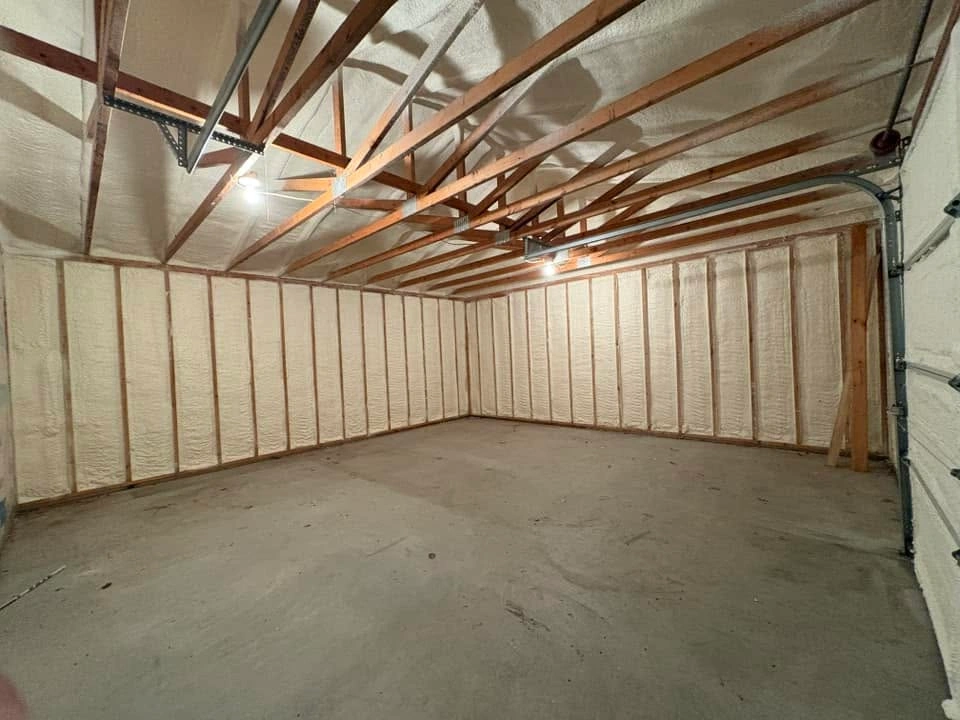
Spray foam insulation outperforms traditional insulation in thermal resistance, air sealing, and long-term energy savings, while traditional options like fiberglass batts and blown-in cellulose offer a lower upfront cost and are easier to install in open cavities. The right choice depends on your project scope, budget, climate zone, and whether the building is new construction or a retrofit. Spray foam insulation achieves a higher R-value per inch than most traditional materials, with closed-cell spray foam delivering R-5.5 to R-6.5 per inch compared to fiberglass at roughly R-3.1 to R-4.3 per inch, according to Wikipedia’s R-value reference table. Beyond R-value, spray foam creates an airtight seal that traditional materials cannot match on their own, reducing air leakage and the convective heat loss that accounts for a significant portion of energy waste in poorly sealed homes.
Thermal resistance, measured in R-value, is the standard metric for comparing insulation effectiveness. The higher the R-value, the better the material resists conductive heat flow. But R-value alone does not tell the full story. Air sealing, moisture resistance, and installation quality all affect real-world performance.
| Insulation Material | R-Value Per Inch | Air Sealing Ability | Moisture Resistance |
|---|---|---|---|
| Closed-cell spray foam | 5.5 to 6.5 | Excellent (expands to seal gaps) | High (acts as vapor barrier) |
| Open-cell spray foam | 3.6 | Very Good | Low (absorbs moisture) |
| Fiberglass batts | 3.1 to 4.3 | Poor (requires separate air sealing) | Low (degrades when wet) |
| Blown-in cellulose | 3.0 to 3.8 | Moderate (settles into cavities) | Moderate (treated for moisture) |
| Rock wool / mineral wool | 3.0 to 3.85 | Moderate | High (naturally moisture-resistant) |
As noted in the Wikipedia R-value article, closed-cell polyurethane spray foam stands near the top of the performance chart, surpassed only by specialized products like aerogels and vacuum insulated panels. For most residential and commercial applications, spray foam offers the best balance of high R-value per inch, air sealing, and structural rigidity.
Traditional materials like fiberglass batts and blown-in cellulose rely on trapped air pockets within fibers to slow heat transfer. While effective, they leave gaps around studs, pipes, and electrical boxes unless paired with a separate air barrier system. Spray foam eliminates this weakness by expanding into and sealing those penetrations during application.
The building insulation article on Wikipedia explains that heat loss occurs through conduction, convection, and radiation. Traditional insulation primarily addresses conduction, but convective heat loss through air leakage is often the larger problem in real-world homes. Gaps around windows, doors, rim joists, and wall penetrations allow conditioned air to escape and unconditioned air to enter.
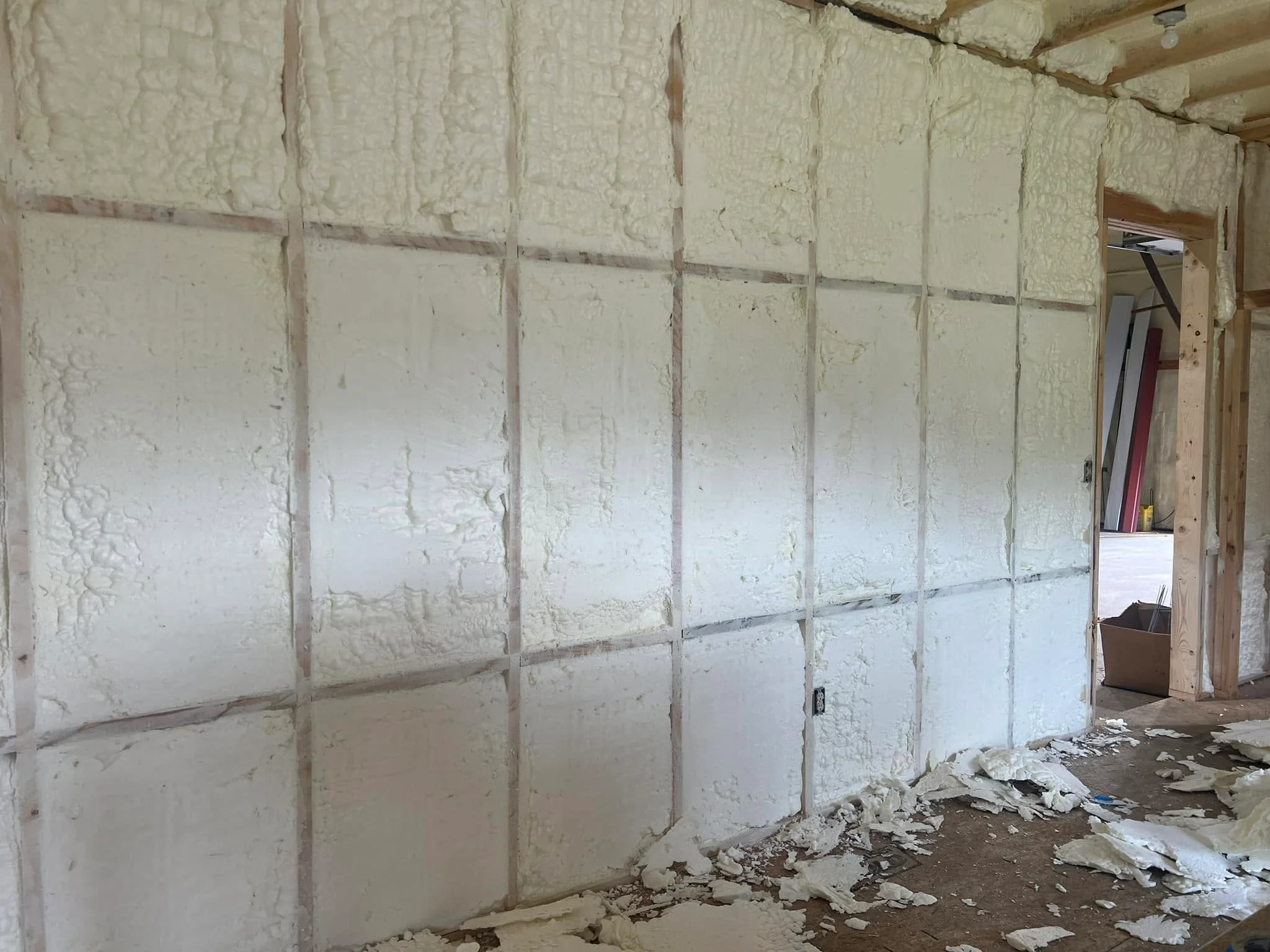
Spray foam insulation’s structural integrity tackles all three modes of heat transfer simultaneously. When applied, it expands to fill cavities and adheres to framing members, creating a monolithic barrier that blocks air movement. This dual function, insulation plus air sealing, is the single biggest advantage spray foam has over traditional materials.
For homeowners in cold climates like Wisconsin, this matters. The EIA’s Residential Energy Consumption Survey shows that space heating accounts for a significant portion of residential energy use, and homes in colder states consume considerably more energy overall. In the Midwest specifically, older homes with inadequate insulation use substantially more natural gas for heating than newer, properly insulated homes.
Closed-cell spray foam provides an additional benefit that traditional insulation cannot: it acts as a vapor retarder and a moisture barrier in many applications. In crawlspaces and basements where moisture intrusion is a concern, closed-cell spray foam prevents condensation from forming on framing members and blocks groundwater vapor from entering the living space.
Fiberglass insulation, by contrast, loses its insulating properties when it absorbs moisture. According to research cited in the R-value (insulation) article, moisture absorption can significantly reduce the effective R-value of fibrous insulation materials. Wet fiberglass can also promote mold growth within wall cavities, creating indoor air quality concerns.
Open-cell spray foam allows moisture vapor to pass through, which can be appropriate for certain wall assemblies where the building design calls for vapor permeability. The choice between open-cell and closed-cell depends on the specific application, climate zone, and building science requirements.
Pricing varies based on project scope, accessibility, material type, and the area to be insulated. Based on our project data for the Waupaca, Wisconsin area:
| Service | Typical Low | Typical Average | Typical High |
|---|---|---|---|
| Closed-cell spray foam | $1,500 | $6,000 | $10,000 |
| Blown-in cellulose | $2,000 | $4,000 | $10,000 |
| Attic insulation | $3,000 | $6,000 | $30,000 |
| Pole barn insulation | $5,000 | $15,000 | $60,000 |
| Commercial insulation | $20,000 | $50,000 | $300,000 |
Several factors influence where a project falls within these ranges:
| Scenario | Property Type | Recommended Option | Reasoning |
|---|---|---|---|
| New home build, standard wall cavities | Residential new construction | Fiberglass batts or cellulose | Open cavities make traditional installation straightforward and cost-effective |
| Crawlspaces and rim joist sealing | Existing home retrofit | Closed-cell spray foam | Air sealing and moisture barrier in hard-to-reach areas |
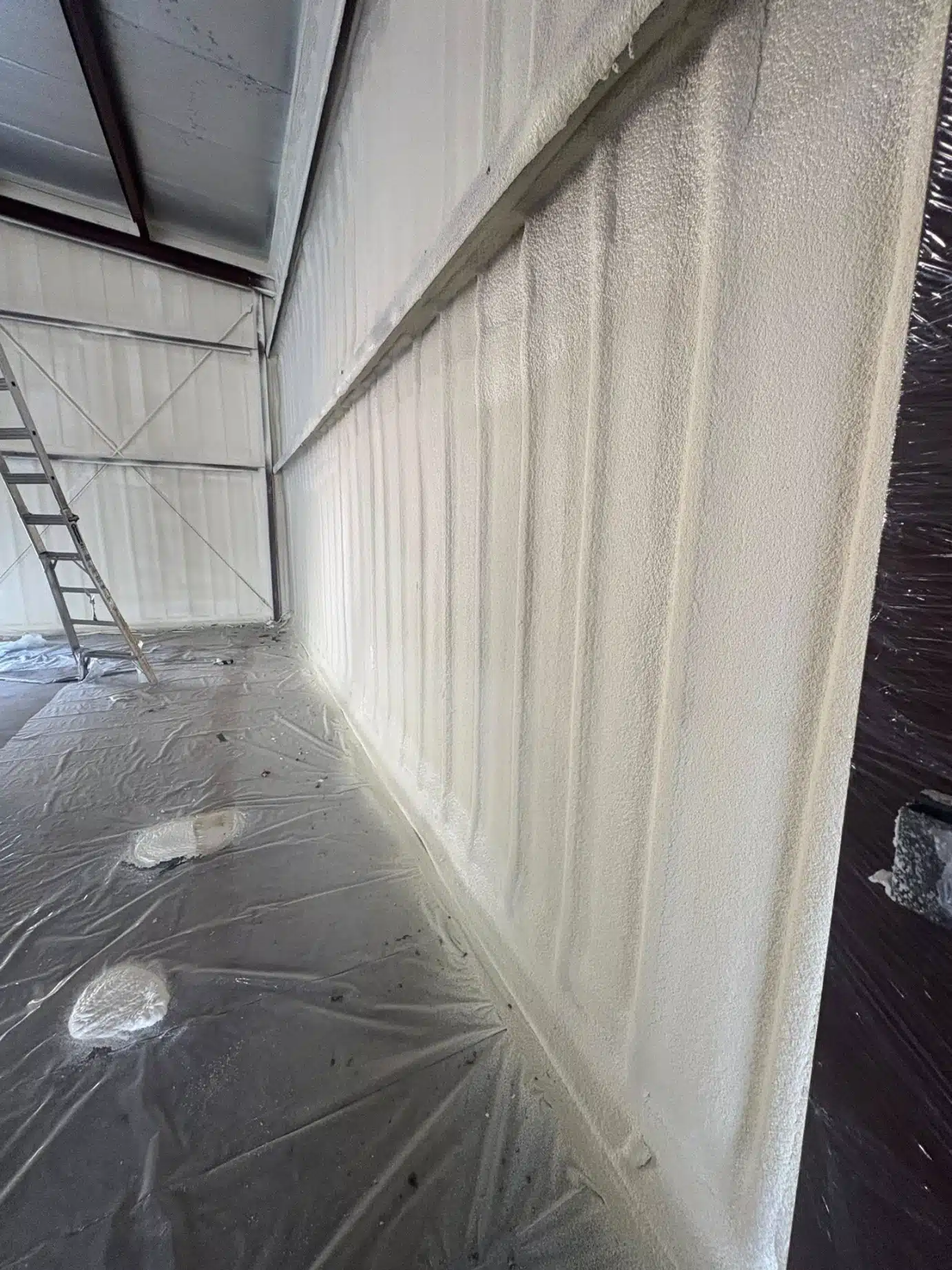
| Pole barn or metal building | Agricultural / storage | Closed-cell spray foam | Adheres to metal surfaces, seals gaps, resists moisture |
| Attic top-up with existing insulation | Existing home | Blown-in cellulose | Cost-effective for large open areas with easy access |
| Commercial warehouse or facility | Commercial building | Closed-cell spray foam | Maximum thermal performance, air sealing, and long-term durability |
| Basement finishing project | Existing home retrofit | Closed-cell spray foam on rim joist | Moisture resistance, air sealing at the foundation-to-frame transition |
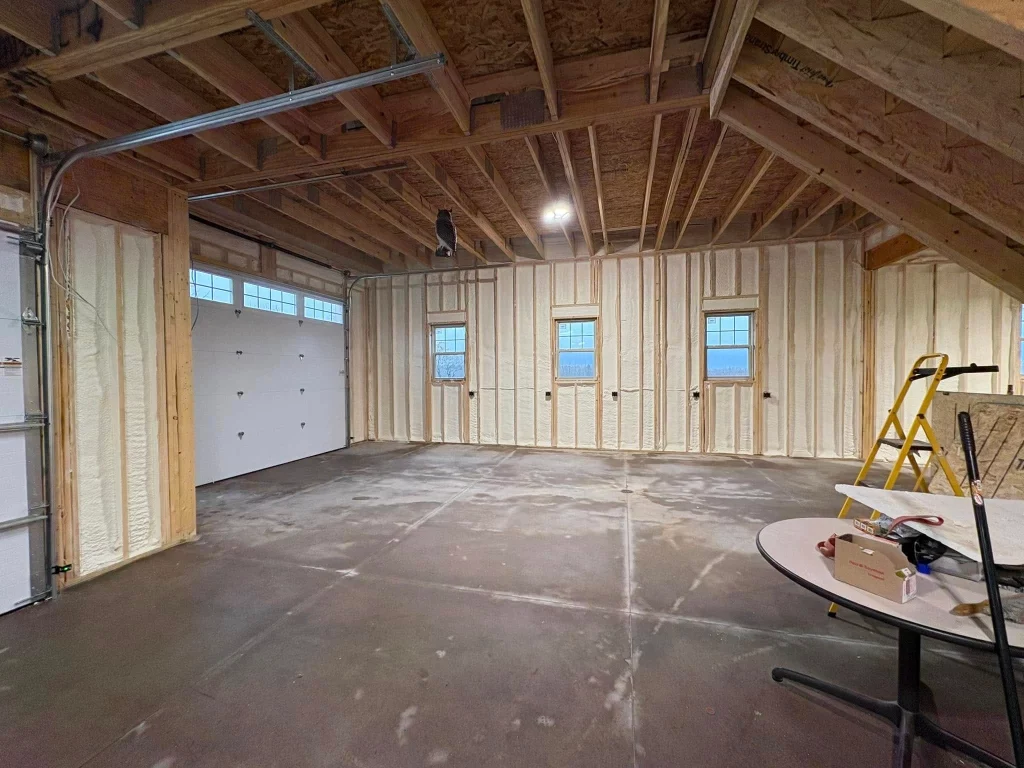
Choosing between spray foam and traditional insulation is not a simple either-or decision. The best choice depends on several key variables:
Choosing the right insulation for your project requires more than comparing price tags. At Proseal Spray Foam, we evaluate your building’s specific needs, climate exposure, and project goals to recommend the insulation solution that delivers the best long-term return. Our team serves the Waupaca, Wisconsin area and surrounding communities with professional closed-cell spray foam, blown-in cellulose, attic insulation, pole barn insulation, and commercial insulation services.
Ready to find out which insulation solution fits your property and budget? Request a Quote or Schedule an Insulation Assessment by calling us at (715) 227-6295 or emailing [email protected]. We will walk you through your options with honest recommendations and no pressure.
Spray foam is applied as a liquid mixture that expands and cures into a solid foam, filling cavities and sealing gaps as it hardens. This expansion allows it to conform to irregular shapes and create an airtight barrier against heat transfer and air leakage.
Yes, spray foam is commonly used in retrofit applications, especially in crawlspaces, rim joists, attics, and basements. It can be applied to existing structures without the need to remove wall finishes in many cases.
Properly installed spray foam insulation is designed to last the lifetime of the building. It does not settle, sag, or degrade the way some traditional materials can over time, maintaining its R-value and air sealing properties for decades.
Once cured, spray foam is inert and does not off-gas. The installation process does produce temporary odors and requires occupants to vacate the space during application and for a short period afterward. Our team follows all safety protocols to ensure proper ventilation during and after installation.
Closed-cell spray foam acts as a vapor retarder and moisture barrier, making it an effective solution for crawlspaces, basements, and other areas prone to moisture intrusion. It can help prevent condensation on framing members and reduce the risk of mold growth.