How Does Open-Cell Spray Foam Insulation Adapt to Different Spaces and Building Designs in Ripon, WI?
Dan Passarella
October 7th, 2026
Open-cell spray foam insulation can adapt to many building designs because it expands into framed cavities and irregular gaps, creating an air seal while insulating the space. But the right application depends on more than cavity shape. We also need to consider cavity depth, required R-value, moisture exposure, vapor control, and the way the entire wall or roof assembly is built.
In Ripon, WI, Wisconsin building requirements also affect the installation. That means we don’t choose open-cell foam simply because it fits a space. We look at how the material will work with the rest of the building.
TL;DR
Open-cell foam can fit exterior walls, interior partitions, attics, and sloped ceiling assemblies when appropriate.
Its lower R-value per inch compared with closed-cell foam makes cavity depth important.
Open-cell foam is more vapour-permeable than closed-cell foam, so moisture control needs careful planning.
Wisconsin rules can affect vapour-retarder and foam-protection requirements.
The best insulation choice depends on the complete assembly, not just the insulation material.
How Open-Cell Spray Foam Adapts To Different Building Designs
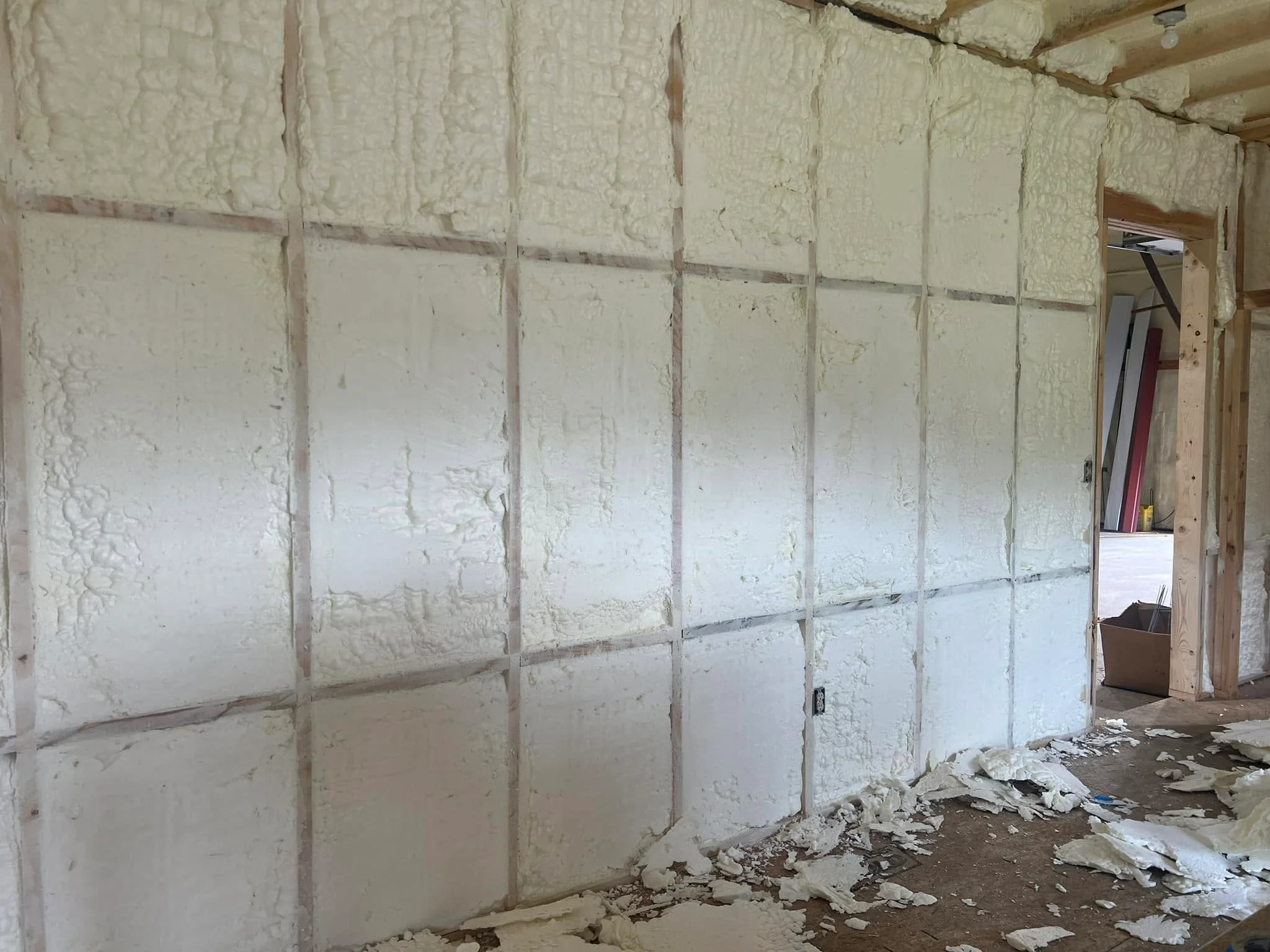
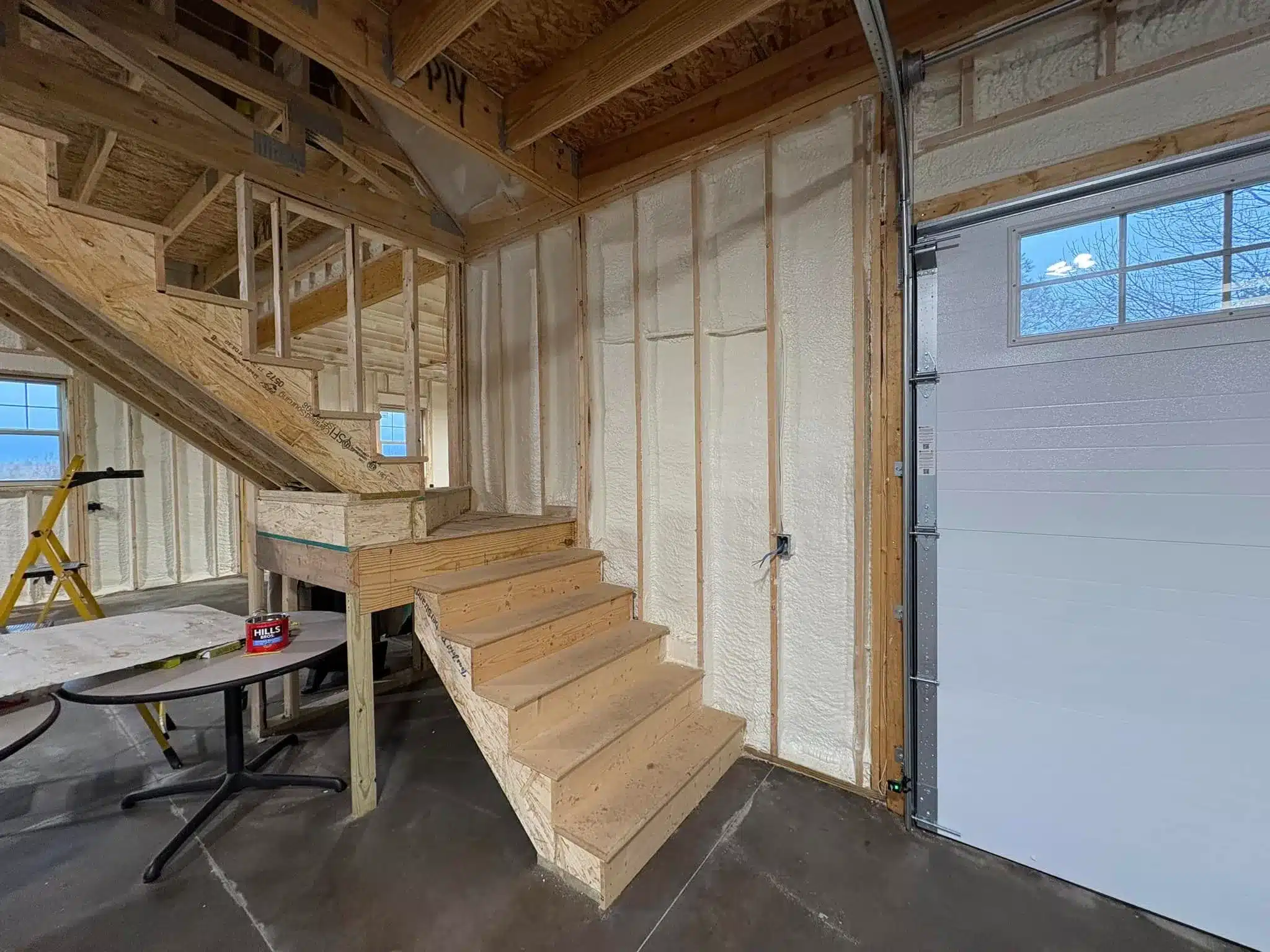
Open-cell foam expands after application and fills spaces between framing members. That makes it useful in cavities with small gaps or irregular areas that need sealing. When installed at the right thickness, it can also reduce uncontrolled air movement through joints and penetrations.
We separate air sealing from vapor control because they solve different problems. The U.S. Department of Energy explains that spray foam can act as an air barrier, while open-cell foam has less resistance to vapor movement than closed-cell foam. That difference can affect where each product makes sense.
Building design matters just as much. A standard exterior wall has different requirements from an interior partition or a roof assembly. We consider what surrounds the foam, how heat and moisture move through the assembly, and the insulation level the space needs.
Where Open-Cell Spray Foam Fits Within A Building
We don’t select open-cell foam based solely on room name. The same product can serve different purposes depending on where it is installed and what the surrounding materials need to do. We consider the full assembly before deciding whether it fits.
Exterior Wall Cavities
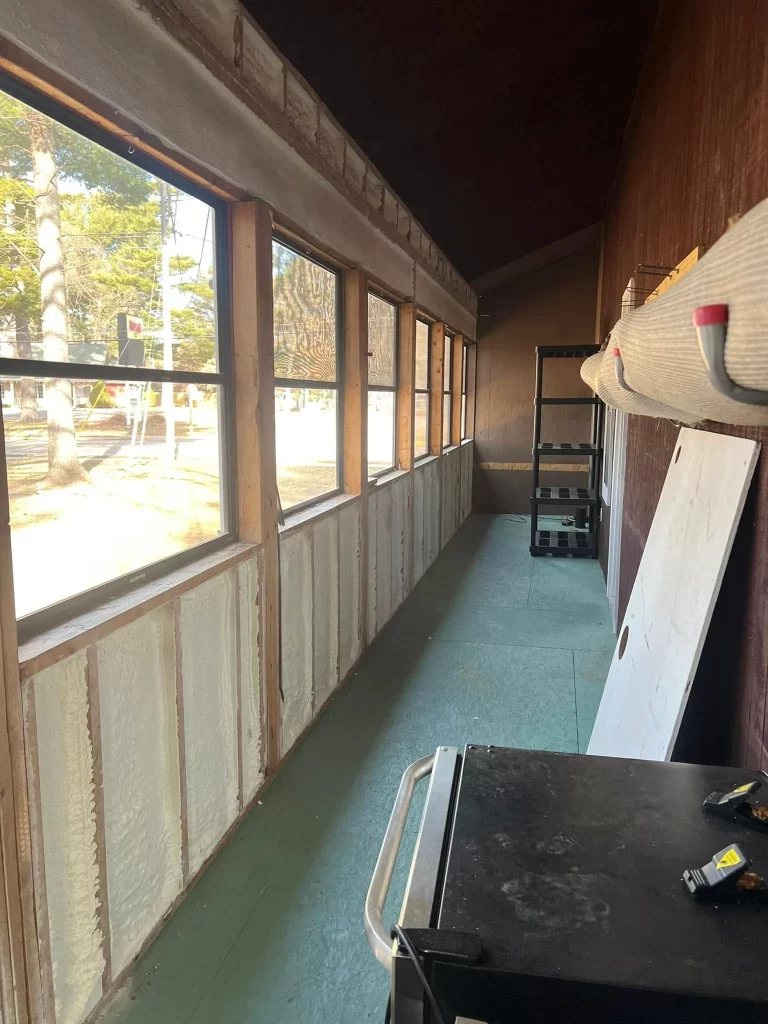
Exterior walls are a common application for open-cell foam. The material expands between studs and can fill the cavity while sealing gaps around framing and penetrations.
Cavity depth matters because open-cell foam generally provides less R-value per inch than closed-cell foam. A deep cavity may provide enough room to reach the desired insulation level, while a shallow cavity may make a higher-R-value-per-inch product more practical.
That doesn’t make open-cell foam unsuitable for walls. It means we need to compare the available space with the insulation target rather than assuming that filling the cavity automatically provides the required performance.
Interior Walls And Sound-Control Areas
Interior partitions have different goals from exterior walls. They usually aren’t separating conditioned space from outdoor temperatures, so thermal insulation may not be the main reason for insulating them.
Open-cell foam can conform to interior cavities, but the assembly still determines whether it is the right choice. Sound control, room separation, access, and existing wall materials can all affect the decision.
Attic Rooflines And Sloped Ceilings
Open-cell foam can be used in certain unvented attic and cathedral-ceiling assemblies. The U.S. Department of Energy’s Building America resources document applications using open-cell foam in vaulted ceiling and attic assemblies.
Roof applications need more planning than a typical wall. Moisture that enters a roof assembly can have fewer drying opportunities, so the roof construction, interior humidity, vapor control, and foam specifications need to work together.
What Should You Consider Before Choosing Open-Cell Foam?
Before choosing open-cell foam, we look at several practical factors. These details determine whether the material can meet the insulation and moisture-control needs of the specific assembly.
Cavity depth: Available depth affects how much insulation you can install.
Required R-value: The assembly needs enough insulation to meet its applicable performance requirement.
Moisture exposure: Areas with greater moisture concerns may need a different vapor-control approach.
Existing construction: Retrofit projects can have limited access because of drywall, wiring, plumbing, and other existing materials.
Building assembly: Sheathing, roofing, exterior insulation, drywall, and other layers affect heat and moisture movement.
Product specifications: Installed thickness, vapor permeance, and approved uses should come from the product documentation.
More foam isn’t automatically the solution. The practical goal for each building is to make the insulation, air sealing, and moisture-control strategy work together.
How Do Wisconsin Moisture And Building Requirements Affect Open-Cell Foam?
Wisconsin’s building requirements make vapor control an important part of insulation planning. Under Wisconsin SPS 322.38, frame assemblies can have vapour-retarder requirements, with provisions that address certain spray-applied foam installations.
The exact requirement depends on the assembly and the foam characteristics. The product’s installed thickness, vapor permeance, required R-value, and the applicable code provisions all matter for that assembly. We therefore avoid treating one vapor-retarder approach as universal.
Foam protection is another consideration. Wisconsin SPS 321.11 addresses foam plastic insulation and generally requires protection from the interior of a dwelling with an approved thermal barrier, subject to listed exceptions.
That means a finished installation isn’t simply foam placed inside a cavity. You must consider the complete assembly, including the interior finish and any applicable protective requirements.
Open-Cell Vs. Closed-Cell: Which One Fits The Space?
Both materials can insulate and air-seal, but their physical properties differ. The U.S. Department of Energy notes that open-cell foam has a lower R-value per inch and greater vapor permeability than closed-cell foam.
Factor
Open-Cell Foam
Closed-Cell Foam
Cell structure
Open
Closed
R-value per inch
Lower
Higher
Vapor resistance
Lower
Higher
Expansion
Higher
Lower
Shallow cavities
May limit insulation level
More R-value in less space
Moisture strategy
More assembly-specific planning
Greater vapor resistance
A deeper wall cavity with suitable moisture control may work well with open-cell foam. A shallow assembly that needs more R-value in limited space may favor closed-cell foam. Neither choice is automatically right for every building.
Practical Questions To Ask Before Installation
Before installation, we recommend asking:
What insulation level does the assembly need?
How deep are the cavities?
What are the foam’s R-value and vapor-permeance ratings at the proposed thickness?
Does the assembly need a separate vapor-retarder strategy?
Is the foam being installed against roof sheathing, exterior sheathing, or an interior partition?
What interior protection does the finished foam require?
Does the product documentation support the intended application?
Are existing moisture problems being addressed first?
Talk With Proseal Spray Foam About Your Ripon Project
If you’re considering open-cell spray foam insulation for a home or building in Ripon, WI, we can discuss the space, existing construction, and conditions around the insulation. You can reach Proseal Spray Foam at (715) 227-6295 or [email protected].
A useful conversation should start with the building assembly, cavity depth, and purpose of the space. From there, we can determine whether open-cell foam fits the project or whether another insulation approach is worth considering.
Frequently Asked Questions About Open-Cell Spray Foam In Different Spaces
Can Open-Cell Spray Foam Fill Irregular Wall Cavities?
Yes. Its expansion allows it to conform to irregular spaces and seal gaps around framing and penetrations. The installed thickness still needs to meet the insulation needs of the assembly.
Is Open-Cell Spray Foam Suitable For An Attic Roofline?
It can be suitable for certain unvented attic and sloped-ceiling assemblies. The roof design, moisture control, product specifications, and required protective coverings all need to be evaluated together.
Does Open-Cell Spray Foam Need A Vapor Retarder?
Not every installation has the same requirement. Wisconsin’s rules include provisions for spray-applied foam, including circumstances tied to vapor permeance and insulation levels. The specific product and assembly should be checked before installation begins on the project.
Does Cavity Depth Affect The Choice Between Open-Cell And Closed-Cell Foam?
Yes. Because open-cell foam generally provides less R-value per inch, available cavity depth can affect whether it can reach the desired insulation level. A shallow assembly may make closed-cell foam more practical.
I’m Dan Passarella, owner of Proseal Spray Foam, serving Wisconsin since July. I provide spray foam solutions for residential, commercial, and industrial properties, focusing on efficiency, comfort, and quality workmanship.
Better insulation supports consistent indoor temperatures in Ashwaubenon, WI by slowing heat transfer through your attic, walls, floors, and crawlspaces…