How Spray Foam Insulation Helps Protect Sensitive Interior Spaces From Outdoor Drafts in Weston, WI
If your home or office feels freezing in January or a nursery stays drafty despite cranking up the heat, the…

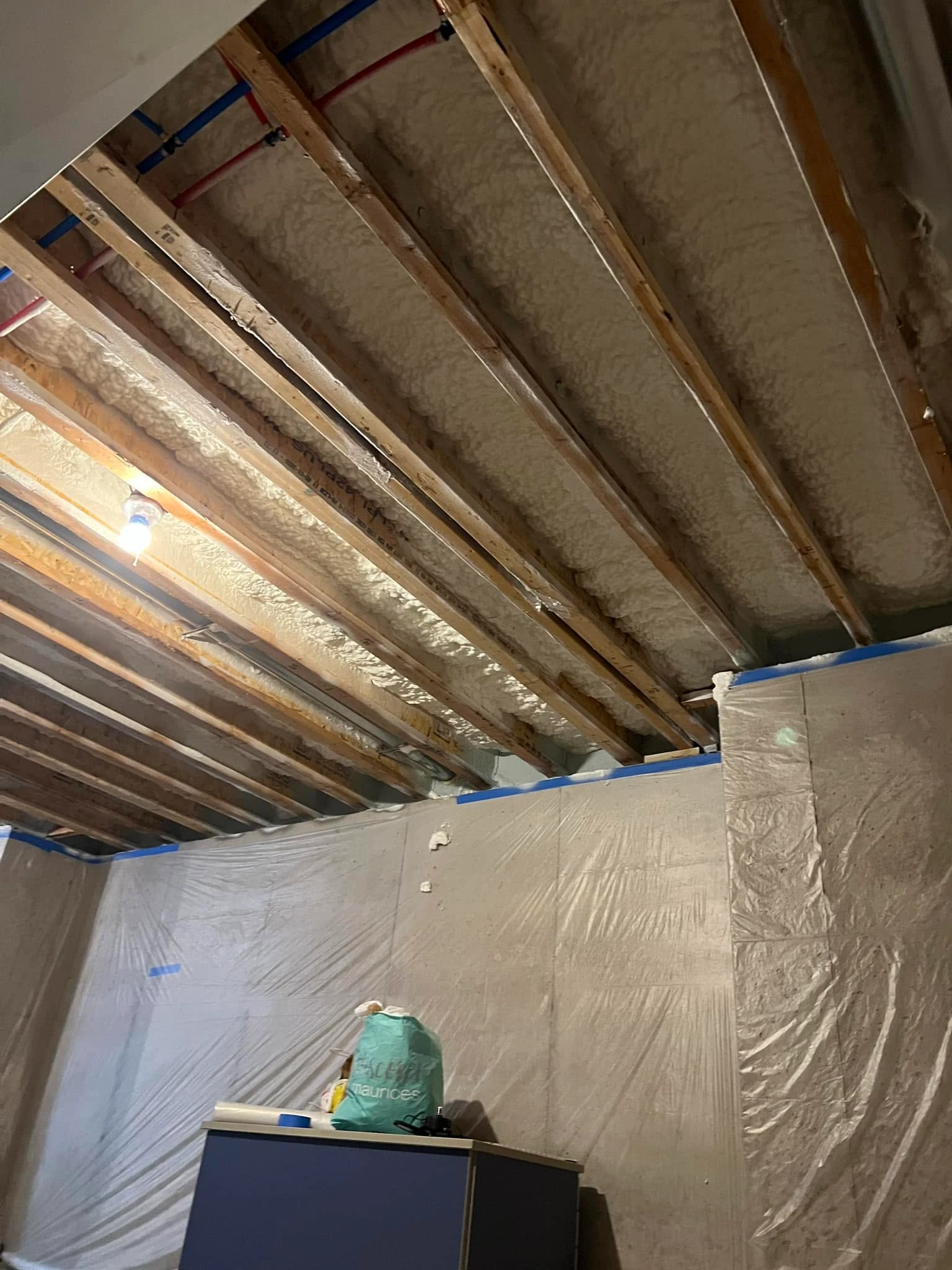
If you have ever stood in your living room in January and felt a cold draft that no amount of thermostat adjusting could fix, you have experienced the real-world problem that open cell spray foam insulation is designed to solve. Most homes in the United States are under-insulated and riddled with air leaks that drive up energy bills and make comfort a constant struggle. According to ENERGY STAR, 9 out of 10 homes in the U.S. do not have enough insulation, and the combined air leaks in a typical home add up to the equivalent of leaving a window open every single day of the year.
Open cell spray foam insulation Company directly addresses this problem by expanding into a continuous, airtight barrier that fills every gap, crack, and void in your building envelope. Unlike fiberglass batts or blown-in cellulose that can leave gaps and settle over time, spray foam adheres to surfaces and expands on contact, creating a seal that traditional insulation simply cannot match.
This guide is the product of years of hands-on experience installing spray foam insulation in homes, crawlspaces, attics, and commercial buildings. We have seen what works, what fails, and what homeowners consistently ask about. By the time you finish reading, you will understand exactly what open cell spray foam is, how it performs, where it belongs (and where it does not), what the installation process looks like, and how to decide if it is the right choice for your project.
Open cell spray foam insulation is a type of spray polyurethane foam (SPF) applied as a two-part liquid that expands on contact into a soft, flexible solid. It earns its name from its internal structure: once cured, the foam consists of a three-dimensional matrix of tiny, interconnected cells that are open to each other rather than sealed off. Think of it like a sponge. Air gets trapped inside those cells, and that trapped air is what provides the insulation value.
The two liquid components are kept separate until the moment of application. One side contains polymeric MDI (methylene diphenyl diisocyanate), and the other side holds a blend of polyol resins, surfactants, fire retardants, catalysts, and water as the blowing agent. When these two sides meet at the spray gun tip, a chemical reaction begins immediately. The mixture expands rapidly, roughly 150 times its original liquid volume, filling cavities and sealing gaps in a single pass. A trained applicator can spray open cell foam to its full target thickness, up to about 10 inches, in one go.
The finished material weighs approximately 0.5 pounds per cubic foot, which is why installers often refer to it as “half-pound foam.” It is soft enough to compress with your hand and remains somewhat flexible after curing, though it will not fully rebound if crushed. That softness is actually an advantage in many applications because it accommodates the natural shifting and settling of a wood-frame structure without cracking or pulling away from framing members.
Open cell spray foam does its job through two main mechanisms: air sealing and thermal resistance.
Air sealing is where spray foam separates itself most clearly from other insulation types. Fiberglass and cellulose slow down heat transfer, but they do not stop air movement. Air still passes through and around them. Open cell spray foam, by contrast, becomes air-impermeable at typical installed thicknesses (around 3.5 inches). The expanding foam fills every crack, gap, and penetration in the cavity, creating a continuous air barrier. As the Department of Energy’s Building Science Education Center explains, spray foam insulation can be used at rim joists, floors above unconditioned space, and in attics to insulate and air seal at the same time, something few other insulation materials can claim.
Thermal resistance comes from the R-value, which measures how well a material resists conductive heat flow. Open cell spray foam delivers approximately R-3.6 per inch. In a standard 2×6 wall cavity with 5.5 inches of depth, that translates to roughly R-20. In an attic rafter bay sprayed to 10 inches, you would reach approximately R-36. The R-value alone does not tell the whole story, though. Because open cell foam also eliminates air leakage, the real-world performance of a spray-foam-insulated assembly often outperforms what the R-number alone would suggest. A fiberglass-insulated wall rated at R-19 can lose significant effectiveness if air is moving through it, while an R-20 open cell wall maintains its rating because the air is stopped.
One of the underappreciated benefits of open cell spray foam is its acoustic performance. Because of its soft, open-cell structure, the foam absorbs sound energy rather than reflecting it. In a standard 2×4 wood stud wall assembly, open cell foam achieves a Noise Reduction Coefficient (NRC) of 0.70, meaning it absorbs about 70% of the sound that reaches it. This makes it a strong choice for home offices, media rooms, and walls shared between living spaces and garages or mechanical rooms.
Expert Tip: If sound control is a priority for your project, open cell foam actually outperforms closed cell in most wall assemblies. The softer, more porous structure absorbs more acoustic energy. Just keep in mind that no wall insulation eliminates sound transmission through flanking paths like shared floor assemblies or ductwork.
Understanding the raw numbers helps you evaluate whether open cell foam fits your project. Here are the properties that matter most, drawn from the Department of Energy’s Building America spray foam guide:
| Property | Open Cell SPF Value | What It Means for You |
|---|---|---|
| Density | 0.5 lb/cu ft | Lightweight, will not add structural load |
| R-Value | R-3.6 per inch | Good thermal resistance per inch, needs more depth than closed cell |
| Air Permeance | 0.0049 L/s-m² @ 75 Pa (at 5.25″) | Effectively airtight at standard thicknesses |
| Vapor Permeance | 5-10 perms (at 5″ thick) | Vapor-permeable, allows the wall to dry |
| Flame Spread | Less than 25 | Low flame spread, but still combustible |
| Smoke Developed | Less than 450 | Meets code requirements |
| Compressive Strength | Less than 2.0 psi | Soft, not a structural material |
| NRC (Sound) | 0.70 (2×4 wall) | Absorbs 70% of sound energy |
Key Takeaways: Open Cell Material Properties
Not every insulation material belongs in every location. Open cell spray foam has specific strengths that make it the right call in some areas and the wrong call in others. The DOE guide breaks this down by application and climate zone.
In cold climates and hot-dry climates, open cell foam is the preferred choice for frame wall cavities. It fills the cavity completely, seals air leaks at every stud, plate, and penetration, and delivers roughly R-20 in a standard 2×6 wall. In hot-humid climates, it is rated as “acceptable” but requires more careful attention to exterior drainage planes and moisture management, since the foam’s vapor-permeable nature means it will not block moisture from the outside.
Open cell foam is an “acceptable” choice for spraying directly to the underside of roof decking in both cold and hot-humid climates. This approach allows you to bring the attic into the conditioned space, eliminating the need for venting and protecting ductwork from extreme temperatures. In cold climates, a vapor-retardant coating on the roof deck or a vapor-retarder paint on the interior side of the foam is recommended to prevent interior moisture from reaching the cold roof deck.
Expert Tip: When we spray open cell foam to roof decks in cold climates, we always discuss the vapor control strategy with the homeowner upfront. Skipping this step can lead to moisture accumulation at the roof deck over time. A coat of vapor-retarder paint on the finished ceiling or drywall side is usually all it takes.
Perimeter band joists, where floor joists meet the exterior wall, are notoriously difficult to insulate with batts. Open cell foam is rated as “acceptable” here and works well because it can expand into the irregular shapes and gaps that make band joists so hard to seal. In hot-humid or extreme cold climates, closed cell is preferred, but open cell is a perfectly good option in mixed or moderate climates.
These areas behave much like wall cavities but in a less demanding configuration. Open cell foam is “acceptable” here because there is no exterior drainage plane to worry about, just a soffit or ceiling below.
Open cell can work in vented crawlspaces where the foam is applied to the floor above, sealing the living space from the crawlspace below. However, in unvented crawlspaces where foam would be applied directly to crawlspace walls, the moisture-permeable nature of open cell makes it less ideal than closed cell, especially in damp conditions.
Understanding the limitations is just as important as knowing the strengths. The DOE guide explicitly rates open cell foam as “not acceptable” in several applications.
Open cell foam absorbs and holds liquid water, up to one-third of its volume by weight. In a basement or below-grade application, this means groundwater or moisture can soak into the foam and hold it against your framing and finishes, creating an environment for mold and decay. Closed cell foam is the correct choice here because it is hydrophobic and will not absorb water.
Brick veneer can hold significant amounts of rainwater. In a hot-humid climate, solar heat drives that moisture inward toward the wall cavity. Open cell foam cannot serve as a drainage plane and will absorb and hold that moisture. Closed cell formulations designed specifically for this application are the right choice.
When ductwork runs through unconditioned attics, the outside surface of a cooled duct can fall below the dew point of the humid attic air. If open cell foam (which is vapor-permeable) is applied to the duct surface, condensation will form and be absorbed into the foam, making the problem worse. Closed cell is required here because it acts as both an insulator and a vapor barrier.
One of the most common questions homeowners ask us is whether they should go with open cell or closed cell spray foam Guide. The answer depends on the application, the climate, and the budget. Here is a direct comparison:
| Feature | Open Cell Spray Foam | Closed Cell Spray Foam |
|---|---|---|
| Density | 0.5 lb/cu ft | 2.0 lb/cu ft |
| R-Value per Inch | R-3.6 | R-6.0 to R-6.5 |
| Expansion Ratio | ~150x liquid volume | ~35-50x liquid volume |
| Application Per Pass | Full thickness (up to 10″) | 2-3 inches, multiple passes |
| Vapor Permeance | 5-10 perms (vapor-permeable) | Less than 1 perm (vapor-retarder) |
| Water Absorption | Absorbs and holds water | Hydrophobic, does not absorb |
| Compressive Strength | Less than 2.0 psi | About 22 psi |
| Sound Absorption | Excellent (NRC 0.70) | Lower |
| Air Sealing | Excellent at 3.5″+ thickness | Excellent at 1-2″ thickness |
| Cost (per R-value) | Lower | Higher (roughly 60% more per R) |
Key Takeaways: Open Cell vs. Closed Cell
Expert Tip: In our experience, the most common mistake homeowners make is assuming “more expensive means better.” For a standard attic or wall cavity in Wisconsin’s mixed climate, open cell foam is often the more practical choice. You get the air sealing benefit at a lower cost, and the vapor-permeable nature allows the assembly to dry. Save closed cell for the places where its specific properties are actually needed.
The whole point of investing in insulation is to use less energy and feel more comfortable. The data here is clear. ENERGY STAR estimates that homeowners can save an average of 15% on heating and cooling costs, or about 11% on total energy costs, by air sealing their homes and adding insulation in attics, floors over crawl spaces, and basements.
Spray foam insulation is particularly effective at delivering these savings because it tackles both sides of the equation simultaneously. It adds R-value to resist conductive heat flow, and it creates an airtight seal to stop convective heat loss through gaps and cracks. Traditional insulation handles only the first part.
Beyond the energy bill, homeowners consistently report these comfort improvements after a spray foam installation:
The payback period for spray foam insulation varies based on climate, existing insulation levels, energy costs, and the scope of the project, but the combination of lower bills, improved comfort, and better indoor air quality is what drives most homeowners’ decisions.
Understanding what happens during installation helps you prepare and sets realistic expectations. Here is how a typical open cell spray foam project unfolds.
Before any foam is sprayed, we evaluate the space. This includes checking the cavity depths, identifying penetrations that need sealing, reviewing the ventilation strategy, and confirming that the substrate (the surface being sprayed) is clean, dry, and free of dust and debris. In retrofit projects, existing insulation may need to be removed first.
Spray foam is sticky and expands quickly, so masking and protection are essential. We cover windows, doors, fixtures, and any surfaces that should not receive foam. In occupied homes, we set up containment barriers with poly sheeting to isolate the work area from the rest of the house.
A high-pressure, two-component spray rig is brought on site. The two chemical tanks (the “A” side with isocyanates and the “B” side with polyols, catalysts, and blowing agents) are connected to heated hoses that feed the spray gun. The equipment is calibrated to the specific product being used and the ambient temperature and humidity conditions.
The applicator sprays the foam in a controlled pattern, working from bottom to top in wall cavities and following a systematic pattern in attics and crawlspaces. Open cell foam expands to its full thickness in a single pass, so the applicator maintains a steady speed to achieve consistent depth. The foam reaches full expansion within seconds and begins curing immediately. A typical wall cavity fills in minutes. A full attic might take a few hours depending on the square footage and target depth.
Once the foam cures (usually within 20-30 minutes for open cell), any foam that has expanded beyond the cavity face is trimmed flush with the framing using a specialized saw or knife. The work area is cleaned, and masking materials are removed.
Because spray foam is a combustible material, building codes require it to be covered with a thermal barrier (typically half-inch gypsum board, providing a 15-minute fire rating) in habitable spaces. In attics and crawlspaces that are not used for storage, an ignition barrier may be used instead. The specific requirements depend on the foam manufacturer’s testing, the application, and local code interpretation.
Expert Tip: If you are building a new home or planning a major renovation, talk with your insulation contractor before the drywall goes up. Coordinating the spray foam schedule with other trades prevents conflicts and ensures the foam has adequate time to cure before being enclosed. Some manufacturers’ evaluation reports specify exact thickness limits and barrier requirements that your contractor should have on hand.
Spray polyurethane foam is an effective insulation material, but the chemicals involved demand respect. The EPA’s Safer Choice program has published extensive guidance on SPF safety, and the Consumer Product Safety Commission has issued a consumer fact sheet compiling recommendations from the EPA, OSHA, NIOSH, and other agencies.
The key chemical of concern in all spray polyurethane foam is isocyanates, which make up roughly half of the “A-side” formulation. Exposure to isocyanates during and immediately after installation can cause asthma, lung sensitization, respiratory problems, and skin and eye irritation. Once the foam is fully cured, these risks drop dramatically, but the curing period is when precautions matter most.
Here is what a responsible installation looks like from a safety standpoint:
If you experience persistent odors or respiratory symptoms after re-entering your home following an installation, the CPSC recommends seeking medical attention, filing a report on SaferProducts.gov, and working with your contractor or an independent indoor air quality consultant to diagnose the problem.
Key Takeaways: Safety
After years of installing spray foam, we have seen the same missteps repeated by homeowners and less experienced contractors. Here are the ones that cause the most problems.
Using open cell foam in a wet or below-grade location. This is the single most consequential mistake. Open cell absorbs water. If it gets wet from groundwater, plumbing leaks, or flooding, it can hold that water against wood framing for extended periods, promoting rot and mold. Always use closed cell for basements, below-grade walls, and any area prone to moisture exposure.
Skipping the vapor control strategy in cold climates. In a cold climate wall assembly with open cell foam, warm interior air carrying moisture can pass through the drywall and reach the foam. If the exterior sheathing is vapor-impermeable (like foil-faced sheathing or certain exterior wraps), that moisture has nowhere to go. The DOE guide documents at least one catastrophic moisture failure in Northern Vermont caused by this exact combination. The fix is simple: use vapor-retarder paint or primer on the interior drywall surface.
Ignoring manufacturer evaluation reports. Not all spray foam products are tested for the same applications. Individual manufacturers have ICC Evaluation Service Reports that specify exactly where their product can be used, at what thickness, and with what barriers. A contractor should be able to produce these reports on request.
Applying foam to damp or contaminated substrates. Spray foam adheres best to clean, dry surfaces. Spraying over dusty framing, wet wood, or surfaces with oil residue compromises adhesion and can lead to delamination over time.
Choosing a contractor based on price alone. Spray foam application requires specific training, calibrated equipment, and a thorough understanding of building science. The cheapest bid often comes from someone cutting corners on material coverage, safety protocols, or both.

After the foam is installed and you have returned to your home, there are several ways to evaluate whether the job was done well.
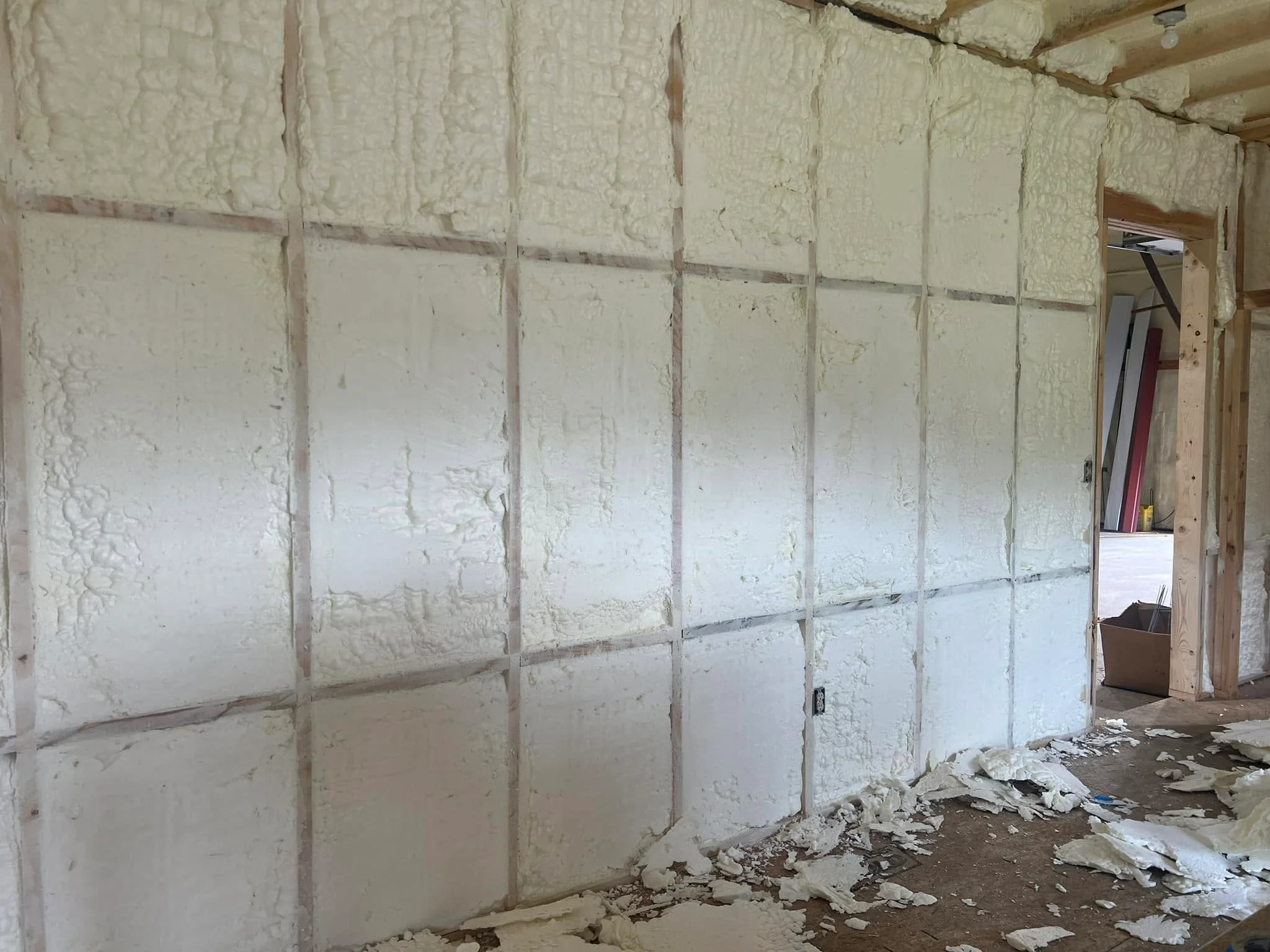
Visual inspection. The foam should fill the cavity completely with no visible gaps, voids, or shrinkage. It should be flush with or slightly proud of the framing faces and trimmed cleanly. The color should be consistent throughout.
Blower door test. A blower door test before and after insulation is the most objective way to measure air sealing improvement. This test uses a powerful fan to depressurize the home and measure the rate of air leakage. A significant reduction in air leakage after spray foam installation confirms that the air sealing benefit has been achieved.
Temperature consistency. In the weeks and months following installation, pay attention to how your home feels. Are there still cold spots near exterior walls? Are upstairs rooms still significantly warmer than downstairs? These are signs that some areas may have been missed or under-insulated.
Energy bills. Compare your heating and cooling costs before and after the installation, keeping in mind that weather varies year to year. The most meaningful comparison is between the same months in different years.
Open cell spray foam insulation is not the right answer for every project, but in the right applications, it delivers a combination of air sealing, thermal performance, and sound control that is difficult to match with any other single material. It works best in interior wall cavities, attic rafter bays, band joists, and similar above-grade locations where its vapor-permeable nature is an advantage rather than a liability.
The most successful projects start with a clear understanding of your home’s specific needs, your climate zone, and the building science principles that govern how your walls, roof, and floors interact with moisture and temperature. Choose your contractor based on their knowledge of these principles, not just their price. Ask about their safety protocols, their vapor control strategy for your climate, and the specific product they plan to use.
Use this guide as a reference as you move through the decision-making process. The sections on where open cell belongs (and does not), the comparison with closed cell, and the safety considerations are worth revisiting as your project takes shape.
If you are considering open cell spray foam insulation for your home or building and want to discuss your specific project with an experienced team, we are here to help. Proseal Spray Foam can be reached at [email protected] or by calling (715) 227-6295. We walk through every project with you, answer your questions, and make sure the right material goes in the right place.
Open cell foam reaches initial cure within 20 to 30 minutes and is typically safe to trim and cover within an hour. Full chemical curing continues for about 24 hours, which is why the standard re-occupancy recommendation is 24 hours after the last spray pass.
Yes, open cell spray foam is commonly used in retrofit projects. Wall cavities can be accessed by removing exterior siding or interior drywall, and attics and crawlspaces are often fully accessible without demolition. The scope of the retrofit determines the disruption level and cost.
It depends on the climate and the assembly. In cold climates, a vapor-retarder paint or primer on the interior drywall surface is recommended to prevent interior moisture from reaching the exterior sheathing. In hot-humid climates, interior vapor retarders should generally be avoided to allow drying to the interior. Your contractor should evaluate this based on your specific climate zone and wall assembly.
During application and the initial curing period, spray foam produces odors and chemical vapors that can be harmful to breathe, which is why occupants must vacate. Once the foam is fully cured (typically 24 hours), these emissions drop to very low levels. If you continue to notice strong odors or experience respiratory symptoms after re-entry, contact your contractor and consider consulting an indoor air quality professional.
Open cell spray foam provides a higher effective R-value because it eliminates air leakage, which fiberglass does not. Fiberglass can allow air to pass through and around it, reducing its real-world performance. Spray foam also fills irregular cavities completely and seals around penetrations, while fiberglass requires careful cutting and fitting and is prone to gaps and compression.
In most cases, no. Building codes require spray foam to be covered with a 15-minute thermal barrier (such as half-inch drywall) in habitable spaces. In attics and crawlspaces that are only used for utility access and not for storage, an ignition barrier may be used instead. The specific requirements depend on the product’s testing and your local code interpretation.