How Spray Foam Insulation Helps Protect Sensitive Interior Spaces From Outdoor Drafts in Weston, WI
If your home or office feels freezing in January or a nursery stays drafty despite cranking up the heat, the…

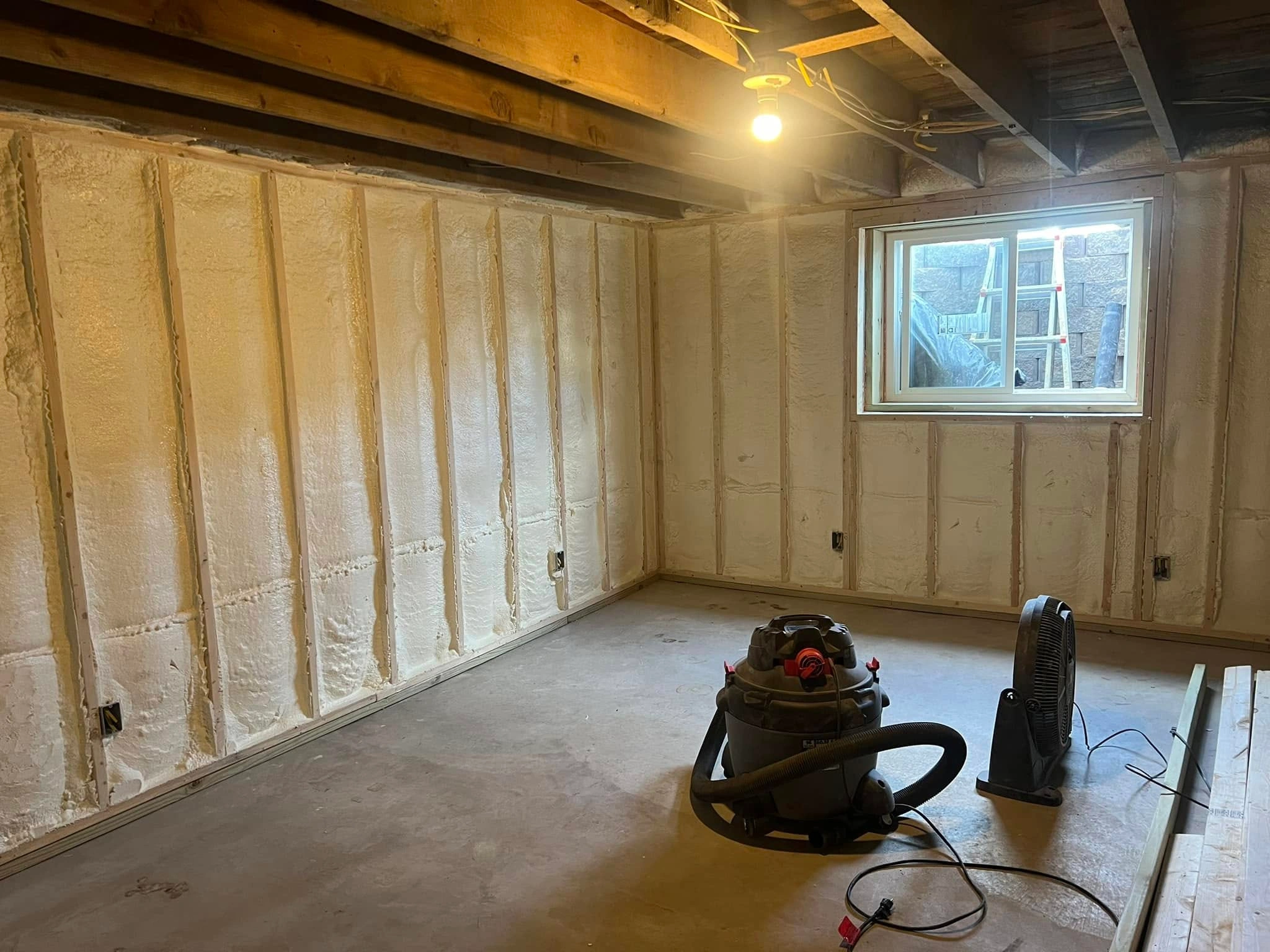
Closed cell spray foam delivers some of the highest thermal resistance per inch of any insulation material available, typically rated between R-5.5 and R-6.5 per inch, but in Sturgeon Bay’s humid continental climate, it can fail when installation quality, moisture management, and material aging are not handled correctly. The combination of extreme temperature swings, seasonal humidity, and the unique building conditions found across Door County creates an environment where even high-performance insulation underperforms or breaks down entirely if the right precautions are not in place. Understanding exactly how and why closed cell spray foam fails here, and what steps prevent those failures, is the difference between decades of energy savings and an expensive remediation project.
Sturgeon Bay sits on the Door Peninsula with a humid continental climate classified as Dfb under the Koppen system. The city records average daily highs of just 25.2 degrees Fahrenheit in January and 78 degrees Fahrenheit in July, but the extremes tell the full story. Record lows reach -29 degrees Fahrenheit while summer highs have hit 105 degrees Fahrenheit. Annual precipitation averages nearly 33 inches, with over 57 inches of snowfall each winter. These are conditions that push building materials to their limits season after season.
The seasonal temperature differential between the heated interior of a home and the freezing exterior drives moisture vapor movement through building assemblies. When warm indoor air carries humidity into wall and ceiling cavities, that vapor moves toward the cold exterior. If closed cell spray foam is installed without accounting for this vapor drive, moisture can become trapped against the sheathing or framing, creating conditions for hidden rot and mold growth. The Sturgeon Bay climate data from NOAA shows that even the mean daily minimum temperatures stay below freezing for five consecutive months, meaning the vapor drive problem is not occasional but continuous for nearly half the year.
Closed cell spray foam is a thermosetting polymeric foam created by reacting polyols and isocyanates. The “closed cell” designation means the individual gas pockets within the foam are sealed off from each other, unlike open cell foam where pores are interconnected. This closed cell structure gives the material its characteristic high R-value, its ability to act as a vapor retarder, and its structural rigidity.
Rigid polyurethane foams, which closed cell spray foam is a type of, offer low thermal conductivity, low density, and good dimensional stability. These properties make them excellent thermal insulators, which is why they are used in buildings, vehicles, and aircraft. The foam expands and adheres to the substrate during application, creating an airtight seal that also blocks moisture intrusion from the exterior. However, these same properties that make closed cell foam effective, specifically its vapor barrier qualities and rigidity, are what can lead to failure when conditions are not right.
Research by the U.S. Army Engineer Research and Development Center found that closed cell polyurethane spray foam can experience a reduction of approximately 27.5% in its R-value over time. This degradation happens because the foam is initially blown with high-performance gases that have lower thermal conductivity than air. Over years of service, these gases slowly diffuse out of the closed cells and are replaced by regular air, which conducts heat more readily. The foam industry adopted the Long-Term Thermal Resistance (LTTR) method to rate foam based on a 15-year weighted average, but this still represents only an eight-year aged value on a building that may stand for 50 to 100 years.
Closed cell spray foam acts as a Class II vapor retarder with a permeance rating low enough to block significant moisture transmission. In Sturgeon Bay’s cold winters, this becomes a double-edged sword. If the foam is applied to the interior side of a wall cavity and there is any moisture pathway from the exterior, or if moisture enters through leaks around windows, doors, or roof penetrations, that water has nowhere to go. It becomes trapped against cold framing and sheathing. Research cited in building science literature shows that high humidity conditions increase the thermal conductivity of polyurethane foam by roughly 5%, but the structural damage from trapped moisture is far more costly than the modest efficiency loss.
The temperature swings in Sturgeon Bay, from sub-zero winters to potentially triple-digit summers, subject the foam to repeated expansion and contraction cycles. While polyurethane foams generally maintain good dimensional stability, the bonding interface between the foam and the substrate can weaken over time. The building insulation research documents cases where foam applied in colder-than-recommended conditions develops poor adhesion, leading to gaps, delamination, and air infiltration pathways that undermine the entire insulation system.
During and immediately after application, spray polyurethane foam releases volatile organic compounds and other chemicals as part of the curing process. If the foam is applied in temperatures that are too low, the chemical reaction may not complete properly, leading to prolonged off-gassing and a weaker final product. In tightly sealed homes where closed cell foam has created an airtight envelope, proper ventilation becomes even more important to manage any residual emissions and maintain healthy indoor air quality.
| Failure Mode | Primary Cause | Warning Signs | Prevention |
|---|---|---|---|
| R-value degradation | Blowing agent diffusion over time | Rising energy bills, cold spots | Monitor performance, supplement with additional insulation |
| Moisture trapping | Improper vapor barrier placement | Mold smell, staining, warping | Correct vapor retarder sequencing per climate zone |
| Delamination | Cold substrate at installation, contamination | Gaps visible at edges, drafts | Temperature-controlled application, clean substrates |
| Off-gassing issues | Incomplete cure from cold conditions | Persistent chemical odors | Maintain proper temperature during and after application |
The most preventable cause of closed cell spray foam failure is poor substrate preparation. Foam adheres best to clean, dry surfaces at the correct temperature. In Sturgeon Bay, where winter temperatures routinely drop below zero, applying foam to cold framing or sheathing leads to weak adhesion. The foam may appear to have cured properly, but the bond to the wood or metal is compromised. Over the first few heating seasons, thermal stress pulls the foam away from the substrate, creating air gaps that drastically reduce the effective R-value of the wall or ceiling assembly.
The R-value of closed cell foam depends on achieving the correct installed thickness. If the applicator sprays too thin in some areas, those spots become thermal weak points. Uneven coverage also creates channels where air and moisture can move through the building envelope. The FTC R-value Rule (16 CFR 460) requires that insulation products provide R-value information based on standardized testing, and these values assume proper installation at the rated thickness.
Many spray foam failures occur because the installer did not evaluate the entire wall or roof assembly before application. In existing Sturgeon Bay homes, there may be old insulation, vapor barriers, or moisture issues already present. Spraying closed cell foam over wet materials, over an existing vapor barrier on the wrong side of the cavity, or into a cavity with hidden moisture problems compounds rather than solves those issues. Our team always inspects the existing conditions before recommending a spray foam solution.
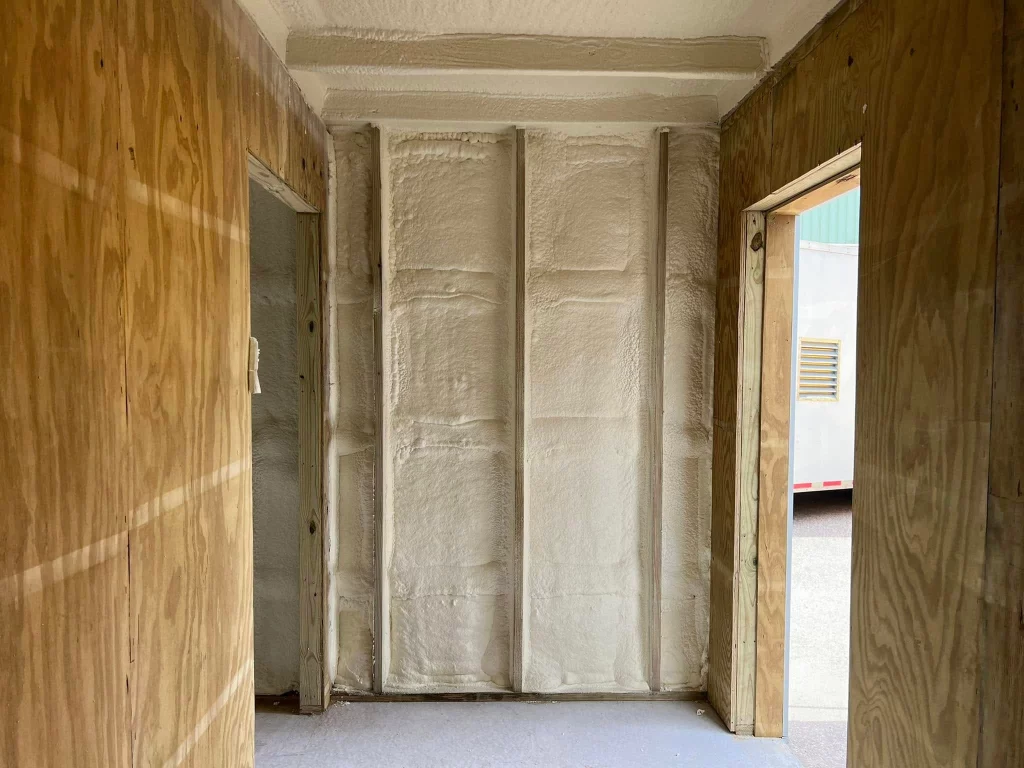
The choice between closed cell and open cell spray foam is not simply about which product has a higher R-value per inch. Each type performs differently in this specific climate. Closed cell foam at approximately R-6 per inch provides both insulation and vapor retardation in a single application, making it ideal for basement walls, crawlspaces, and rim joists where moisture resistance matters. Open cell foam at approximately R-3.6 per inch allows vapor to pass through, which can be advantageous in wall assemblies where drying potential is a concern.
| Property | Closed Cell Spray Foam | Open Cell Spray Foam |
|---|---|---|
| R-value per inch | R-5.5 to R-6.5 | R-3.5 to R-3.6 |
| Vapor permeance | Acts as vapor retarder | Vapor permeable |
| Density | Higher (2.0+ lbs/ft3) | Lower (0.5 lbs/ft3) |
| Best applications | Basements, crawlspaces, rim joists, exterior walls | Interior wall cavities, attics, sound isolation |
| Moisture risk in cold climates | Traps moisture if improperly placed | Allows drying but absorbs water if wet |
The single most effective prevention strategy is choosing an installer who understands building science, not just spray equipment. Our technicians evaluate substrate conditions, ambient temperature, humidity levels, and the entire building assembly before any foam leaves the truck. We measure and verify substrate temperatures, ensure the curing environment is within manufacturer specifications, and confirm that the installed thickness meets the designed R-value for each cavity.
In Sturgeon Bay’s climate zone, the vapor retarder typically belongs on the warm side of the insulation, which is the interior in winter. Closed cell spray foam naturally serves this function when applied to the interior face of walls and ceilings. However, in assemblies where moisture can enter from the exterior, such as below-grade basements or walls with poor exterior drainage, additional water management measures are necessary. The building science consensus is that insulation performance must account for the vapor profile across the entire assembly, not just the insulation layer itself.
Temperature and humidity during application directly affect the quality of the cured foam. When we schedule closed cell spray foam projects in Sturgeon Bay, we factor in the forecast and, when necessary, use temporary climate control to maintain the proper temperature range during application and the critical 24-hour curing window. This prevents incomplete chemical reactions that lead to shrinkage, poor adhesion, and extended off-gassing.
No insulation product is install-and-forget. Closed cell spray foam should be inspected periodically, particularly in areas prone to moisture intrusion such as rim joists, basement band joists, and crawlspaces. Signs of failure include visible gaps between the foam and framing, persistent odors, and unexplained increases in heating costs. Catching these issues early allows for targeted repairs before the underlying structure is compromised.
Proseal Spray Foam brings deep building science knowledge and hands-on installation experience to every project across the Sturgeon Bay area. Our team understands the specific challenges that Wisconsin’s cold, humid climate presents for closed cell spray foam in Sturgeon Bay, WI, and we take the steps necessary to ensure every installation performs as designed for years to come. Whether you need basement wall insulation, crawlspace encapsulation, attic spray foam, or a full building envelope upgrade, we evaluate your property’s unique conditions before recommending the right solution.
Request a Quote | Schedule an Insulation Assessment
Call us at (715) 227-6295 or email [email protected] to get started.
Closed cell spray foam itself does not rot wood, but it can trap moisture against framing if installed improperly or if there are unaddressed water intrusion issues in the building assembly.
Most manufacturers require substrate temperatures above 40 degrees Fahrenheit during application, and our team uses climate control measures when conditions fall outside this range in Sturgeon Bay.
Most off-gassing completes within 24 to 72 hours when the foam cures at the correct temperature, though adequate ventilation during and after application is always recommended.
It can be, particularly for basements, crawlspaces, and rim joists where moisture resistance and high R-value per inch matter most, though a full assessment of existing conditions should come first.
In most applications, closed cell foam at the proper thickness acts as its own vapor retarder, eliminating the need for a separate polyethylene barrier in wall and ceiling assemblies.