What Causes Concrete Slabs to Lose Their Level, and When Is Concrete Lifting Worth It?
Concrete slabs usually lose their level when the soil, base, or other support beneath them settles, shrinks, erodes, or loses…


Concrete slabs usually lose their level when the soil, base, or other support beneath them settles, shrinks, erodes, or loses material. Water and poor drainage can make the problem worse by weakening or washing away supporting material.
Consider concrete lifting when an existing slab is still a reasonable candidate for repair but has settled or lost support underneath. Slabjacking can raise the concrete and fill voids, but it doesn’t automatically fix the underlying soil problem. The cause of the settlement matters just as much as the amount of movement.
A concrete slab depends on the material underneath it for support. If that support changes after the slab is installed, sections of the concrete can settle or shift.
Research from the American Concrete Institute describes slabjacking as a method used when slabs have shifted because of settlement, erosion, flooding, or shrinkage of the soil or base below them. The concrete lifting guidance points to improper soil compaction, soil shrinkage, and sub-base erosion as common conditions associated with lost support.
Soil doesn’t always provide the same support throughout the area beneath a slab. If fill wasn’t compacted properly during construction, the supporting material can settle later.
Settlement can also occur when the properties of the soil change. Some soils shrink as they dry and can swell when they gain moisture. That change in volume can affect the elevation of the material supporting the slab.
The result can be a slab that sits lower in one area than another.
Water is another part of the problem. Excess moisture beneath concrete can contribute to erosion and movement of fine supporting material. Over time, that can leave empty spaces beneath part of the slab.
The Federal Highway Administration explains that water infiltration can contribute to the movement of water and fine materials from beneath concrete pavement, creating voids and loss of support.
That matters because a slab doesn’t need to be completely broken to have a support problem. A section can remain largely intact while the material beneath it changes.
An uneven slab often gives you clues before you know exactly what caused the movement.
Look for:
This is where diagnosis matters. A visible low spot tells us what happened at the surface, but it doesn’t necessarily tell us why the slab moved.
That distinction is important because lifting the concrete addresses its position. It may not correct poor soil, continuing erosion, or another condition that caused the settlement in the first place.
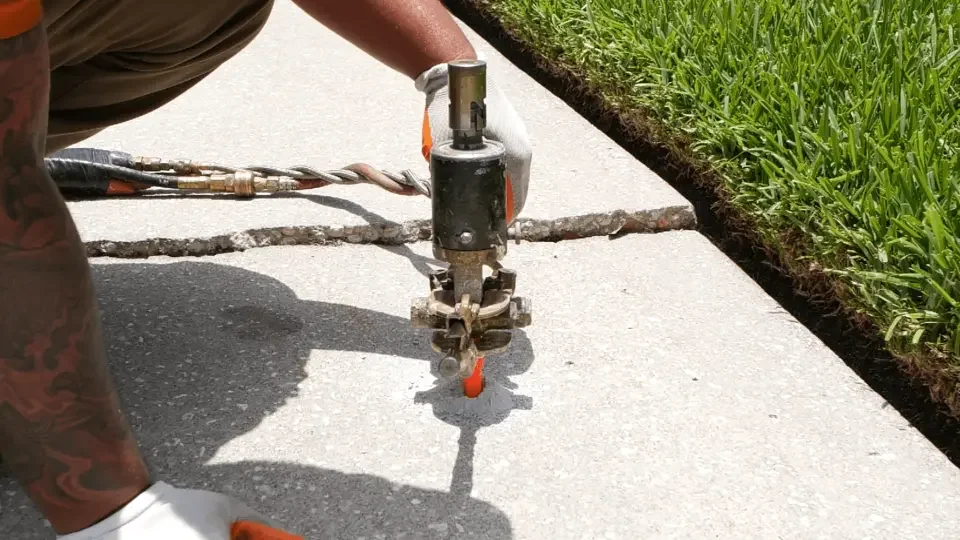
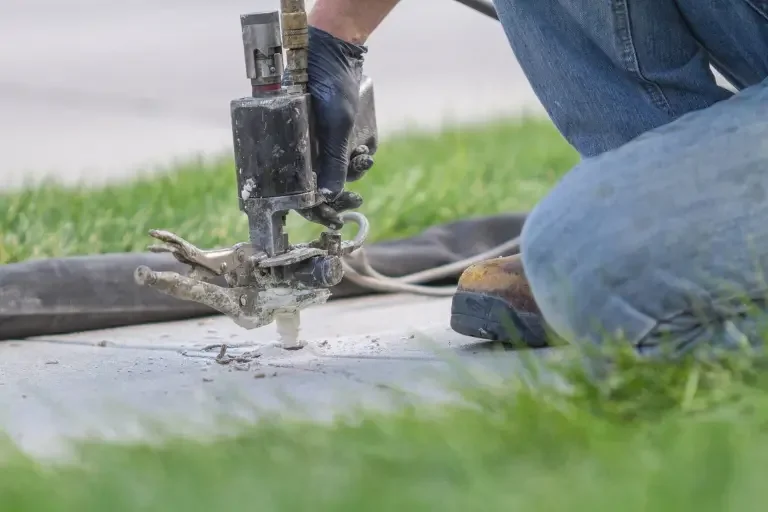
Concrete lifting, also called slabjacking or concrete leveling in some contexts, involves raising an existing slab or filling voids beneath it. ACI describes slabjacking as the process of raising concrete slabs, filling voids beneath them, or doing both by injecting material under pressure.
The basic idea is straightforward: restore support beneath a settled area and bring the slab closer to its intended elevation.
The material and injection method can vary. Cementitious and noncementitious materials can be used for slabjacking, while some projects use polyurethane-based materials. The appropriate approach depends on the slab, the void or settlement problem, and the conditions beneath it.
Concrete lifting is therefore more than simply forcing a slab upward. A good repair starts with understanding why the slab lost support and where that support is missing.
Concrete lifting makes the most sense when the existing slab can reasonably be repaired, and the main problem is settlement or lost support beneath it.
The condition underneath the concrete deserves particular attention. ACI’s repair guidance makes a clear distinction here: slabjacking can level a settled slab, but it doesn’t correct underlying poor soil conditions. Soil conditions should be considered before choosing the method.
A useful evaluation should consider:
| Question | Why It Matters |
|---|---|
| Why did the slab settle? | The cause can determine whether lifting alone is likely to address the problem. |
| Has the supporting material been lost? | Voids or erosion can leave sections without adequate support. |
| What condition is the slab in? | A severely damaged slab may need a different repair approach. |
| Are soil or moisture conditions still changing? | Continued movement can affect the result of a lifting repair. |
| Can the existing slab be reasonably restored? | Not every damaged concrete section is a good candidate for lifting. |
The Iowa State University guide to concrete pavement distress reaches a similar conclusion: slab jacking can be a viable option for settlement, but selecting a repair requires evaluating the cause of the settlement and the condition of the supporting layers.
Not every uneven slab should simply be raised.
If the concrete has significant damage, if the supporting soil remains unstable, or if the cause of the movement hasn’t been addressed, lifting may not solve the full problem. The same applies when the visible settlement is only one part of a larger drainage or foundation-support issue.
That doesn’t mean lifting is ineffective. It means the repair should match the actual failure mechanism.
Raising the surface without understanding the support underneath can treat the symptom while leaving the cause in place.
Before choosing a concrete lifting contractor or repair method, ask what caused the slab to move and what evidence supports that conclusion.
A useful discussion should cover:
We recommend focusing on those questions rather than choosing a repair based only on how quickly the slab can be raised.
A professional repair should have a clear reason behind it. If the explanation is simply “the slab is low, so we’ll lift it,” there is still an important question left unanswered: why did it become low?
If your property has an uneven concrete slab along with concerns about insulation, moisture, or other building-envelope issues, Proseal Spray Foam can be contacted at (715) 227-6295 or [email protected] to discuss the property concerns within our supplied service information.
We don’t want to promise a concrete lifting service that hasn’t been established in the available business information. For a slab that needs lifting, make sure the professional you contact specifically evaluates concrete settlement and the supporting conditions beneath the slab.
In some cases, yes. Slabjacking or concrete lifting can raise a settled slab and fill voids beneath it. Whether it is appropriate depends on the condition of the slab and the cause of the settlement.
Common causes include poor soil compaction, soil shrinkage, settlement, erosion, flooding, and loss of supporting material beneath the slab. Moisture changes can also affect some soils and contribute to movement.
No. Lifting can correct the elevation of a settled slab, but it doesn’t necessarily correct poor soil or another underlying cause. The condition beneath and around the slab should be considered before selecting the repair.
The evaluation should consider why the slab settled, whether support has been lost, the condition of the concrete, and whether soil or drainage conditions could continue affecting the slab. Those factors help determine whether lifting is an appropriate repair.