Blown-In Cellulose Pricing Guide: What Homeowners Have to Pay
Dan Passarella
April 1st, 2026
A complete blown-in cellulose insulation installation usually lands between $2,000 and $10,000 for most homes. Forbes Home pricing data our team tracks puts a typical low project at $2,000, the typical average project at $4,000, and a typical high project at $10,000, and your final number depends on how many square feet need coverage, how deep the material must go, and what local crews charge for labor. Materials alone run $0.40 to $1.00 per square foot, while professional installation adds another $0.50 to $1.50 per square foot on top. If you have been trying to figure out how much does blown in insulation cost in your area, here is the encouraging part: homeowners across the Fox Valley, including Oshkosh, Green Bay, Stevens Point, and Fond du Lac, pay amounts that track almost exactly with national pricing, which makes blown-in cellulose one of the friendliest budgets in the insulation world.
TL;DR
Installed cellulose insulation cost per square foot averages $0.90 to $2.30
Typical low project: $2,000 | Typical average project: $4,000 | Typical high project: $10,000
Expect R-3.5 to R-3.8 for every inch of installed depth
Sealing and insulating with cellulose can cut heating and cooling bills by up to 20%, according to the U.S. Department of Energy
Per square foot, cellulose runs 40 to 60% cheaper than spray foam
Materials alone cost $0.40 to $1.00 per square foot before labor enters the picture
Your climate zone sets the required depth, and depth sets the final bill
The average cost of blown in insulation in the Appleton area stays level with national pricing
What Is Blown-In Cellulose Insulation?
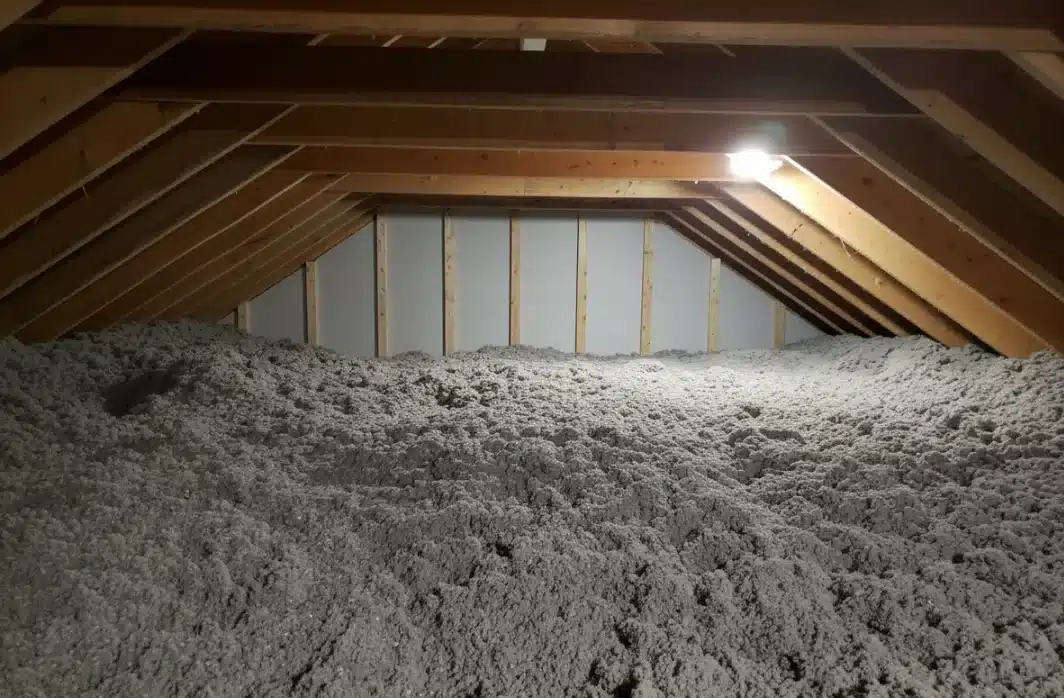
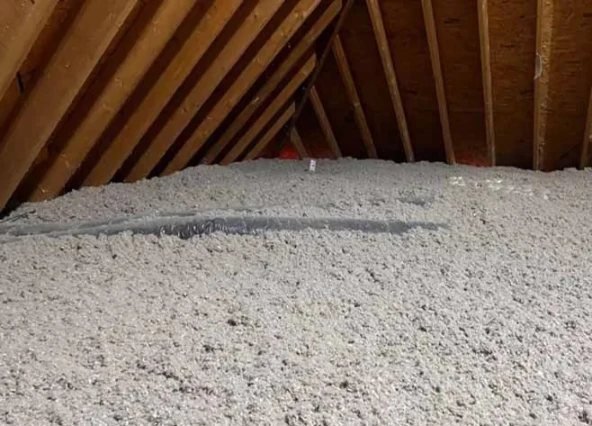
Cellulose begins as recycled paper, mostly old newsprint, treated with borate compounds that protect against fire, mold, and insects. A technician feeds the material through a blowing machine that fills cavities and coats surfaces evenly, reaching attics, walls, and awkward corners that batts simply cannot fill properly. These professional blown-in insulation services help ensure consistent coverage across challenging areas.
According to This Old House, cellulose can also be packed into enclosed wall and ceiling cavities at high density, a method known as dense-pack, tight enough to nearly stop air movement on its own. That density explains why cellulose resists airflow better than fiberglass and absorbs noticeably more sound.
The R-value, which measures thermal resistance, lands around R-3.5 to R-3.8 per inch. That matches fiberglass on paper, yet cellulose often wins in real homes because it fills every gap and void, shutting down the convective loops that form inside wall and ceiling cavities. Homeowners in a popular Reddit thread on r/HomeImprovement about whether blow-in cellulose is worth it reached a similar verdict: strong performance for the money, especially in attics.
Blown In Cellulose Insulation Cost by Project Area
Where the material goes changes what you pay. Attics remain the most common and cheapest application, while walls demand more labor and specialized equipment.
Project Area
Cost Per Sq Ft
Typical Project Cost
R-Value Achieved (10″ depth)
Open-blow attic
$0.90 – $1.50
$2,000 – $4,000
R-35 to R-38
Dense-pack wall cavities
$1.50 – $2.30
$4,000 – $10,000
R-35 to R-38
Floors and crawl spaces
$1.20 – $2.00
$2,000 – $6,000
R-30 to R-38
Existing wall retrofit
$2.00 – $3.00
$4,000 – $10,000
R-35 to R-38
The cost to blown-in insulation in walls runs higher for a reason. The material must be pneumatically packed to a calculated density inside closed cavities so it will not settle later, which means drilling access holes, blowing to spec, then patching and finishing every opening. Dense pack cellulose insulation cost sits at the top of the range for exactly this reason. Answers from insulation contractors on Quora, where homeowners asked about the risks of blown cellulose on older houses, describe dense-pack as the best performer in its class, with nothing worse than minor settling over the years.
Blown In Insulation Cost Per Square Foot: Materials vs. Labor
Splitting the blow in insulation cost per square foot into product and labor makes any quote far easier to judge.
Cost Item
Price Range
Share of Total
Cellulose material (bags)
$0.40 – $1.00 per sq ft
35% – 45%
Labor and equipment
$0.50 – $1.50 per sq ft
40% – 50%
Prep work and cleanup
$200 – $600 flat
10% – 15%
Access holes and patching (walls)
$300 – $800 flat
Added to wall retrofits
Fixr reports the cost to install blown in insulation at $1.67 to $2.92 per square foot, with the final number shaped by site conditions, accessibility, and whether the job is new construction or a retrofit into existing walls. Bob Vila reports national averages in a comparable band, with labor usually claiming the larger share of the invoice. Labor rates in the Appleton and Green Bay markets stay competitive next to bigger metro areas, which keeps total project costs at or slightly under national averages.
One warning worth borrowing from Quora discussions: the installed height of blown-in material can be faked by an unscrupulous installer, and settling makes short coverage even shorter. Ask for depth rulers in the attic and a bag count on your invoice so you can verify what you actually received.
Fiberglass vs Cellulose Blown Insulation Cost
The fiberglass vs cellulose blown insulation cost debate comes up in almost every homeowner forum, and the honest answer is that price alone rarely settles it.
Insulation Type
Cost Per Sq Ft
R-Value Per Inch
Air Sealing
Best Application
Blown-in cellulose
$0.90 – $2.30
3.5 – 3.8
Moderate
Attics, walls, retrofits
Blown-in fiberglass
$0.80 – $1.80
2.2 – 2.7
Low
Attics, open spaces
Open-cell spray foam
$1.50 – $3.50
3.5 – 3.7
High
Walls, crawl spaces
Closed-cell spray foam
$2.50 – $5.00
6.0 – 6.5
Very High
Basements, rim joists
Per This Old House, spray foam typically costs two to three times more than cellulose, though foam doubles as an air barrier, which cellulose cannot claim on its own. Even so, cellulose pushes back against airflow thanks to its dense, fibrous makeup, and it beats fiberglass on that count in side-by-side testing. The cost of cellulose insulation per square foot sits below open-cell spray foam while delivering a similar R-value per inch and better real-world performance than fiberglass. Whether your home is in Fond du Lac, Stevens Point, or anywhere between, cellulose remains one of the smartest insulation upgrades for the money.
What Drives Your Cellulose Insulation Cost Up or Down?
Every project is different. These variables move your final price the most.
Climate zone and target R-value: Northern zones need more depth. Energy Star recommends R-38 to R-60 for attics in northern U.S. zones, while southern zones may only call for R-30. More depth means more material and a bigger invoice.
Work area and access: Wide-open attics are the cheapest to insulate. Tight crawl spaces, knee walls, and crowded wall cavities slow the crew down and raise labor costs.
Depth of existing insulation: If your attic already holds usable insulation, a top-off layer may be all you need, which trims both material and labor.
Air sealing before the blow: Cellulose blocks neither air nor vapor on its own. Most professionals recommend air sealing first. It adds cost and multiplies performance.
Removing old insulation: Damaged, moldy, or pest-contaminated insulation must go first, and removal adds $1.00 to $2.50 per square foot.
Local labor rates: The Northeast and Pacific Northwest run 20 to 40% above national averages. Here in the Appleton area and across nearby communities like Green Bay, Oshkosh, Fond du Lac, and Stevens Point, pricing stays close to the national line, which works in your favor.
Spend ten minutes on Reddit or Quora and the same handful of cellulose complaints surface again and again. The pattern matters, because nearly all of these issues trace back to installation shortcuts rather than the material itself.
Homeowner Complaint (Reddit and Quora)
Why It Happens
The Fix
Settling thins out R-value
Loose fill compacts over time, and shallow installs make it worse
Blow 10 to 20% past the target depth and verify with attic rulers
Dust appears in the living space
Unsealed ceiling penetrations and recessed lights pull fibers downward
Air seal the attic floor and dam around fixtures before the blow
Mold shows up on attic sheathing
Bath fans vent into the attic, roof leaks, or blocked soffit vents trap moisture
Install baffles, dams, and fixture covers before installation day
The attic becomes a mess during renovations
Loose fill is hard to move and nearly impossible to fluff back up
Finish wiring and HVAC work before insulating, not after
Installed depth falls short of the quote
No depth verification on the job
Request a bag count on the invoice and check depth rulers yourself
where a homeowner reported mold after a fresh insulation job, all point to the same playbook from professionals: find and fix the moisture source first, treat the mold, and bring the installer back to the table. Users who have lived with the material for years describe it as essentially permanent as long as it stays dry, with the caveat that it is dusty to handle, so air sealing and clean work habits matter. Anyone disturbing the material during a DIY project should wear an N95 respirator and goggles.
Blown In Insulation Cost Guide
Real-World Cost Examples
Want a realistic price for blown in insulation before you start collecting quotes? These project snapshots cover the most common scenarios our team sees.
Scenario
Location
Project Size
Estimated Cost
Attic top-off over existing insulation
Appleton-area suburb
1,200 sq ft
$2,000 (Low)
Full attic insulation, new construction
Southeast U.S.
1,500 sq ft
$4,000 (Average)
Dense-pack wall retrofit, existing home
Northeast U.S.
800 sq ft of wall
$6,000 – $10,000 (High)
Attic removal and replacement
Pacific Northwest
1,000 sq ft
$4,000 – $7,000
Full attic and crawl space combo
Oshkosh / Green Bay region
2,000 sq ft total
$8,000 – $10,000 (High)
Attic and floor insulation bundle
Fond du Lac / Stevens Point
1,800 sq ft total
$5,000 – $7,000 (Average to High)
These figures reflect installed prices from professional crews and cover materials, labor, equipment, and standard cleanup. Your own numbers will shift with the conditions inside your home and the going rates in your market.
Is Blown-In Cellulose Right for Your Home?
This material fits well when:
Your attic holds little or outdated insulation and needs an affordable upgrade
Wall cavities in an existing home need filling without tearing out drywall
You want a greener product built from 80%+ recycled content
Quieter rooms and floors matter as much as lower energy bills
Your budget cannot stretch to spray foam prices
This material is the wrong call when:
Your home has major air leakage that needs sealing first, since air sealing should come before any loose fill
A basement or crawl space needs a vapor barrier or dedicated moisture control
Your budget covers spray foam and you want maximum R-value per inch with built-in air sealing
Extreme humidity makes moisture management the top priority in your region
The Real Question: What Does It Cost to Do Nothing?
Most people researching cellulose pricing are really asking whether the investment pays off. The sharper question is what an under-insulated home drains from your wallet every month.
Per the U.S. Department of Energy, adding insulation to attics, floors, and crawl spaces can save homeowners up to 20% on heating and cooling, or about 10% on total energy costs. For a household spending $2,400 a year on heating and cooling, that equals $480 slipping away annually.
Stretch that across 20 years and inadequate insulation burns through $9,600 or more, before counting comfort loss, extra wear on the HVAC system, and the moisture risks created by temperature swings inside wall and ceiling assemblies. A cellulose project at the typical average price of $4,000 pays for itself within 5 to 7 years in most climates, then keeps returning value for the life of the home. Wisconsin’s long, brutal winters make this math even stronger for homeowners in Appleton, Green Bay, Oshkosh, and Fond du Lac, and residents around Stevens Point see the same payoff across an extended heating season.
Visual Suggestions for Designers
Bar Chart: “Cost Per Square Foot: Cellulose vs. Fiberglass vs. Spray Foam” showing installed prices across the three material families.
Pie Chart: “Where the Insulation Dollar Goes” splitting materials, labor, and prep on a typical cellulose job.
Line Graph: “Cumulative Energy Savings Over Time” charting the payback period on a $4,000 average installation at 15% annual savings.
Get an Accurate Quote for Your Home
General pricing is useful, but your home has its own conditions that shape the final number. At Proseal Spray Foam, we inspect your current insulation, measure your existing R-value, and quote transparent pricing with no buried fees. We serve Appleton and the surrounding area, including Green Bay, Oshkosh, Stevens Point, and Fond du Lac, so if you have been searching for cellulose insulation near me and want a straight answer, our team is ready with attic top-offs, full wall retrofits, and complete insulation overhauls backed by years of hands-on experience in both cellulose and spray foam.
Installed correctly and kept dry, blown-in cellulose performs for 30 to 50 years. The borate treatment resists mold and insects, and seasonal humidity around Appleton, Green Bay, Oshkosh, Stevens Point, and Fond du Lac only becomes a problem when attic ventilation is blocked or a leak goes unrepaired.
Can I install blown-in cellulose myself?
Open attics are a realistic DIY job with a rented blowing machine, but dense-pack walls demand professional equipment to hit the correct density. DIY attic work saves 30 to 50% on labor, and you should wear an N95 respirator and goggles, since the material is dusty to handle.
Does cellulose insulation settle over time?
A little. Loose fill loses roughly 1 to 2% of its installed depth in the early years, which quality installers offset by blowing slightly past the target R-value. Dense-pack walls settle even less because the material is compressed to a set density that resists further movement.
Is blown-in cellulose fire resistant?
Yes. Every cellulose product sold in the United States must meet ASTM C739 fire safety standards, and the borate treatment earns it a Class 1 fire rating. Some fire testing even shows cellulose-insulated wall assemblies slow flame spread better than fiberglass assemblies.
How does cellulose compare to fiberglass for sound control?
Cellulose wins. Its higher density and finer fibers absorb more sound, which makes it a favorite for interior walls between bedrooms, home offices, and media rooms where quiet matters as much as temperature.
I’m Dan Passarella, owner of Proseal Spray Foam, serving Wisconsin since July. I provide spray foam solutions for residential, commercial, and industrial properties, focusing on efficiency, comfort, and quality workmanship.
Better insulation supports consistent indoor temperatures in Ashwaubenon, WI by slowing heat transfer through your attic, walls, floors, and crawlspaces…