Does blown-in cellulose stop attic mold growth better than batts in Fox Crossing, WI
Dan Passarella
June 8th, 2026
Blown-in cellulose insulation does offer better resistance to attic mold growth than fiberglass batts, but the real story is more layered than just picking one material. Cellulose is treated with borate-based compounds that actively suppress mold and fungal growth, while its dense, fibrous fill blocks air infiltration and eliminates the gaps and voids where condensation commonly forms behind poorly fitted batts. Many homeowners exploring spray foam insulation in Fox Crossing, WI compare these moisture-control benefits when evaluating attic insulation options. In a climate where Wisconsin’s cold winters drive warm indoor air into the attic and create prime conditions for condensation, the material you choose matters, but so does air sealing, ventilation, and proper installation. Neither insulation type will stop mold on its own if moisture problems go unaddressed, but cellulose has several physical and chemical advantages that make it the stronger performer in a cold-climate attic environment.
TL;DR
Cellulose is treated with boric acid and sodium borate, which provide mold-inhibiting properties that fiberglass batts lack entirely
Blown-in cellulose fills gaps, voids, and irregular spaces that batts leave open, reducing air infiltration and the cold spots where condensation forms
Oak Ridge National Laboratory research showed loose-fill fiberglass loses up to 50% of its R-value in extreme cold due to air convection, while cellulose maintains its thermal performance
Wisconsin’s cold climate (IECC Climate Zone 6 or 7 for the Fox Crossing area) makes the insulation material and air sealing approach especially important
The EPA states that moisture control is the key to mold control, so ventilation and air sealing remain essential regardless of insulation type
Blown-in cellulose attic insulation for the Fox Crossing area typically ranges from $2,000 to $10,000, depending on project scope and thickness
Why Fox Crossing Homes Face a Higher Mold Risk
Fox Crossing sits in northeastern Wisconsin, an area that falls within IECC Climate Zone 6 or 7, where winter temperatures regularly drop well below freezing and heating seasons stretch for six months or longer. That extended heating season creates a persistent stack effect: warm, moisture-laden air rises from the living space into the attic through any gaps around recessed lights, plumbing penetrations, and electrical runs. When that warm air hits cold roof sheathing, condensation forms. Over time, that moisture soaks into insulation, wood framing, and ceiling drywall, creating the conditions mold needs to thrive.
The EPA’s Mold Course explains that mold can grow on virtually any organic material, including insulation, as long as moisture and oxygen are present. In Wisconsin attics, the combination of indoor humidity migrating upward and cold exterior surfaces makes condensation a recurring problem. The insulation layer itself becomes a factor in whether that moisture accumulates or gets managed properly.
Cellulose vs. Batts: How They Handle Moisture and Mold
The difference between these two materials goes beyond how they look or how they get installed. The way each one interacts with moisture, air movement, and temperature is what determines its mold resistance.
Factor
Blown-In Cellulose
Fiberglass Batts
Mold-resistant treatment
Borate compounds actively suppress mold and fungal organisms
No chemical mold resistance
Air sealing
Dense fill (1.5-3.5 lbs/cu ft) seals cracks and gaps
Gaps and voids around framing, pipes, and fixtures are common
R-value in cold climates
Maintains R-3.6 to R-3.8 per inch, even in extreme cold
Can lose up to 50% R-value in subzero conditions due to convection
Moisture interaction
Absorbs limited moisture but dries more readily; borates inhibit fungal growth
Traps moisture in gaps and voids; does not absorb but holds humidity against surfaces
Installation consistency
Machine-blown, fills irregular cavities evenly
Requires precise cutting and fitting; prone to gaps and compression
Borate Treatment: The Active Defense
Cellulose insulation is made primarily from recycled newspaper, but before it reaches your attic, the fibers are treated with a mixture of boric acid, sodium borate, and ammonium sulfate. These compounds serve as fire retardants, but boric acid and sodium borate also function as antifungal agents. They actively suppress the growth of mold and mildew organisms within the insulation itself.
Fiberglass batts, by contrast, are made from spun glass fibers bonded with a resin. They contain no chemical treatment that inhibits mold growth. While fiberglass itself is inorganic and does not support mold as a food source, mold frequently colonizes the dust, organic debris, and wood particles that settle on and around batt surfaces. The EPA notes that mold can grow on insulation, particularly in areas where moisture accumulates due to condensation or leaks.
Air Infiltration: Where Batts Fall Short
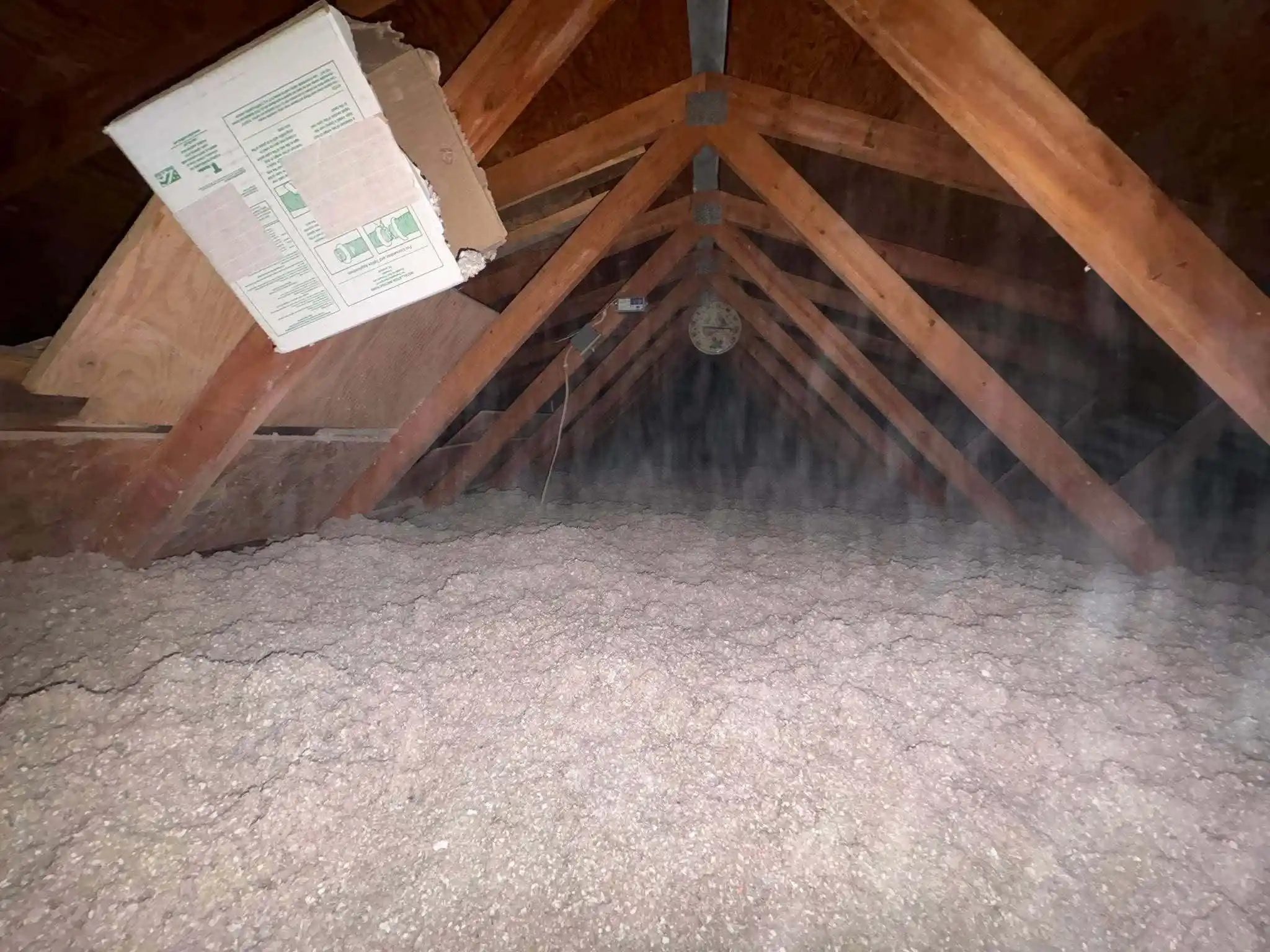
The most practical advantage of blown-in cellulose is how it fills the attic floor. A hose and blowing machine deposit cellulose at a consistent density across the entire surface, flowing around joists, wiring, ductwork, and penetrations. Homeowners comparing insulation options often consider blown-in cellulose insulation costs alongside these performance benefits. Fiberglass batts, even when installed by careful professionals, leave small gaps around obstacles and between batt ends. Those gaps allow warm, humid air from the living space to pass through the insulation layer and contact the cold roof sheathing directly. That is exactly where condensation starts and where mold begins to grow.
Research from the University of Colorado found that cellulose-insulated test structures were 74% more airtight than uninsulated buildings, while fiberglass-insulated structures were only 41% more airtight. That difference in air sealing directly translates to fewer condensation points and less moisture available for mold growth.
Cold Climate Performance: Why It Matters in Fox Crossing
Oak Ridge National Laboratory conducted some of the most widely referenced research on attic insulation performance in cold climates. Their work found that at very cold temperatures, loose-fill fiberglass loses significant R-value, sometimes up to 50%, because air convection currents develop within the insulation layer. These findings highlight the importance of blown-in insulation energy efficiency when selecting materials for colder climates. Those currents carry heat away from the ceiling and reduce the insulation’s ability to maintain warm surface temperatures on the interior side.
When the insulation performs poorly, the ceiling surface stays colder, which increases the temperature differential between the attic space and the living area. That larger differential drives more condensation. Cellulose insulation, with its higher density and fibrous structure, blocks those convection currents and maintains its R-value more consistently in cold conditions.
Wisconsin’s SPS 322 building code requires R-38 minimum insulation for ceilings with unconditioned attic spaces. Meeting that target with a material that degrades in cold weather leaves homeowners with less protection than the code assumes. Cellulose holds up better under the conditions that matter most in the Fox Crossing area.
What Neither Material Fixes on Its Own
It is worth being direct: no insulation material stops attic mold growth if the attic has uncontrolled moisture. The OSHA mold prevention guidelines emphasize that moisture control is the key to mold control, and that wet areas must be dried within 24 to 48 hours to prevent mold growth. Insulation is one part of the system, not the whole solution.
For cellulose or batts to perform as intended in a Fox Crossing attic, the following conditions need to be in place:
Air sealing at the ceiling plane: All penetrations, gaps, and openings between the living space and attic should be sealed before insulation is installed
Proper attic ventilation: Soffit vents, ridge vents, or gable end vents allow moist air to exit the attic and prevent humidity buildup
Bathroom and kitchen exhaust venting: Dryers, range hoods, and bathroom fans must vent to the exterior, never into the attic space
No roof leaks or ice dams: Water intrusion from above will overwhelm any insulation’s ability to prevent mold
Correct vapor barrier placement: In Wisconsin’s cold climate, a vapor retarder on the warm side (interior) of the ceiling assembly helps limit moisture migration into the attic
Which Approach Fits Your Situation
Your Situation
Recommended Approach
Reasoning
Older Fox Crossing home with uneven joist spacing
Blown-in cellulose
Fills irregular cavities that batts cannot cover completely
New construction with an open, accessible attic floor
Either option works
Batts can be installed cleanly if the framing is standard and obstacles are minimal
Existing batts with visible gaps or settling
Blown-in cellulose over existing batts
Dense cellulose fills the voids left by poorly fitted batts
History of attic condensation or mildew
Blown-in cellulose with upgraded air sealing
Borate treatment plus better air blocking addresses both the symptom and the cause
Budget-constrained retrofit
Blown-in cellulose
Lower material cost and faster installation for standard attic floor applications
Signs You Have Found the Right Insulation Contractor
Choosing the right installer in the Fox Crossing area matters as much as choosing the right material. Look for these indicators:
The contractor performs a thorough inspection of your attic before recommending any product, checking for existing mold, air leaks, ventilation adequacy, and moisture damage
The recommendation includes air sealing as part of the scope, not just insulation dumped over existing problems
The contractor explains why a specific material and R-value target make sense for your home, rather than pushing a single product on every job
Pricing is transparent and itemized, showing what you are paying for in terms of insulation type, thickness, and any preparatory work
The crew uses calibrated blowing equipment and verifies the installed depth and coverage before leaving
Get a Professional Assessment for Your Fox Crossing Attic
Proseal Spray Foam has extensive experience evaluating and insulating attics across the Fox Crossing area. Whether you are dealing with recurring condensation, visible mold, or simply want to upgrade underperforming insulation, our team will inspect your attic, identify moisture and air sealing issues, and recommend the right solution for your home and budget.
Call us at (715) 227-6295 or email [email protected] to get started. We serve homeowners throughout the Fox Crossing region and surrounding communities with honest recommendations and quality installations.
Frequently Asked Questions
Can blown-in cellulose get moldy if it gets wet?
Cellulose can support mold growth if it remains saturated for an extended period, but the borate treatment inhibits fungal growth under normal moisture conditions. The key is fixing any water intrusion promptly and ensuring proper attic ventilation.
Should I remove my old fiberglass batts before installing cellulose?
In most cases, existing batts can stay in place, and cellulose can be blown directly over them. However, if the existing batts show signs of mold, pest damage, or heavy compression from moisture, removal is the safer option.
How does Wisconsin’s climate zone affect my insulation choice?
Fox Crossing falls within IECC Climate Zone 6 or 7, which requires a minimum of R-49 for ceilings in new construction under the 2015 IECC. Cold-climate performance matters because convection losses in fiberglass become more pronounced at low temperatures.
Is the borate treatment in cellulose safe for my family?
Borate-treated cellulose has been used in residential attics for decades and is generally considered safe for occupants. The treatment is bonded within the insulation fibers and does not off-gas into the living space.
Will adding more insulation alone solve my attic mold problem?
Adding insulation without addressing air sealing and ventilation will not fix mold. The EPA and OSHA both emphasize that moisture control is the primary defense against mold, and insulation alone cannot stop condensation if warm air keeps leaking into the attic.
OSHA – A Brief Guide to Mold in the Workplace – Federal workplace mold prevention guidelines covering moisture control, remediation, and the relationship between insulation, condensation, and fungal growth.
I’m Dan Passarella, owner of Proseal Spray Foam, serving Wisconsin since July. I provide spray foam solutions for residential, commercial, and industrial properties, focusing on efficiency, comfort, and quality workmanship.
Better insulation supports consistent indoor temperatures in Ashwaubenon, WI by slowing heat transfer through your attic, walls, floors, and crawlspaces…