How Much Does Blown-In Cellulose Insulation Cost and What Determines the Price?
Installing blown-in cellulose insulation costs typically start from $1.67 to $2.92 per square foot, though your final price will depend…

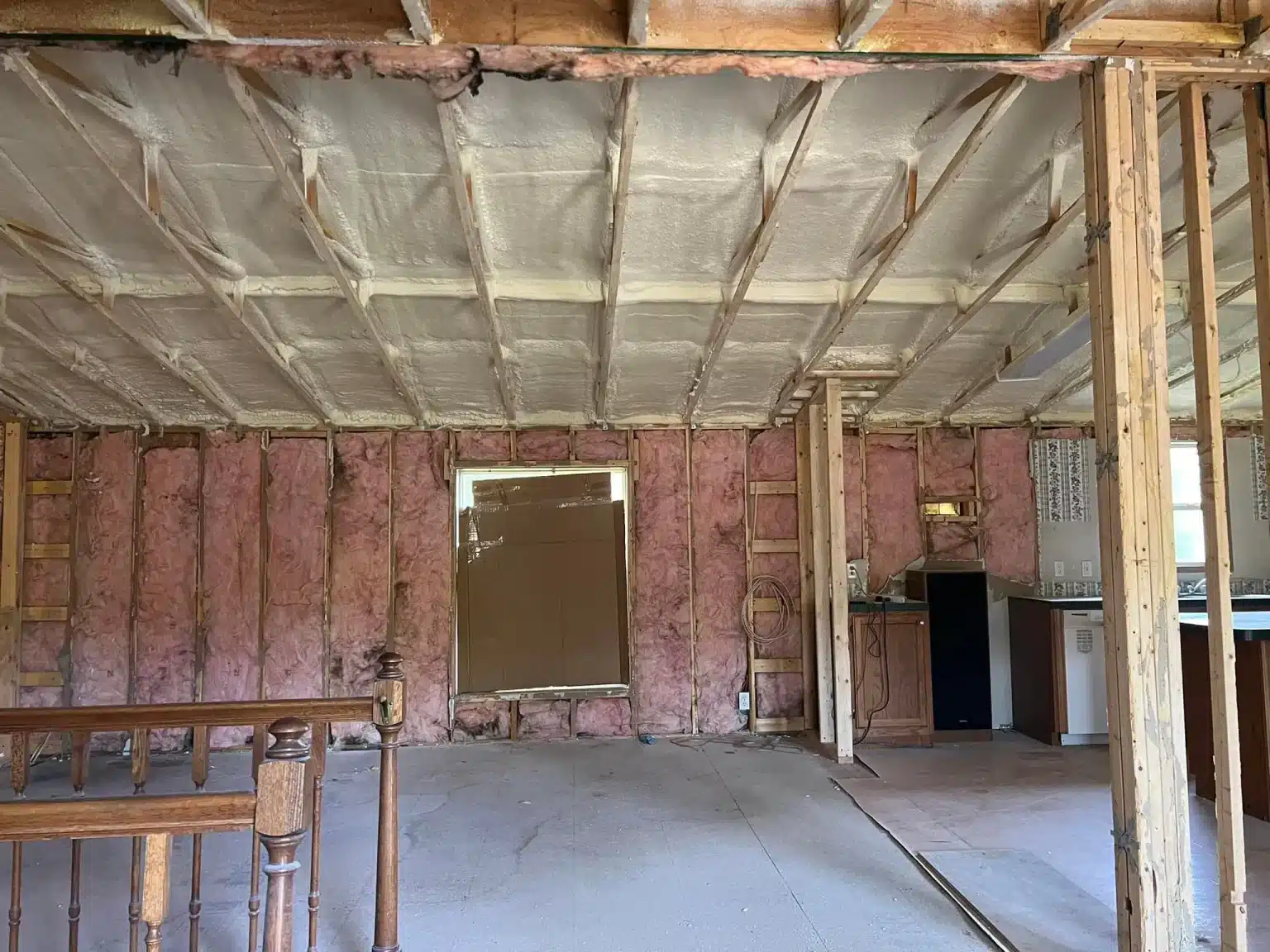
Wet insulation is not a cosmetic problem that resolves on its own. When insulation in any Shawano, WI home absorbs moisture, it begins a chain reaction that damages energy efficiency, indoor air quality, and structural integrity. The right response depends on the type of insulation, the extent of water exposure, and how quickly the issue is identified and corrected. Ignoring wet insulation means accepting higher utility bills, potential mold growth, and the possibility of rot in wood framing, all of which escalate in severity the longer they go unaddressed. This guide covers the specific risks Shawano homeowners face, how different insulation types respond to moisture, and what to do when you discover a problem.
Insulation works by trapping tiny pockets of still air that slow heat transfer. When water enters those pockets, everything changes. Water conducts heat roughly 23 times faster than still air, so even a small amount of moisture dramatically reduces thermal resistance. Fiberglass insulation that accumulates just 1.5% moisture content can lose up to half of its R-value. That loss is permanent in many cases because wet fiberglass tends to sag, compress, and lose its loft even after drying.
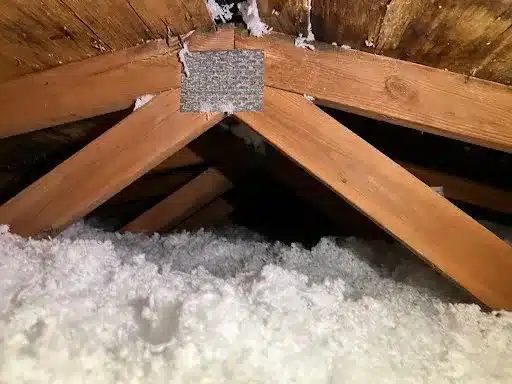
Cellulose insulation presents a similar problem. Made from recycled paper treated with fire retardants, cellulose absorbs moisture like a sponge. Once saturated, it clumps, settles, and creates voids in wall cavities. Even if it appears dry on the surface, trapped moisture inside the material continues to degrade its effectiveness and feed biological growth.
The practical impact for Shawano homeowners is direct. Wisconsin requires specific R-values for ceilings, walls, basements, and crawl spaces under Chapter SPS 322 of the state administrative code. When insulation is compromised by moisture, your home falls below those thermal performance standards, your heating system runs longer to compensate, and you pay for the difference every month through the winter heating season.
The health consequences of wet insulation stem primarily from mold growth. The EPA states that mold produces allergens, irritants, and in some cases potentially toxic substances. Inhaling or touching mold spores can trigger allergic reactions including sneezing, runny nose, red eyes, and skin rash. For people with asthma, mold exposure can set off attacks. Even individuals without mold allergies may experience irritation of the eyes, skin, nose, and throat.
The CDC adds that exposure to damp and moldy environments may cause a variety of health effects, and in 2004 the Institute of Medicine found sufficient evidence to link indoor mold with upper respiratory tract symptoms, coughing, and wheezing in otherwise healthy people. Children, the elderly, and individuals with chronic lung conditions face the greatest risk.
The EPA’s Brief Guide to Mold, Moisture, and Your Home emphasizes that drying water-damaged areas within 24 to 48 hours is critical to preventing mold growth. Once mold colonizes wet insulation, it spreads quickly through wall cavities and attic spaces, contaminating indoor air that circulates through your entire home. The Environmental Law Institute notes that the more extensive the dampness and mold, the greater the risk of health effects, including respiratory infections, allergic rhinitis, and difficulty breathing.
Beyond energy loss and health concerns, wet insulation threatens the physical structure of your home. When moisture becomes trapped in wall cavities or attic spaces, wood framing members absorb water and begin to rot. The sheathing behind exterior siding softens, fasteners corrode, and drywall can weaken and crumble.
In Shawano’s climate, the freeze-thaw cycle adds another layer of damage. Moisture that accumulates in wall assemblies can freeze during cold snaps, expand, and create cracks that let even more water in during spring thaws and summer storms. Over time, this cycle compounds structural damage in ways that are expensive and disruptive to repair.
Box sill and rim joist areas are especially vulnerable. Wisconsin’s code specifically calls for air-impermeable insulation sealed on all sides in these locations because they are common entry points for moisture and air infiltration. When standard insulation in these areas gets wet, the damage often extends to the floor framing above, which can require significant carpentry work to correct.
Not all insulation installation responds to moisture the same way. Understanding the differences helps you evaluate your home’s vulnerability and make informed decisions about replacement materials.
| Insulation Type | Moisture Absorption | R-Value When Wet | Mold Risk | Recovery Potential |
|---|---|---|---|---|
| Fiberglass batts | Absorbs and holds moisture | Drops up to 50% | High | Poor, often needs replacement |
| Cellulose (blown-in) | Absorbs heavily like a sponge | Drops up to 50% or more | Very high | Very poor, almost always replaced |
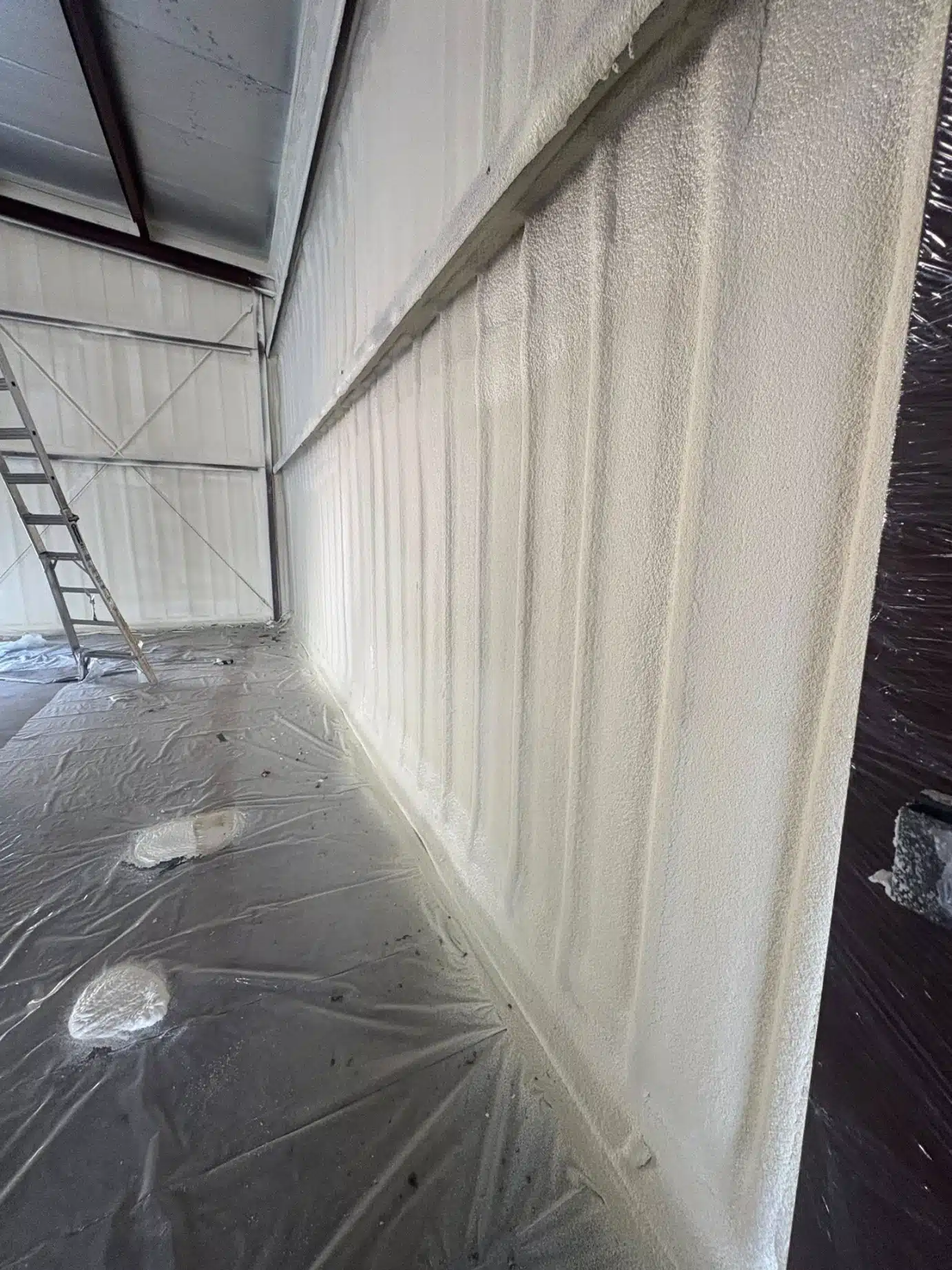
| Closed-cell spray foam | Does not absorb water | Maintains R-value | Very low | Excellent, water-resistant |
| Open-cell spray foam | Absorbs some moisture | Reduced when saturated | Moderate | Fair to poor if saturated |
Closed-cell spray foam stands apart because it acts as both an insulator and a moisture barrier. Its closed-cell structure prevents water absorption, which means it maintains thermal performance even in flood-prone or high-humidity conditions. Wisconsin’s building code even acknowledges this by reducing vapor retarder requirements when spray foam with a perm rating of 1.0 or less provides at least 50% of the required R-value in a cavity.
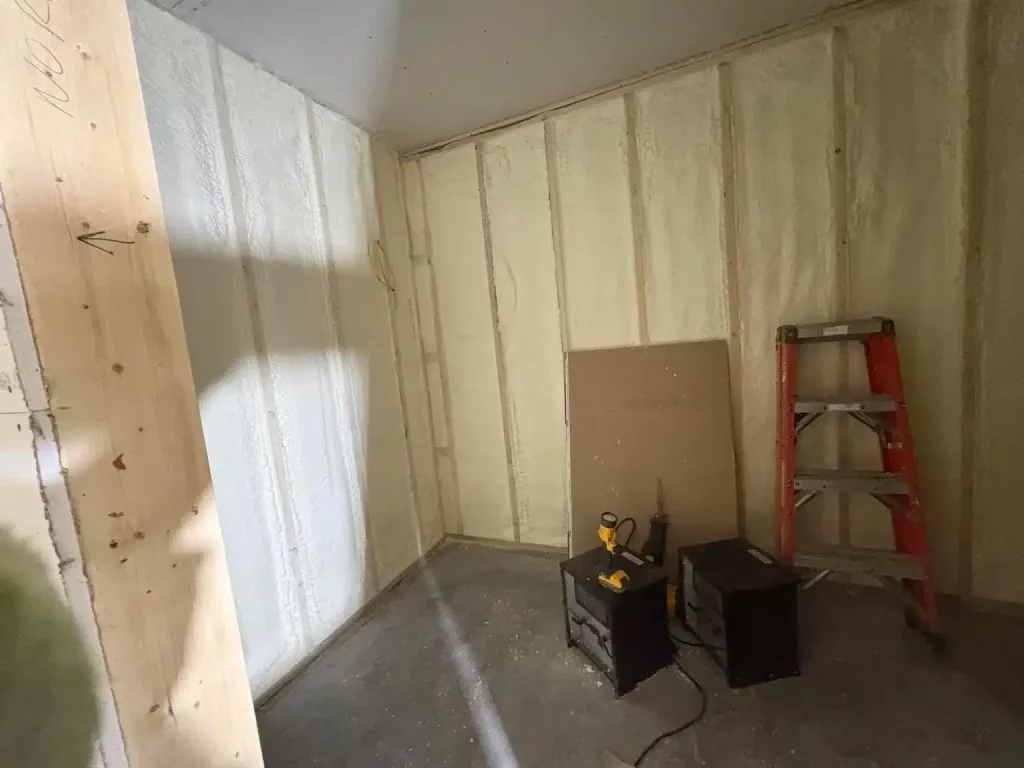
Understanding where the water comes from helps you catch problems early. The most frequent culprits in Shawano-area homes include:
Many of these sources develop gradually, which is why homeowners often discover the damage only after insulation performance has already degraded and mold colonies are established.
The first step is identifying the moisture source and stopping it. No insulation repair will hold if water continues to enter the space. Once the source is addressed, the damaged insulation needs to be assessed by a professional who can determine whether it can be dried and restored or must be removed and replaced.
For fiberglass or cellulose insulation that has been wet for more than a few days, replacement is almost always the safest choice. Even if the material appears dry, embedded mold spores and compressed fibers mean the R-value will never return to its original rating. In these situations, removing the compromised insulation, treating the cavity, and installing new material provides the most reliable result.
Addressing moisture issues before they cause insulation damage is far less disruptive and far more cost-effective than dealing with the consequences. Proper vapor retarders, adequate ventilation, and air sealing at joints and penetrations all work together to keep insulation dry and performing as designed. Wisconsin’s code requirements exist because the state has long recognized that moisture control is the foundation of effective insulation performance and healthy indoor environments.
Choosing the right professional to address wet insulation in Shawano, WI issues matters. Look for a team that communicates clearly about the moisture source, explains why specific materials are recommended for your situation, and provides a straightforward assessment rather than pressuring you into unnecessary work. A strong partner will evaluate your entire building envelope, not just the affected area, and will take the time to explain how their solution prevents future moisture problems rather than simply replacing damaged material.
Proseal Spray Foam provides expert insulation evaluation and replacement for homeowners throughout the Shawano, WI area. Our team identifies moisture sources, removes compromised insulation, and installs closed-cell spray foam that resists water absorption and protects against future mold growth. Reach out to us today to discuss your situation and get started with a plan that keeps your home dry, efficient, and healthy.
Request a Quote | Schedule an Inspection
Call us at (715) 227-6295 or email [email protected] to speak with our team directly.
Fiberglass can technically dry out, but it usually loses loft and structure in the process, reducing its R-value by 20% to 40% permanently. In most cases, replacement is the better option.
According to the EPA, mold can begin growing on wet materials within 24 to 48 hours. Acting quickly to dry or remove wet insulation is the most effective way to prevent colonization.
Closed-cell spray foam does not absorb water and does not support mold growth, making it well-suited for basements, crawl spaces, and other areas where moisture is a recurring concern.
Coverage depends on your policy and the cause of the water damage. Review your policy terms and contact your insurance provider to understand what is and is not covered.
Warning signs include persistent musty odors, unexplained increases in heating bills, visible mold on walls or ceilings near the affected area, and cold spots that indicate thermal performance has dropped.