How Much Does Blown-In Cellulose Insulation Cost and What Determines the Price?
Installing blown-in cellulose insulation costs typically start from $1.67 to $2.92 per square foot, though your final price will depend…

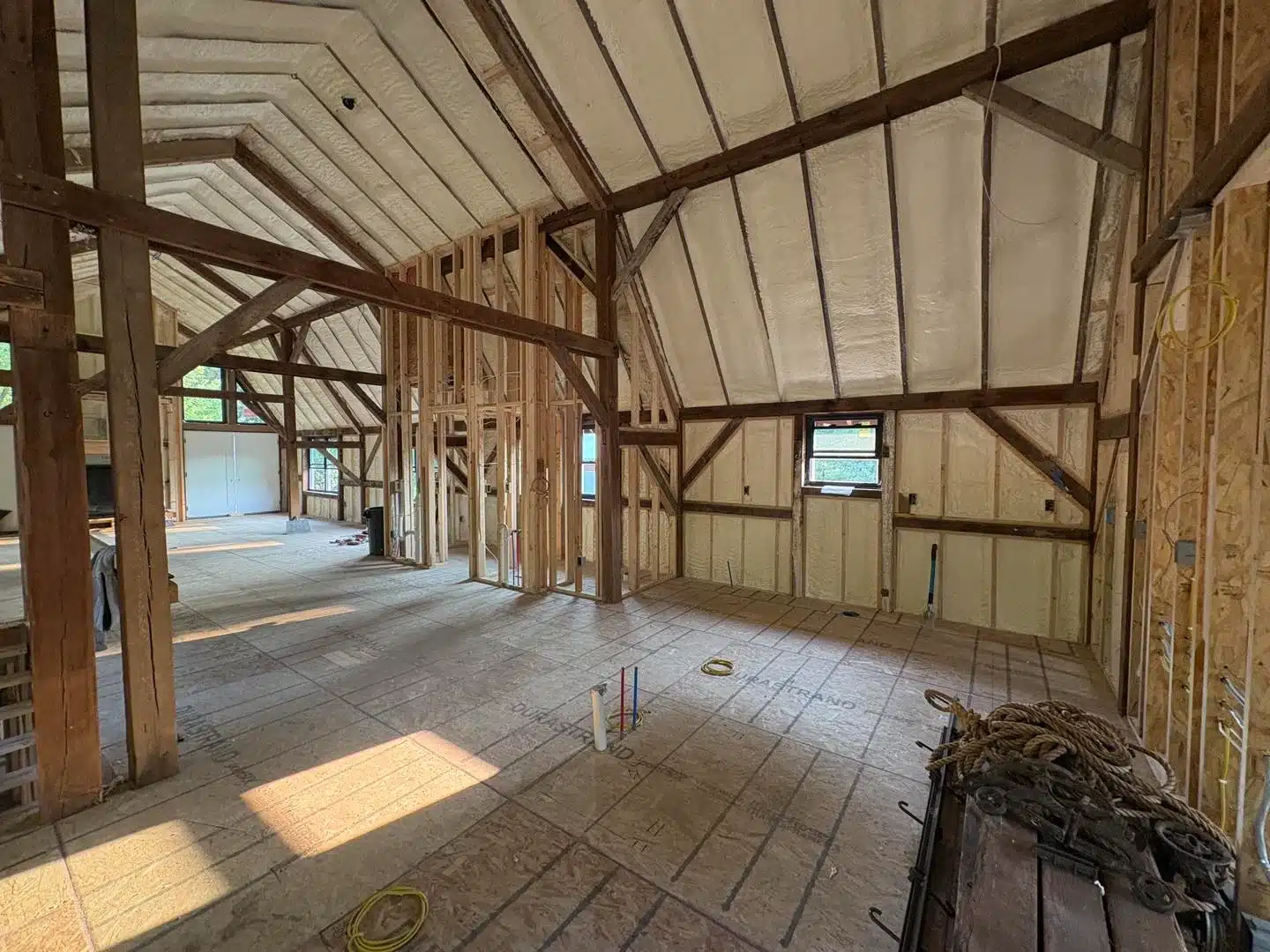
Proper insulation installation is the single most effective way to reduce energy waste, improve indoor comfort, and protect the structural integrity of homes in Waupaca, Wisconsin. Our cold winters and humid summers demand insulation installation that is correctly specified for climate zone 5, professionally installed without gaps or compression, and paired with thorough air sealing. Whether you are building new, retrofitting an older home, or insulating a pole barn, the difference between a job done right and a job done quickly shows up in your energy bills, indoor air quality, and long-term durability. The right approach depends on the building type, existing conditions, and your performance goals.
Waupaca experiences long, cold winters with significant heating degree days and warm, humid summers. The DOE classifies our region as a heating-dominated climate zone, meaning heat loss through the building envelope is the primary driver of high energy bills during most of the year. According to the U.S. Department of Energy, climate zone 5 requires ceiling insulation rated at R-60 and wood-frame wall assemblies at R-20 plus R-5 continuous insulation to meet the 2021 IECC baseline.
The gap between what older Waupaca homes actually have and what current codes require is substantial. Homes built before 2012 often have attic insulation in the R-19 to R-30 range and walls with little more than R-11 fiberglass batts. When insulation falls short of modern recommendations, the furnace works harder, rooms feel drafty, and surfaces near exterior walls stay cold even when the thermostat reads 70 degrees.
Homeowners often focus on which insulation material to choose, but installation quality has a far greater impact on real-world performance. A premium insulation product installed with gaps, voids, or compression will underperform a budget-friendly product installed correctly. The Building America Solution Center from Pacific Northwest National Laboratory emphasizes a step-by-step approach: start with safety and durability assessments, then address fresh air, moisture protection, drafts, and thermal comfort in order.
The most common installation problems we see in Waupaca retrofit projects include:
Each of these problems undermines thermal performance and can contribute to moisture issues, ice dams, and reduced HVAC equipment lifespan.
| Building Component | Minimum R-Value (2021 IECC) | What We Typically Recommend |
|---|---|---|
| Uninsulated attic / ceiling | R-49 (code minimum) | R-60 for maximum performance |
| Wood-frame walls (cavity + continuous) | R-20 + R-5 CI | R-13 cavity + R-10 CI or spray foam |
| Rim joists / band joists | R-19 + air sealing | Closed cell spray foam for air barrier |
| Basement walls | R-15 continuous | R-15 to R-19 with moisture management |
| Floors over crawlspaces | R-30 | R-30 with crawlspace encapsulation |
| Ducts in unconditioned space | R-8 (3″ diameter and above) | R-8 to R-10 depending on location |
Source: U.S. Department of Energy
Different areas of a home benefit from different insulation materials. The best choice depends on the application, access conditions, and performance targets.
Closed cell spray foam delivers high R-value per inch (approximately R-6 to R-7), acts as both an insulation layer and an air barrier, and provides a built-in vapor retarder. It works well in rim joists, crawlspaces, and pole barn ceilings where air sealing and moisture resistance are priorities. Our closed cell spray foam projects in the 54981 zip code typically start at $1,500 and vary based on scope, access difficulty, and project complexity.
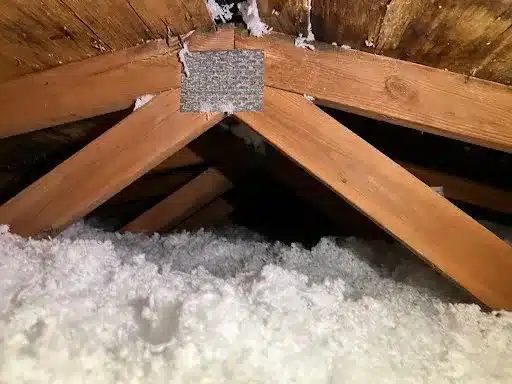
Cellulose is a cost-effective option for attics and wall cavities in existing homes. It fills gaps around framing and obstructions better than batts, reducing voids and improving effective R-value. Cellulose projects in our area typically range from $2,000 to $10,000 depending on area, depth, and whether walls are included.
Attic retrofits are the most common project we complete in Waupaca because most homes lose more heat through the attic than through any other building component. Depending on existing conditions and access, we install blown-in fiberglass, blown-in cellulose, or spray foam. Typical attic insulation projects range from $3,000 to $30,000 based on square footage and target R-value.
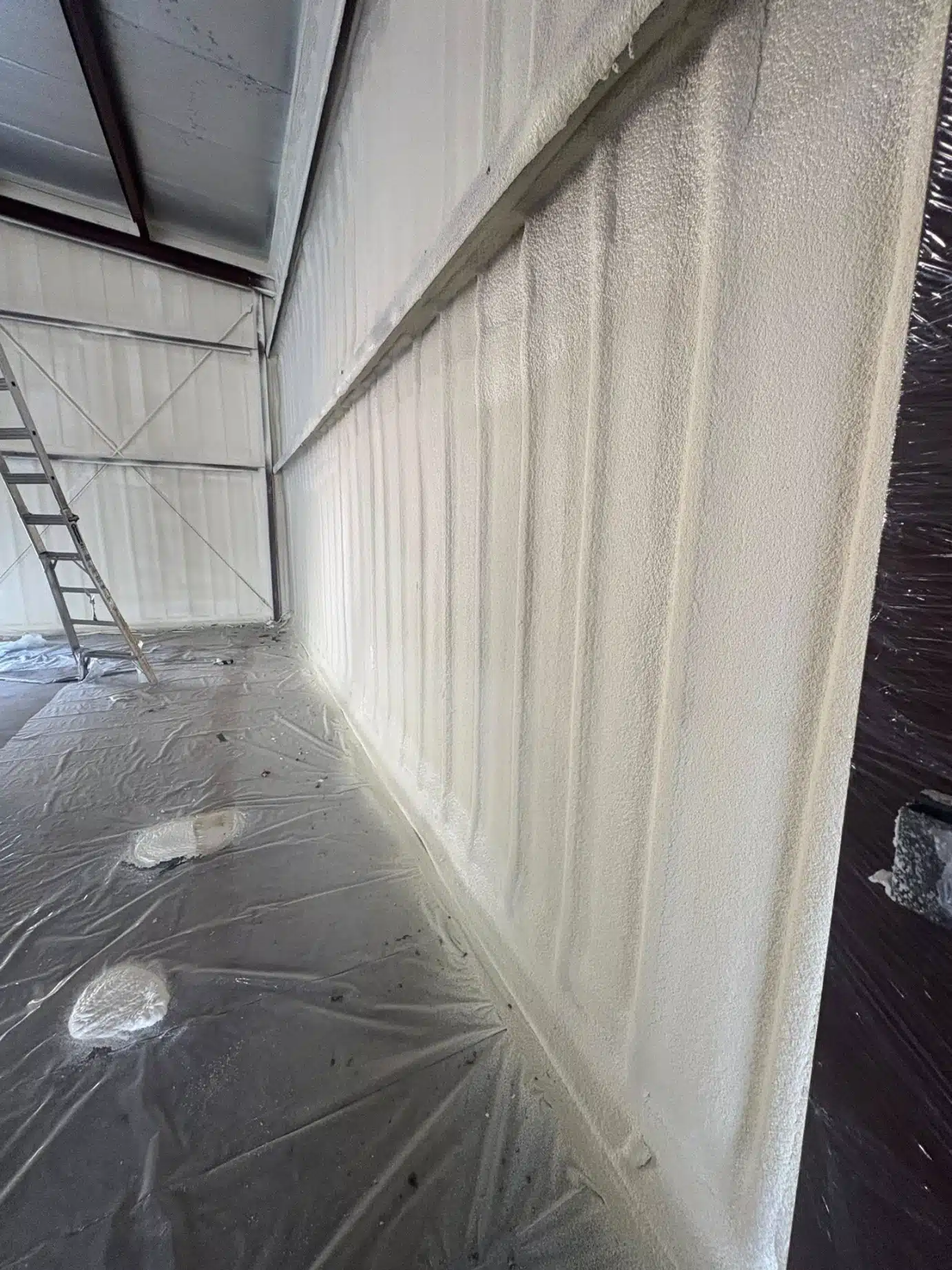
Pole barns and agricultural buildings present unique challenges because metal walls and roofs transfer heat rapidly. Spray foam Waupaca, WI applied to the underside of the roof deck and walls creates an effective thermal and air barrier in these structures. Pole barn insulation projects range from $5,000 to $60,000 depending on building size and the extent of coverage.
Based on our project data for the 54981 zip code, several factors influence the final cost of an insulation installation:
| Factor | How It Affects Pricing |
|---|---|
| Scope of the project | Larger areas and multiple components increase material and labor costs |
| Difficult access | Tight crawlspaces, low-clearance attics, or complicated framing require more time and specialized equipment |
| Removal of old insulation | Damaged or contaminated existing insulation must be removed and disposed of before new material is installed |
| Greater thickness / higher R-value | Achieving R-60 in an attic requires significantly more material than R-38 |
| Travel distance | Projects farther from our Waupaca base may include additional logistics costs |
| Turnaround rate | Faster project timelines may require scheduling adjustments |
Our minimum project size is $1,500, which covers smaller targeted applications like rim joist sealing or single-room insulation upgrades.
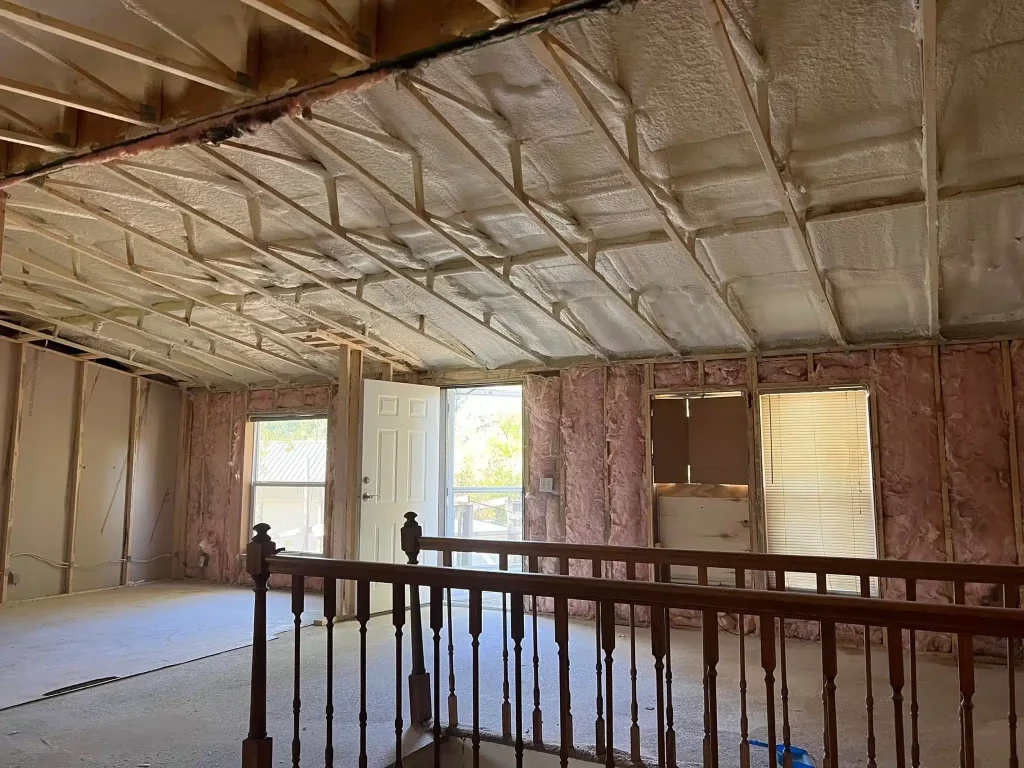
ENERGY STAR makes it clear that insulation and air sealing must work together. If you add R-60 of attic insulation but leave gaps around plumbing vents, electrical penetrations, and the attic hatch unsealed, warm indoor air will still escape through those openings. The EPA estimates that combining air sealing with insulation can save an average of 15% on heating and cooling costs, or about 11% on total household energy costs.
In Waupaca homes, the most impactful air-sealing locations include:
When we insulate an attic, crawlspace, or basement, we always address air sealing first. Skipping this step means the insulation cannot perform at its rated R-value.
Research sponsored by the North American Insulation Manufacturers Association and conducted by ICF Consulting found that 89% of U.S. single-family homes are under-insulated when measured against the 2012 IECC baseline. That study analyzed a sample of one million homes across all climate zones using the National Renewable Energy Laboratory’s 2024 ResStock database.
For Waupaca homeowners, this statistic is especially relevant. Many homes in our area were built in the 1960s through 1980s with minimal insulation by today’s standards. If your home has less than R-49 in the attic or less than R-13 in wall cavities, you are almost certainly under-insulated for our climate zone.
The good news is that the Inflation Reduction Act expanded the 25C federal tax credit to cover up to $1,200 per year through 2032 for qualifying insulation and air-sealing improvements. This makes addressing the insulation gap more financially manageable.
Choosing a contractor who installs insulation properly is the most important decision in this process. Here are the signs that you are working with the right team:
| Homeowner Situation | Recommended Insulation Approach | Key Considerations |
|---|---|---|
| New construction | Spray foam in walls and rim joists, blown-in attic insulation to R-60 | Best time to get air sealing right, easy access to all cavities |
| Retrofit home (pre-1980) | Attic insulation to R-60, rim joist spray foam, wall dense-pack if accessible | Address air sealing first, check for moisture issues, plan for 25C tax credit |
| Post-2000 home with minimal upgrades | Top up attic to R-60, seal rim joists, evaluate wall cavities | May only need targeted improvements rather than full replacement |
| Pole barn or outbuilding | Closed cell spray foam on walls and roof deck | Prioritize air barrier, address ventilation needs |
| Crawlspace with moisture issues | Encapsulation with spray foam on rim joist, vapor barrier on floor | Moisture management must precede or accompany insulation |
Proseal Spray Foam provides professional insulation installation for homes, pole barns, and commercial buildings throughout Waupaca and the surrounding area. Our team assesses your building’s current insulation levels, identifies air-sealing opportunities, and recommends the right materials and R-values for climate zone 5. Whether you need closed cell spray foam, blown-in cellulose, attic insulation, or pole barn insulation, we deliver installations that perform as specified and last for decades. Contact us at [email protected] or call (715) 227-6295 to discuss your project.
Request a Quote | Schedule an Insulation Assessment
If your home was built before 2000 and has not been retrofitted, it likely falls short of the R-60 attic and R-20 wall recommendations for climate zone 5. Visible settling in attic insulation, uneven room temperatures, and high heating bills are strong indicators.
Yes, the 25C tax credit covers up to $1,200 per year through 2032 for qualifying insulation and air-sealing improvements that meet the 2021 IECC requirements.
While some attic blanket installations are DIY-friendly, air sealing, spray foam application, and wall cavity insulation require professional equipment and expertise to avoid moisture problems and ensure full coverage.
A single-component project like attic insulation usually takes one to two days. Multi-component projects involving spray foam, air sealing, and removal of old insulation may take two to five days depending on scope.
Proper attic insulation paired with air sealing at the attic floor reduces heat loss into the attic space, which keeps the roof surface cold enough to prevent snowmelt and ice dam formation on the eaves.