How Spray Foam Insulation Helps Protect Sensitive Interior Spaces From Outdoor Drafts in Weston, WI
If your home or office feels freezing in January or a nursery stays drafty despite cranking up the heat, the…


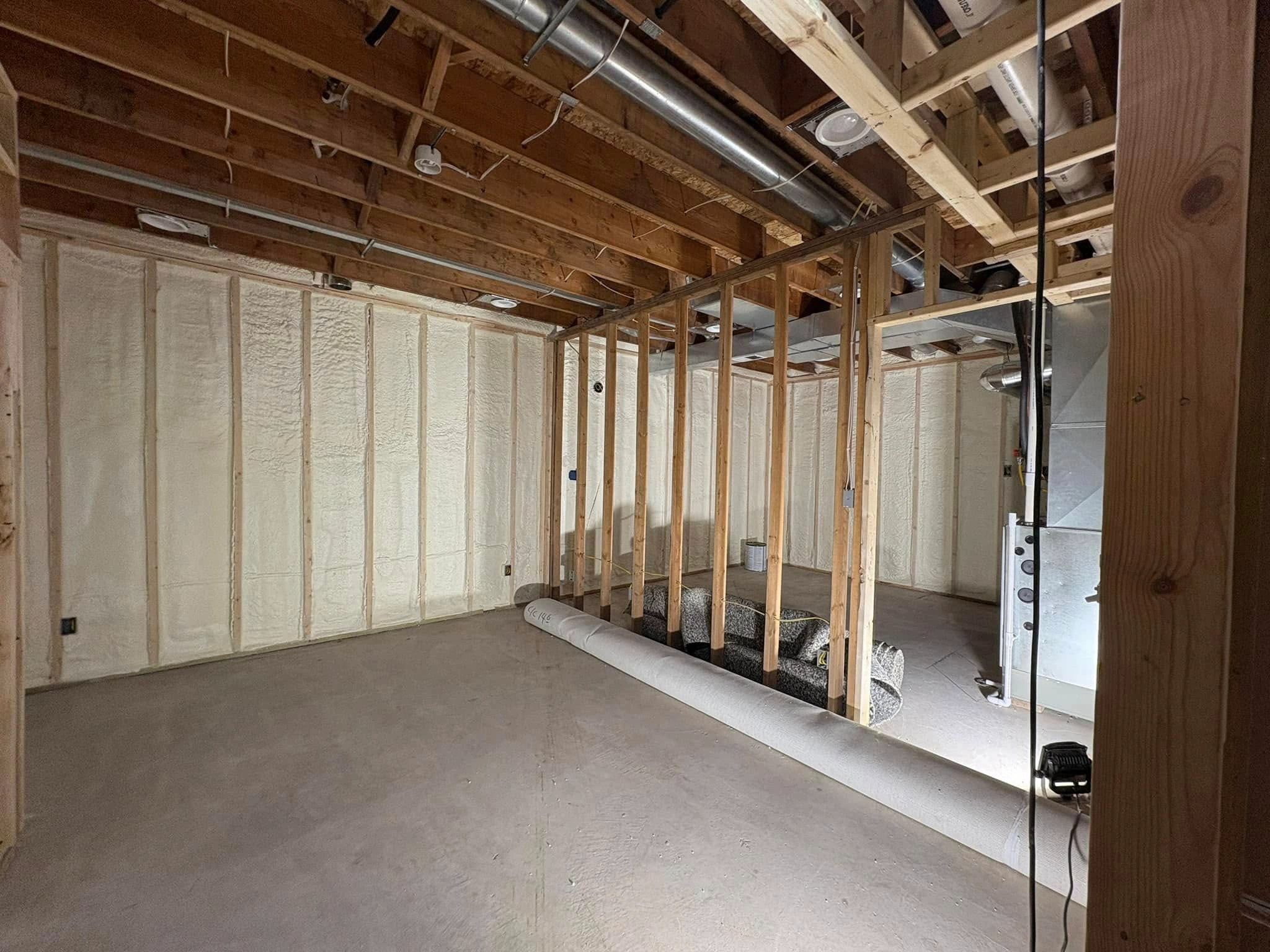
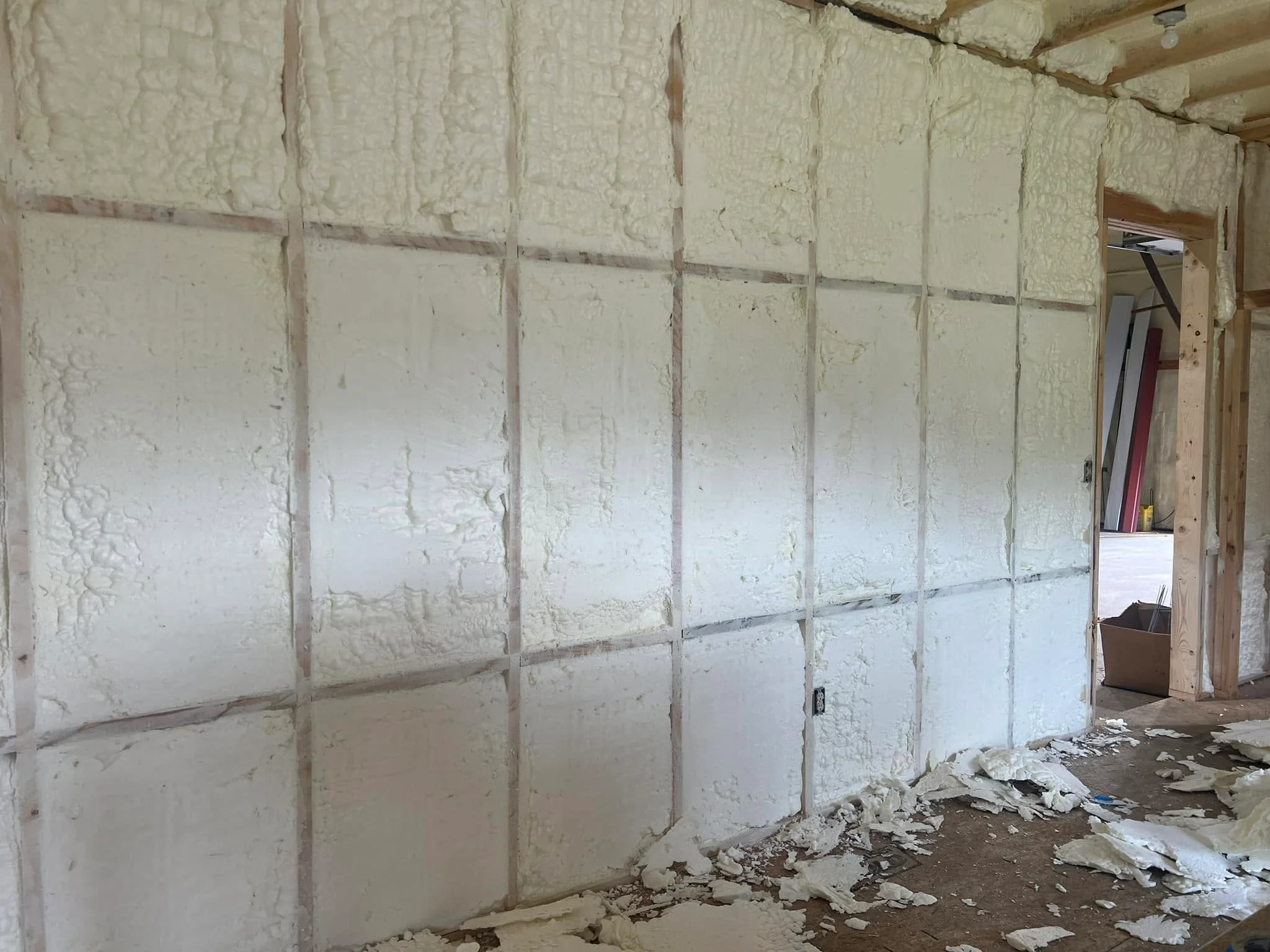
Property owners in New London, WI are moving toward spray foam insulation because it simultaneously addresses the three biggest performance gaps in older and even newer homes: high heating demand driven by Wisconsin’s severe winters, chronic air leakage that undermines conventional insulation, and moisture intrusion that damages building envelopes over time. Spray foam stands apart from traditional materials because it expands on application to fill gaps, seal joints, and create an airtight thermal barrier in a single step. The right choice between open cell and closed cell spray foam depends on the specific application, the area being insulated, and the budget, but both types deliver measurable improvements in comfort and energy efficiency that other spray foam insulation methods simply cannot match on their own.
New London, WI experiences the kind of winters that push heating systems to their limits. Temperatures routinely drop well below freezing from November through March, and the area falls within IECC Climate Zone 5 or 6, which carries the highest insulation requirements in the continental United States. According to ENERGY STAR’s recommended R-values, uninsulated attics in this zone should be brought up to R-60, while floors over unconditioned spaces need R-30. Even if a home already has 3 to 4 inches of attic insulation, the recommendation is to add enough to reach R-49 or higher.
The U.S. Energy Information Administration (EIA) explains that heating degree days measure how cold a region is by comparing daily mean temperatures to a base of 65 degrees Fahrenheit. Colder regions accumulate more heating degree days, which directly correlates with higher energy consumption for heating. The Wisconsin State Climatology Office tracks heating degree day data across the state’s nine climate divisions and confirms that Wisconsin consistently ranks among the highest-heating-demand states in the nation.
For property owners in New London, this means that every gap, crack, and under-insulated wall cavity translates directly into wasted heating dollars month after month. That is the core reason spray foam insulation has gained so much momentum heading into 2026.
Conventional insulation materials like fiberglass batts and blown-in cellulose work by trapping air, but they do not stop air movement through the material itself. Gaps around framing, wiring penetrations, plumbing runs, and recessed lights allow heated indoor air to escape through convection, bypassing the insulation entirely. As Wikipedia’s building insulation reference explains, thermal bridges, points where heat flows through continuous paths with little resistance, are a major source of energy loss in otherwise well-insulated homes. Wood and steel studs, floor joists, and fasteners all create thermal bridges unless interrupted by a continuous insulation layer.
Spray foam insulation addresses this problem differently. When applied, it expands to fill cavities completely and adheres to framing, sealing air leaks as part of the installation process. This dual action, insulating and air sealing in one step, is what sets spray foam apart. Here is how the two primary types compare:
| Feature | Closed Cell Spray Foam | Open Cell Spray Foam |
|---|---|---|
| R-value per inch | ~6.0 to 7.0 | ~3.5 to 3.7 |
| Air sealing | Forms a vapor barrier | Seals air leaks effectively |
| Moisture resistance | Highly resistant, acts as vapor retarder | Permeable, allows moisture passage |
| Density | Higher density, rigid | Lower density, flexible |
| Best applications | Crawlspace walls, rim joists, metal buildings, pole barns | Wall cavities, attics, sound control areas |
| Structural benefit | Adds rigidity to the assembly | Minimal structural contribution |
Many homes in the New London area were built decades ago with minimal insulation, relying on materials that have since settled, degraded, or been disturbed by renovations. Our technicians frequently encounter homes where existing insulation has fallen below floor joists in the attic, leaving large portions of the ceiling essentially uninsulated. Spray foam applied to rim joists in basements and crawlspaces is one of the most cost-effective retrofit upgrades available, sealing the band joist area where air infiltration is often heaviest.
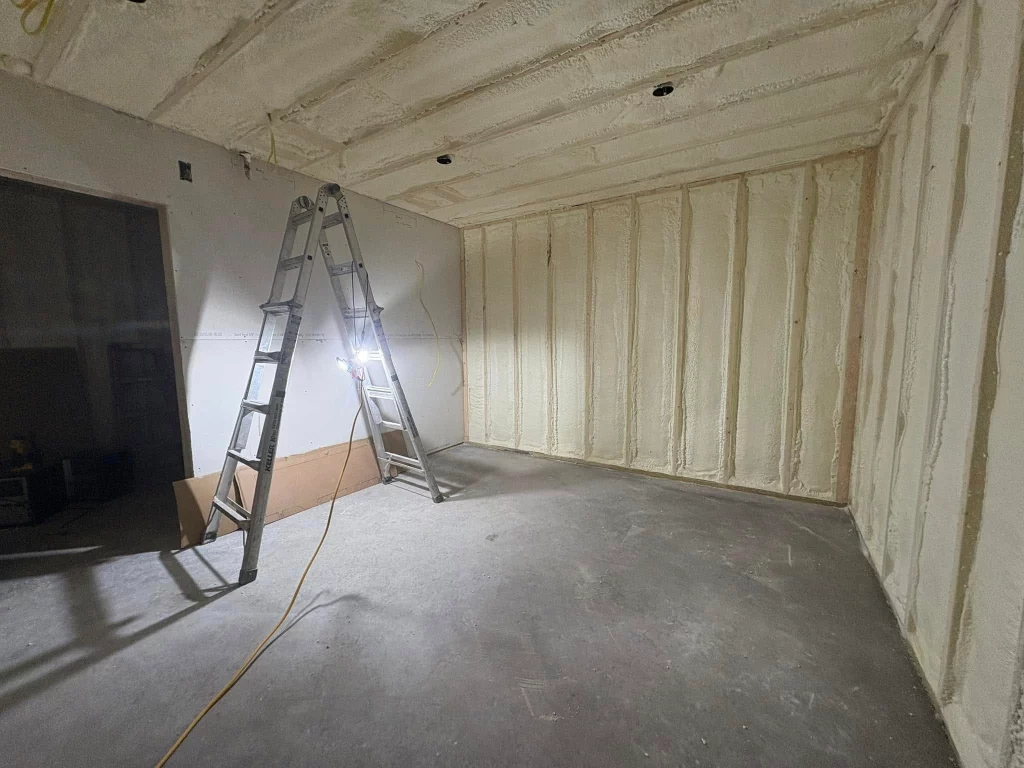
Builders in the New London area are increasingly specifying spray foam as part of their standard packages. New construction allows spray foam to be applied at framing stage, covering every stud bay, hard-to-reach corner, and penetrations before drywall closes everything up. This results in a tighter building envelope from day one, reducing HVAC sizing requirements and improving indoor air quality.
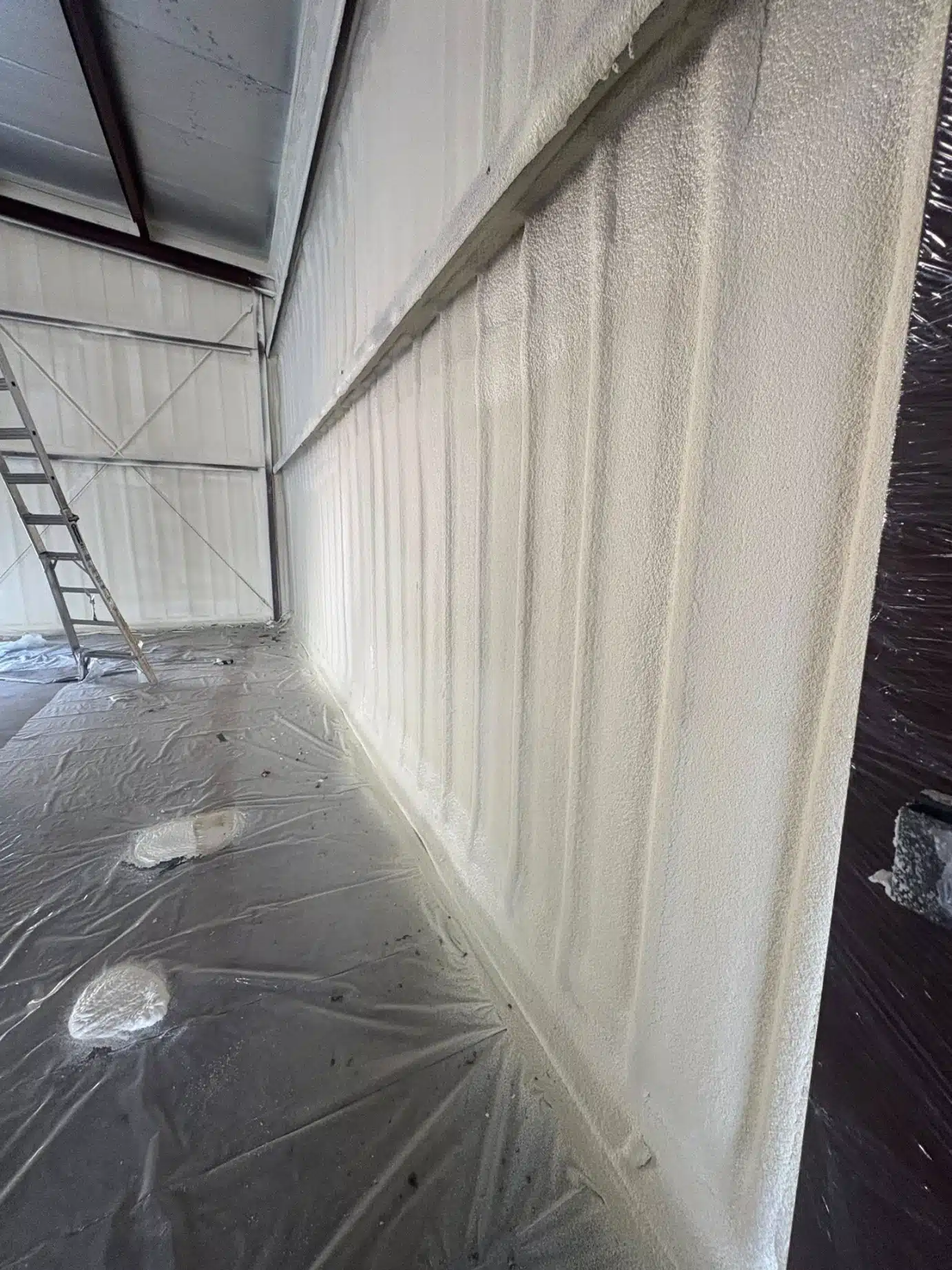
Agricultural and storage buildings are common throughout Waupaca County. These metal-sided structures present a particular insulation challenge because metal transfers heat rapidly and traditional batt insulation cannot conform to irregular surfaces or seal around fasteners. Closed cell spray foam bonds directly to metal panels and framing, creating a continuous thermal barrier that also controls condensation, a major issue in unheated metal buildings during Wisconsin winters.
Crawlspace insulation is one of the areas where spray foam delivers the most dramatic improvement. Ground-level moisture, cold air infiltration through foundation vents, and drafty conditions in the floor above all contribute to discomfort and energy loss. Spray foam applied to crawlspace walls and the rim joist seals these areas while providing the R-values required by code for Wisconsin’s climate zone.
The investment for spray foam insulation depends on several factors including project scope, area size, whether existing insulation must be removed, access difficulty, and the R-value targets required. Below is a summary of typical project ranges for our most common Spray Foam Insulation services in New London and Waupaca County area:
| Service Type | Typical Low | Typical Average | Typical High |
|---|---|---|---|
| Closed cell spray foam | $1,500 | $6,000 | $10,000 |
| Blown-in cellulose | $2,000 | $4,000 | $10,000 |
| Attic insulation | $3,000 | $6,000 | $30,000 |
| Pole barn insulation | $5,000 | $15,000 | $60,000 |
| Commercial insulation | $20,000 | $50,000 | $300,000 |
Factors that influence where a specific project falls within these ranges include scope of work, removal of old insulation, travel distance, difficult access conditions, and greater thickness or higher R-value requirements.
Choosing the right insulation provider matters as much as choosing the right material. Here are the indicators that separate a reliable contractor from the rest:
Homeowners with older homes in New London: Start with rim joist and crawlspace spray foam. These areas offer the highest return on investment because they address both air infiltration and insulation gaps in one application. Adding attic insulation to reach the recommended R-49 to R-60 range should follow as budget allows.
New construction builders: Specify spray foam in wall cavities and the attic plane during initial planning. Our team works with builders to coordinate installation timing, ensuring every bay and penetration is sealed before the envelope is closed.
Pole barn and outbuilding owners: Closed cell spray foam applied to walls and ceilings provides both insulation and condensation control, protecting stored equipment, livestock, and temperature-sensitive materials from Wisconsin’s freeze-thaw cycles.
Commercial property managers: Commercial insulation projects in the New London area often require higher R-values and code compliance for conditioned spaces. Our professionals assess loading docks, warehouse ceilings, and office partitions to deliver code-compliant results.
Proseal Spray Foam serves the New London, WI area from our base in Waupaca County (ZIP 54981), providing closed cell spray foam, blown-in cellulose, attic insulation, pole barn insulation, and commercial insulation for property owners across the region. Whether you are building new, retrofitting an older home, or insulating a pole barn, our experienced team assesses every project individually to recommend the right material and approach for your specific needs. Give us a call at (715) 227-6295 or email [email protected] to discuss your project.
Request a Quote | Schedule an On-Site Assessment
Most residential spray foam projects in the New London area are completed within a single day, depending on the scope and square footage involved.
There is a noticeable odor during and immediately after application that dissipates as the material cures, typically within 24 to 48 hours with proper ventilation.
In some cases, yes, but our team evaluates the condition of existing insulation first. Damaged, wet, or contaminated insulation usually needs to be removed before new material is applied.
For pole barns and metal buildings in Wisconsin’s climate, closed cell spray foam is particularly effective because it bonds to metal, seals fastener penetrations, and controls condensation that would otherwise cause rust and dripping.
Closed cell spray foam has a higher R-value per inch, acts as a vapor barrier, and adds structural rigidity. Open cell spray foam is less dense, expands more to fill irregular cavities, and costs less per square foot. The right choice depends on the application and project goals.