Why Consider Open-Cell Spray Foam Insulation for Residential Properties in Oshkosh, WI?
Choose open-cell spray foam insulation Oshkosh WI homes can use for dry walls and attics. It seals air leaks, softens…


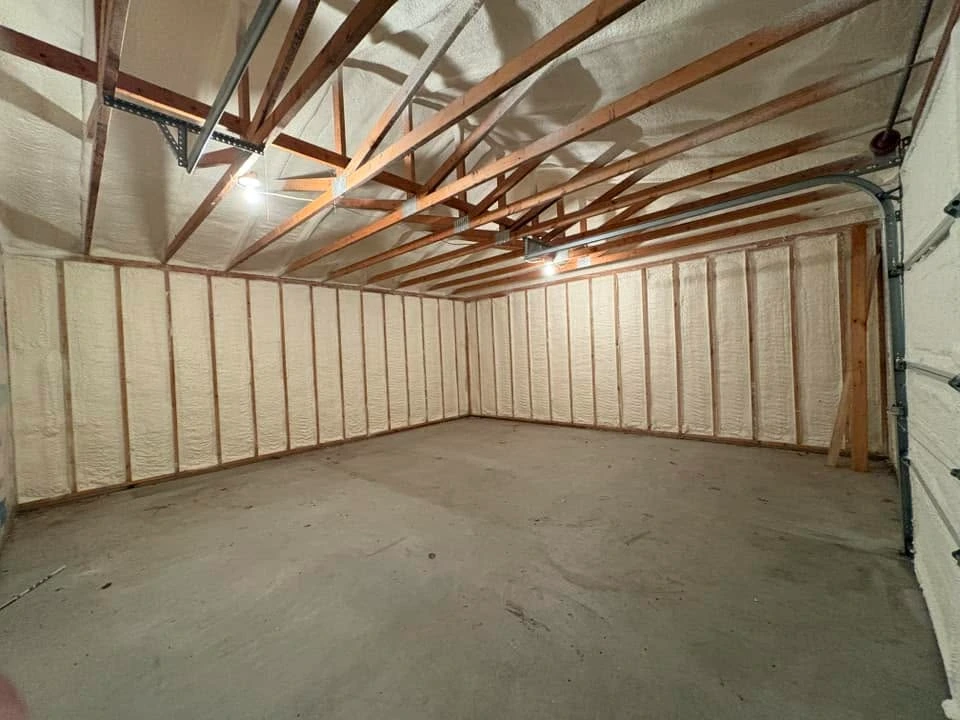
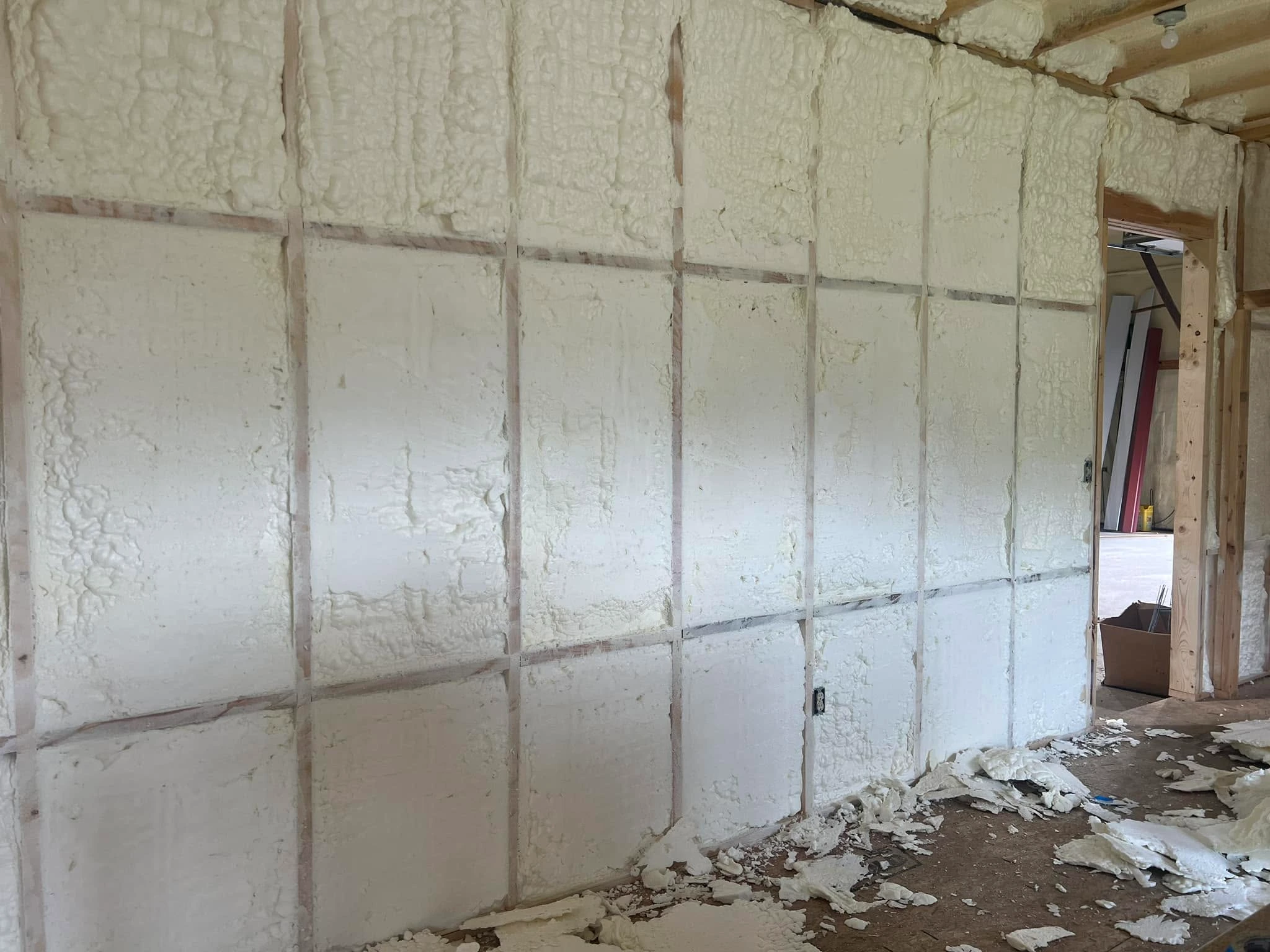
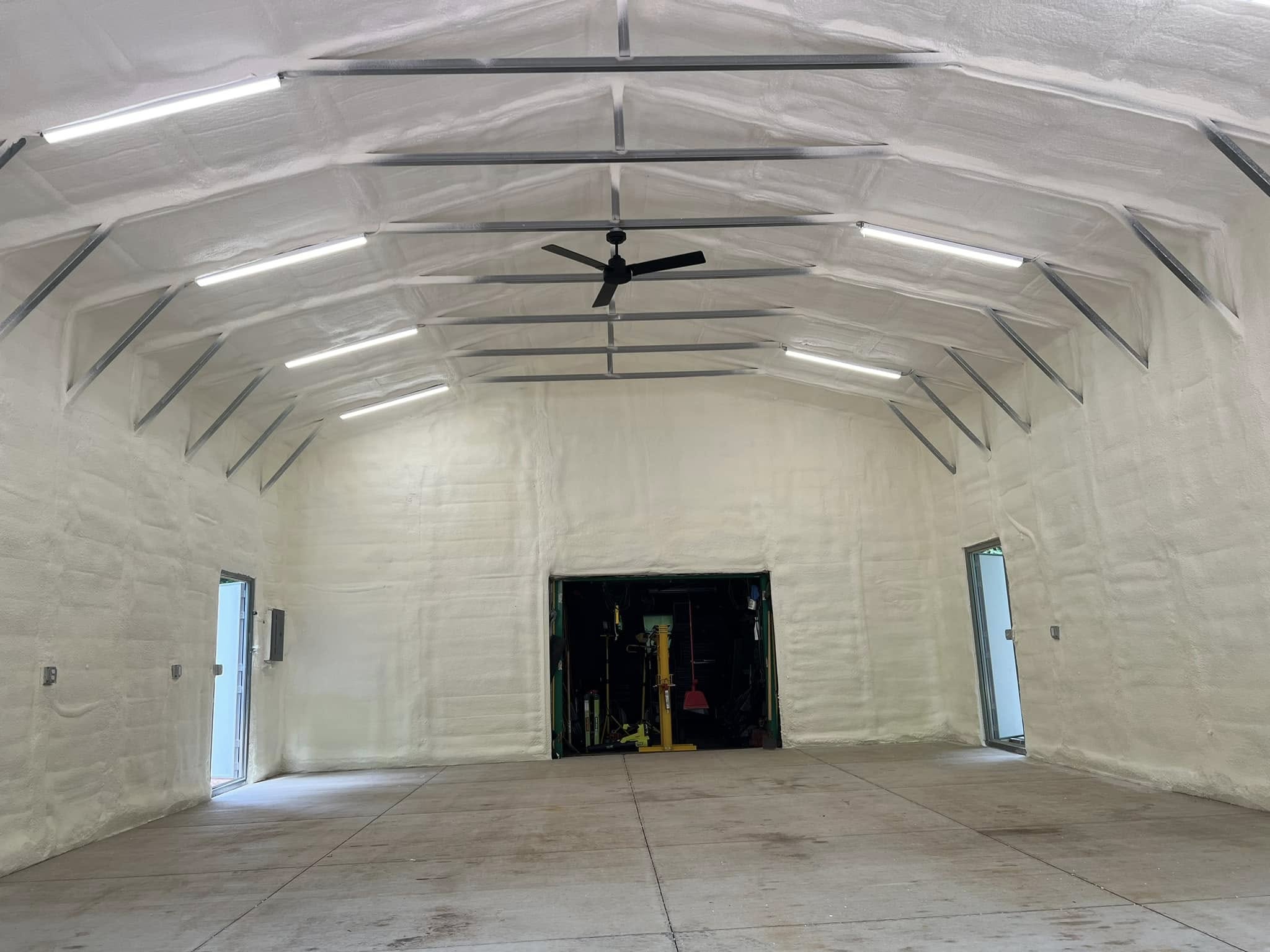
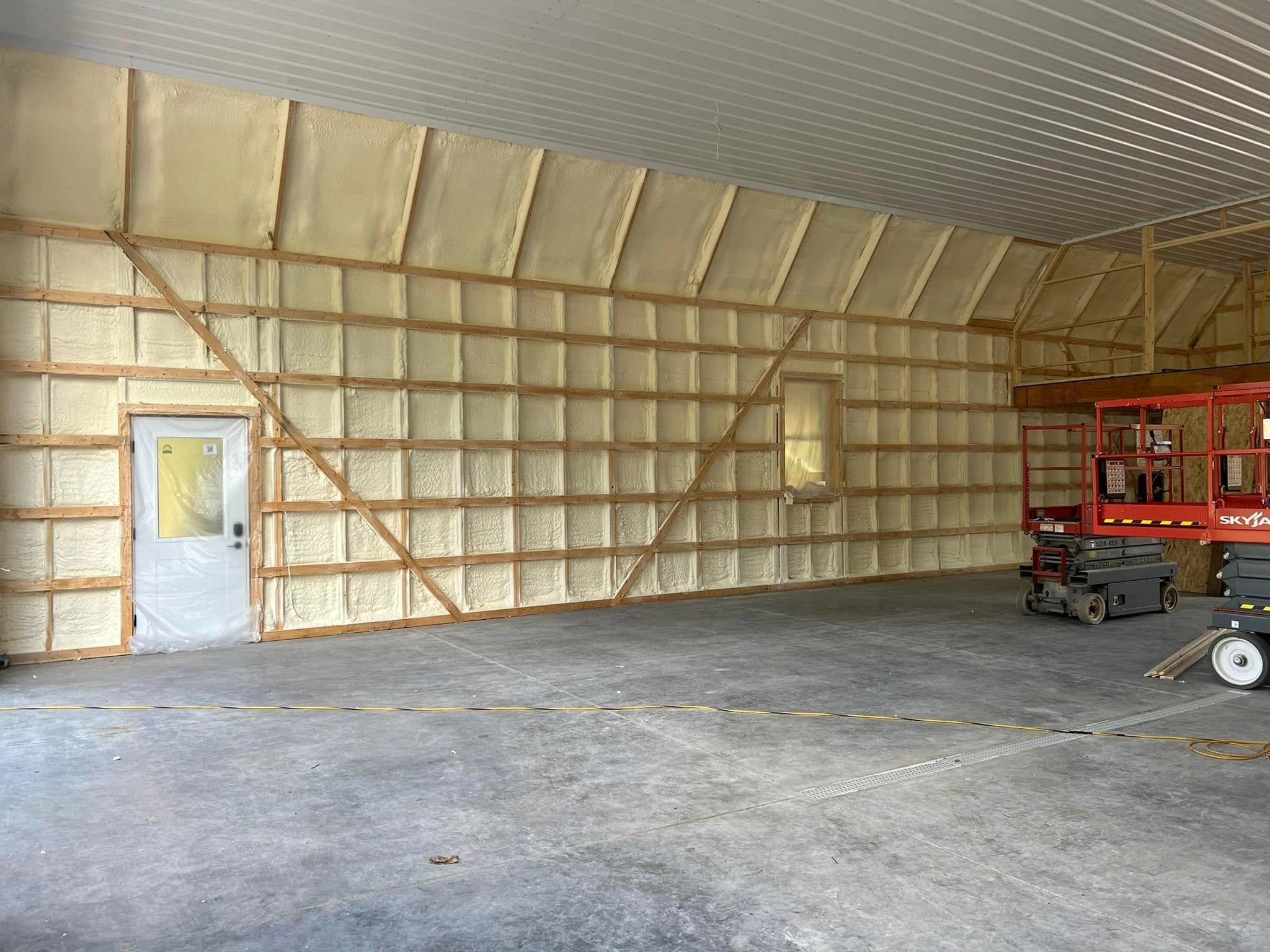
Home spray foam insulation thickness in Waupaca depends on foam type and the area you’re insulating. Closed-cell foam usually needs about 2 to 3 inches in walls and around 9 inches in an attic to reach R60. Open-cell foam needs roughly 3.5 inches in a 2×4 wall and about 16 inches in an attic for the same target.
TL;DR
Thickness is only half the story. The foam type decides how much each inch is worth.
The U.S. Department of Energy says R-value depends on the type of insulation, its thickness, and its density. Installing more insulation raises R-value and slows heat flow.
R-value depends on the foam type, density, and installed depth. For a deeper explanation of foam types, benefits, and installation, read our complete guide to residential spray foam insulation.
Fine Homebuilding puts closed-cell foam at about R-6.5 per inch. Open-cell foam typically lands near R-3.5 to R-3.7 per inch.
The answer changes by location in the house. These examples use R-6.5 for closed-cell and R-3.7 for open-cell, so your product’s label may differ a little.
| Area | Closed-Cell | Open-Cell |
|---|---|---|
| 2×4 wall (3.5 in cavity) | 2 to 3.5 in, about R-13 to R-23 | 3.5 in, about R-13 |
| 2×6 wall (5.5 in cavity) | 3 to 5.5 in, about R-20 to R-36 | 5.5 in, about R-20 |
| Attic, R-60 target | About 9 in | About 16 in |
Closed-cell foam wins where space is tight, like rafter bays and rim joists. Open-cell foam works when you have deep cavities and want to keep material costs down.
We always work from the labeled R-value of the product going in your home, not a rule of thumb.
Long freezing winters push heat out through every weak spot in your home. That makes your target R-value matter more here than in a mild climate.
The DOE’s table lists R60 for an uninsulated attic in climate zones 6 and 7, the two zones that cover Wisconsin. It also lists R49 for attics that already have 3 to 4 inches of insulation.
We plan residential spray foam insulation for Waupaca WI homeowners, can count on by starting with the attic, since warm air rises and escapes through the top of the house.
Local code sets your minimum, so confirm it with your building inspector. Wisconsin’s dwelling code, SPS 322, also calls for a certificate listing the insulation type, manufacturer, and R-value. That gives you a record of what went into your walls.
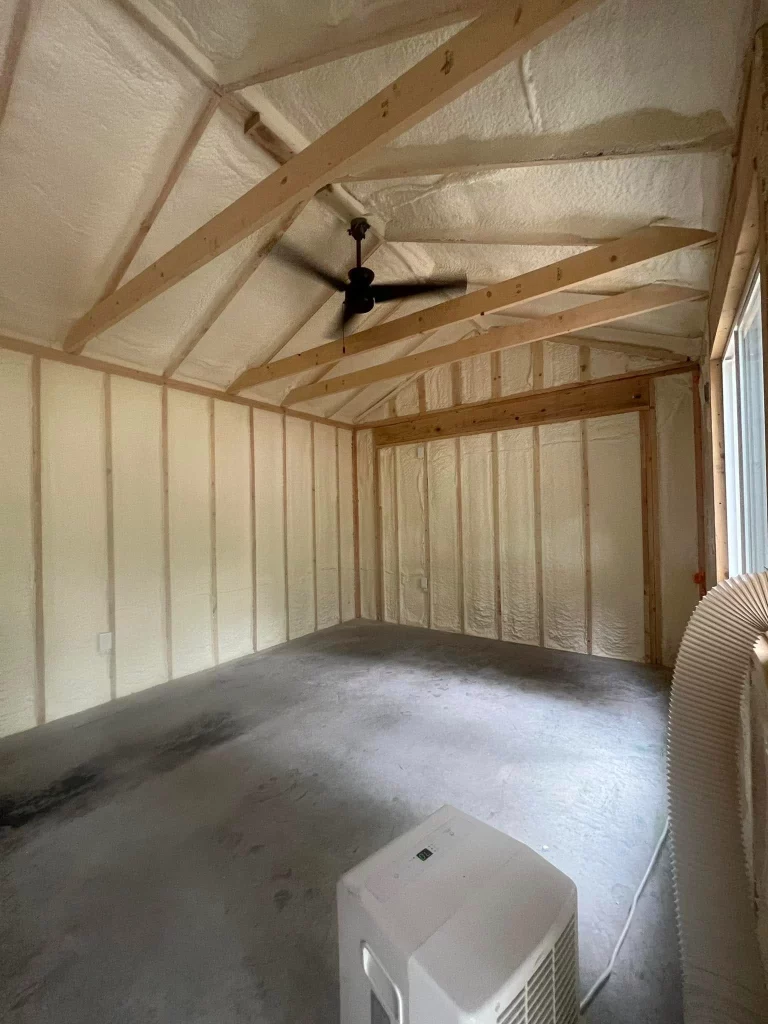
Both mistakes cost you money. One leaves heat loss on the table, and the other pays for foam you don’t need.
The DOE notes that insulation performance depends on how and where it’s installed. It suggests measuring the depth of sprayed insulation and checking for gaps in coverage.
Use this list before you sign anything or let a crew start spraying.
If you’re not sure how many inches your attic, walls, or rim joists need, we’ll look at your home and give you a clear number. We explain the foam type, the target R-value, and the planned depth before any work starts.
Proseal Spray Foam in Waupaca, WI offers a free quote.
Phone: (715) 227-6295 Email: [email protected]
Yes. Thick single passes can trap heat as the foam cures and may lead to cracking or shrinking, so installers typically spray in layers and follow the manufacturer’s limit per pass.
It can. Closed-cell foam tends to seal air at a thinner layer, while open-cell foam usually needs more depth to act as a solid air barrier.
Foam is priced by the volume you install, so every extra inch adds material and labor. Ask your contractor for a quote at two depths so you can compare the added cost against the added R-value.
In many cases, yes. New layers can often be sprayed over cured foam, but your contractor should check that the surface is clean and the total depth still fits the space.
Yes. If foam rises past the studs, it gets shaved flush so drywall can sit flat. Ask your contractor to include trimming in the estimate.