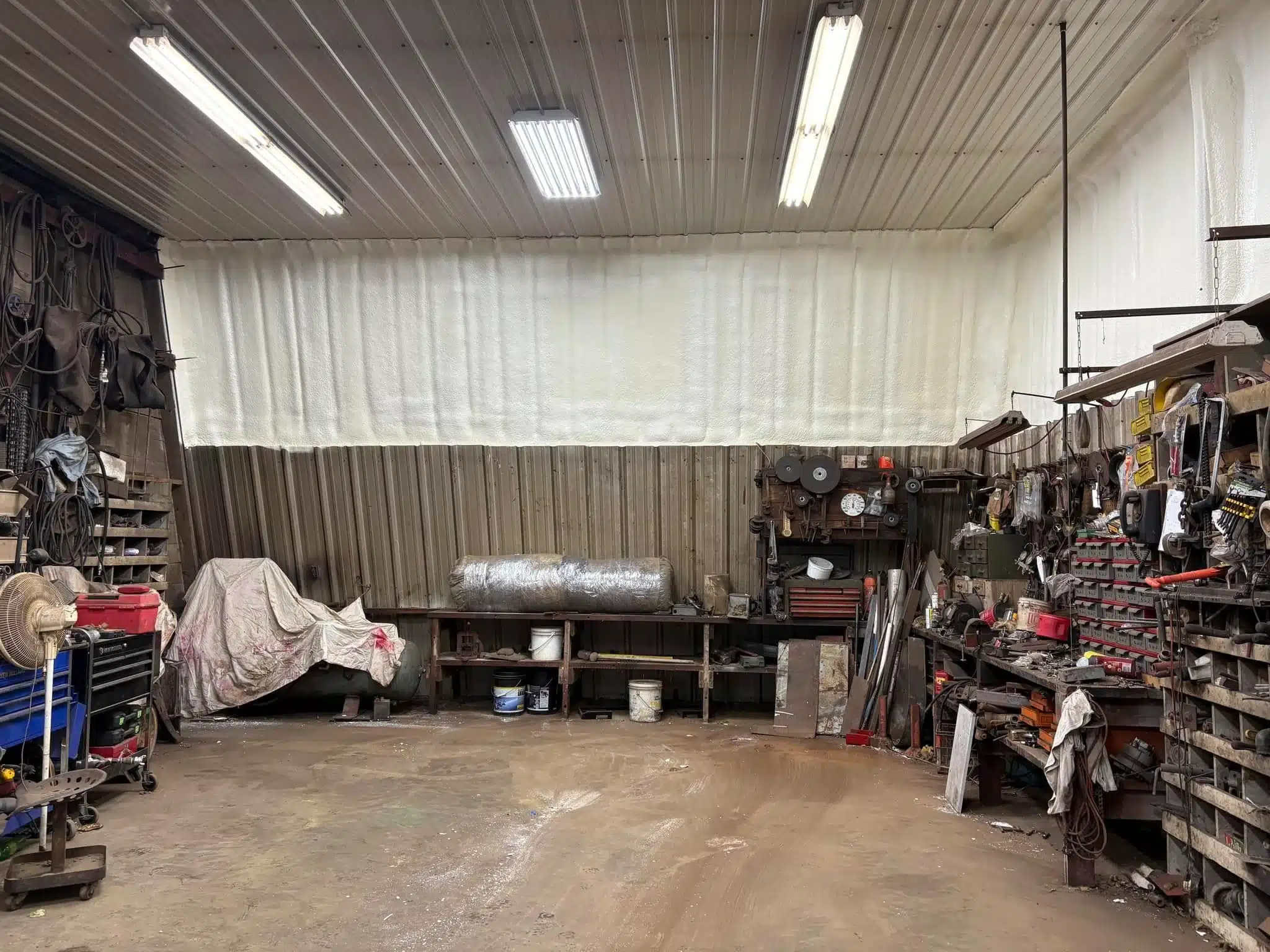
How Pole Barn Insulation Protects Your Expensive Farm Equipment in Kaukauna, WI
Dan Passarella
June 8th, 2026
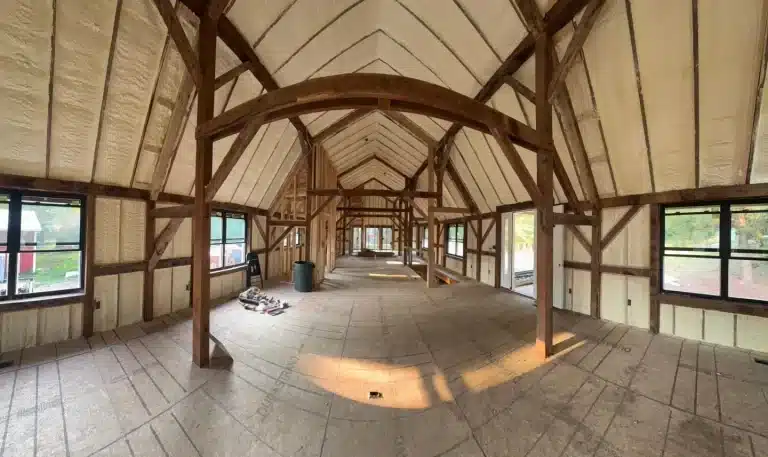
Pole barn insulation in Kaukauna, WI does far more than keep the building comfortable during Wisconsin’s harsh winters. It creates a controlled environment that defends your tractors, combines, and implements from the two biggest threats to stored farm equipment: condensation-driven moisture and temperature extremes. In an uninsulated pole barn, temperature swings between the warm interior air and cold exterior metal surfaces cause condensation to form on walls, ceilings, and, most importantly, on your equipment. Over time, that moisture feeds rust, corrodes electrical connections, and degrades hydraulic systems. Insulation, particularly closed-cell spray foam, seals the building envelope, stabilizes indoor temperatures, and keeps relative humidity below the threshold where corrosion accelerates. The right approach depends on your building size, the type of equipment stored, and how much of the year the barn is heated.
TL;DR
Kaukauna sits in Climate Zone 6, where winter temperatures routinely drop to 12°F and can fall below -8°F, making condensation inside metal buildings a constant, damaging threat.
Scientific research confirms that atmospheric corrosion of steel increases sharply once relative humidity exceeds 60%, and condensation control is the primary defense.
Uninsulated metal pole barns experience massive temperature differential between interior and exterior surfaces, causing water vapor to condense directly onto stored equipment and structural members.
Closed-cell spray foam delivers the highest R-value per inch (approximately R-6 to R-7), creates an airtight seal, and acts as a vapor barrier, making it the most effective choice for cold-climate equipment storage.
Pole barn insulation projects typically range from $5,000 to $60,000 depending on building size and scope, with average projects landing around $15,000.
The U.S. Department of Energy recommends R-49 for uninsulated attics and R-20 plus R-10 continuous exterior insulation for wood-frame walls in Climate Zone 6.
Wisconsin building code SPS 322.31 requires specific insulation R-values depending on component type, and rim joist spaces must use air-impermeable insulation sealed on all sides.
Beyond corrosion protection, insulated barns reduce heating costs, extend equipment lifespan, and can maintain conditions above the 50°F threshold needed to keep diesel engines and hydraulic systems in working order.
Why Kaukauna’s Climate Makes Insulation Non-Negotiable
Kaukauna sits squarely in Wisconsin’s Climate Zone 6a, a region defined by long, freezing winters and significant temperature swings. According to the Wisconsin State Climatology Office at the University of Wisconsin-Madison, the state experiences dramatic seasonal shifts that directly affect how buildings perform. Weather data for Kaukauna shows temperatures ranging from a low of 12°F in winter to a high of 81°F in summer, with extremes that can dip below -8°F on the coldest nights and push past 89°F during summer heat waves.
For an uninsulated pole barn with exposed metal roofing and steel siding, those temperature swings create an ideal recipe for condensation. Warm, moist air inside the building meets cold metal surfaces and deposits water droplets. That condensation lands on your tractors, combines, planters, and every other piece of equipment you store. When outdoor temperatures plunge, and the barn is unheated or minimally heated, the metal skin of the building cools rapidly. The air inside, even at moderate humidity levels, will condense on every cold surface it contacts.
The U.S. Department of Energy explains that condensation occurs when moist air reaches its dew point temperature against a cold surface. In a poorly insulated building, the exterior sheathing stays cold, so dew point conditions are met frequently throughout the winter months, leading to persistent moisture problems that accelerate equipment degradation.
The Science: How Humidity and Condensation Destroy Farm Equipment
Research published in the peer-reviewed journal Materials through PubMed Central (PMC) confirms that atmospheric corrosion on carbon steel is directly tied to relative humidity levels. The critical threshold is roughly 60% relative humidity. Below that level, a continuous water film cannot form on metal surfaces, and electrochemical corrosion processes slow to a crawl. Above it, corrosion rates climb substantially.
Inside an uninsulated Kaukauna pole barn during winter, relative humidity regularly exceeds 60% because of the temperature differential between the warm interior air and cold exterior envelope. The Building Science Corporation explains that cold-weather condensation is primarily caused by air leakage carrying warm, moist air toward cold surfaces. When that air reaches the back of cold sheathing or a cold metal wall panel, condensation forms and accumulates as frost. When that frost thaws, liquid water runs down onto whatever is below, including stored equipment.
This cycle repeats throughout the winter. Each freeze-thaw cycle deposits more moisture on your machinery. Over a single Wisconsin winter, this process can cause visible rust on exposed metal, corroded battery terminals, seized hydraulic fittings, and degraded electrical connections. Understanding the long-term pole barn insulation benefits can help property owners avoid these costly issues before they start. For equipment worth tens or hundreds of thousands of dollars, the cumulative damage is not just an inconvenience. It is a real financial loss that could have been prevented.
Insulation Options Compared: What Works for Equipment Storage
Not all insulation performs equally in a pole barn environment. The table below compares the most common options for Kaukauna equipment storage buildings.
Insulation Type
R-Value Per Inch
Air Sealing
Vapor Barrier
Moisture Resistance
Best Application
Closed-cell spray foam
R-6 to R-7
Excellent
Yes (Class II)
Very high
Walls and ceilings of equipment barns
Open-cell spray foam
R-3.5 to R-4
Excellent
No
Low (absorbs water)
Interior partitions, non-exposure areas
Fiberglass batts
R-3.1 to R-3.4
Poor
No
Low (holds moisture)
Interior walls behind a vapor barrier
Blown-in cellulose
R-3.5 to R-3.8
Poor
No
Moderate (absorbs water)
Attics in conditioned buildings
Rigid foam board
R-3.8 to R-6.5
Moderate
Varies by type
High
Continuous exterior insulation
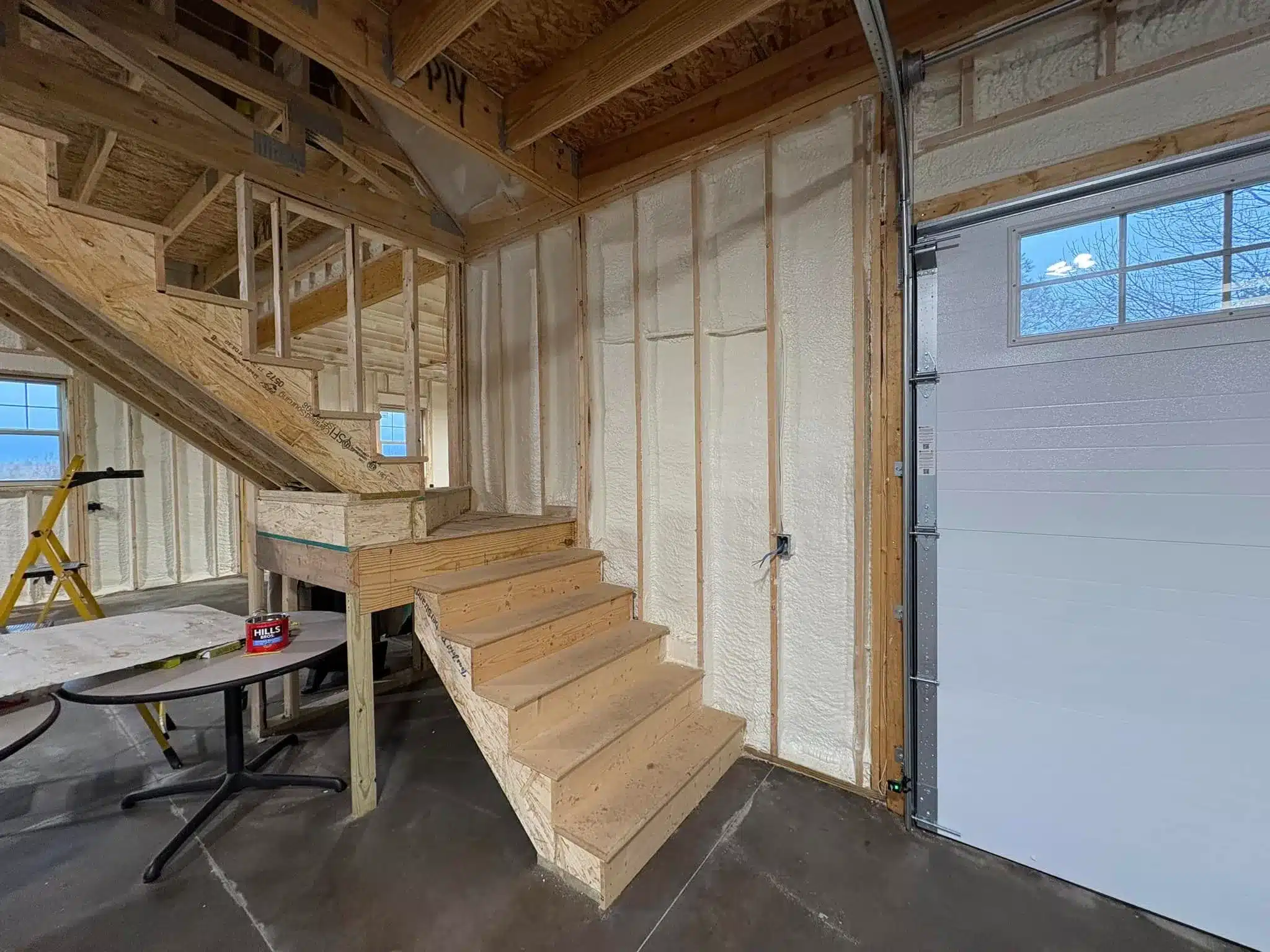
Closed-cell spray foam stands out for equipment storage because it accomplishes three things simultaneously. It delivers a high R-value in a thin layer, which matters when you are insulating between framing members in a pole barn. It creates an airtight seal by expanding into every gap, crack, and void, eliminating the air leakage pathways that drive condensation. And it acts as its own vapor retarder, preventing interior moisture from reaching cold surfaces where it would condense. These performance advantages often play a major role when property owners evaluate pole barn insulation costs before upgrading their buildings.
Fiberglass batts, while common and affordable, are the weakest option for condensation control. The Department of Energy notes that insulation effectiveness depends on proper installation and that air sealing and moisture control are essential to energy efficiency and building health. Fiberglass batts leave gaps around framing, allow air to pass through, and do not stop vapor diffusion. In a cold-climate pole barn, they can actually make condensation worse by keeping interior surfaces warmer but allowing moist air to reach cold sheathing through the insulation itself.
What the Building Code Requires in Wisconsin
Wisconsin’s Uniform Dwelling Code, administered through Wisconsin Administrative Code SPS 322, establishes prescriptive insulation requirements for buildings. While the code focuses on dwellings, the principles apply directly to pole barns used for equipment storage. Under SPS 322.31, Wisconsin is divided into two zones. Outagamie County, where Kaukauna is located, falls in Zone 1, which requires R-49 for ceilings, R-20 for wood-frame walls, and specific treatment of rim joist spaces.
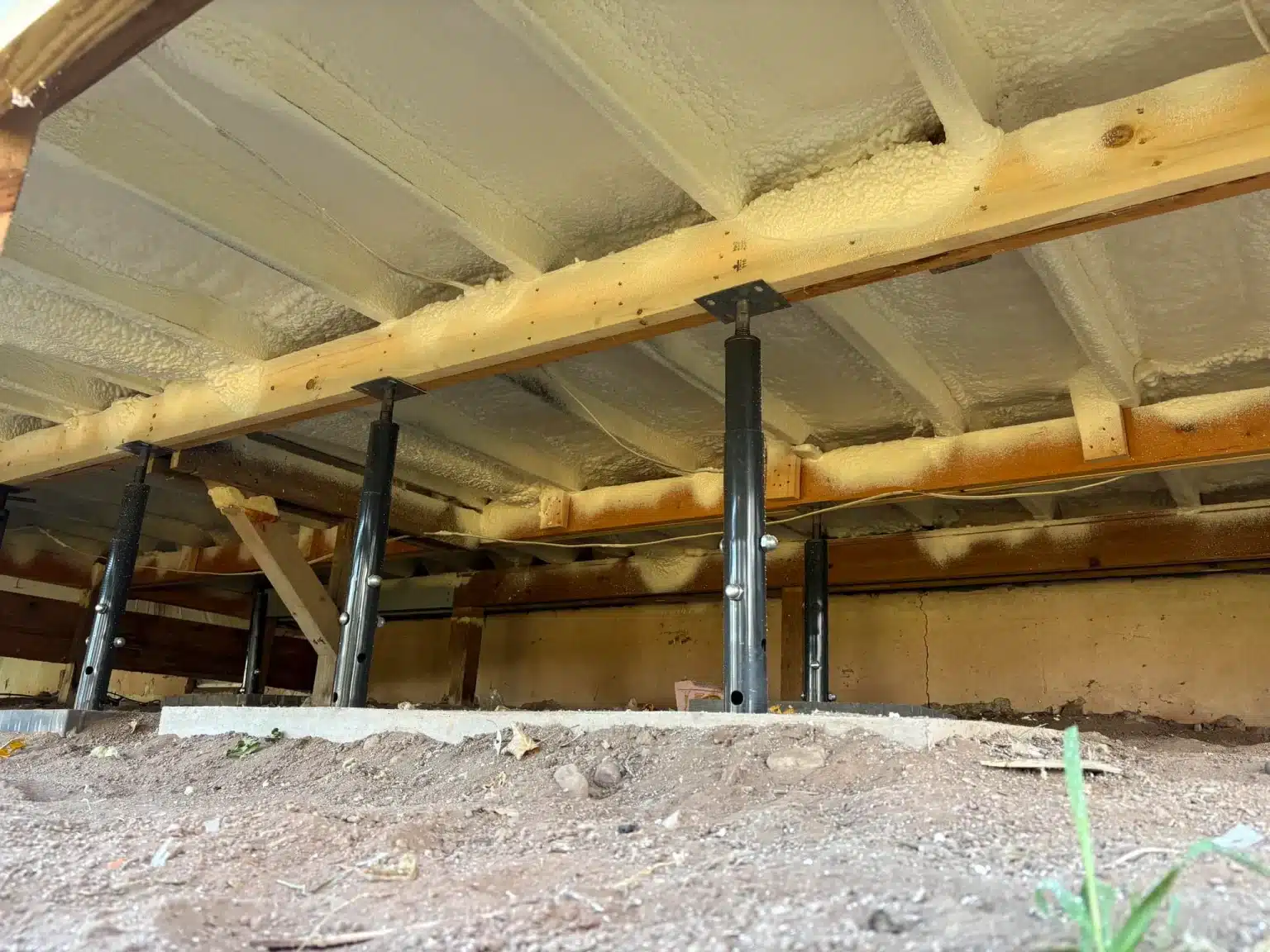
SPS 322.32(7) is particularly relevant for pole barn construction. It requires box sill and rim joist spaces at outside walls to be insulated to the required wall R-value with air-impermeable insulation that is sealed on all sides to all framing members. Spray foam is one of the few materials that meets this requirement, since fiberglass and cellulose are air-permeable and would need additional sealing measures.
For new construction or retrofits, following these code requirements ensures your building envelope performs properly, which directly translates to better protection for stored equipment.
Recommendations by Building Use
Heated Equipment Storage (Year-Round Use)
If you heat your pole barn to 50°F or above throughout winter, closed-cell spray foam applied to walls and ceilings is the recommended approach. The air sealing prevents warm, humid interior air from reaching cold surfaces, and the high R-value keeps heating costs manageable. Pair the insulation with proper ventilation to prevent moisture buildup from daily use.
Seasonal Cold Storage (Unheated or Minimal Heat)
For barns that stay unheated most of the year, the priority shifts to condensation prevention during temperature swings. Spray foam insulation on walls and the underside of the roof deck creates a consistent thermal barrier that keeps interior surfaces closer to the air temperature inside, reducing the temperature differential that causes condensation. Even without active heating, an insulated barn will maintain more stable conditions and protect equipment through freeze-thaw cycles.
Workshop and Maintenance Bay
When the barn doubles as a workspace, insulation directly affects productivity. Closed-cell spray foam on walls and ceiling, combined with insulated overhead doors, keeps the space warm enough for winter maintenance work and protects tools and parts from moisture damage year-round.
Signs You Have Found the Right Insulation Contractor
They assess the entire building envelope before quoting, including air leakage points, existing insulation, and how the building is used, rather than quoting a price per square foot sight unseen.
They explain the condensation problem clearly and show you where moisture is likely forming inside your specific building, not just what product they sell.
They recommend the right material for the conditions, including vapor barrier placement and air sealing details specific to Climate Zone 6, rather than applying a one-size-fits-all approach.
They provide a clear project scope and timeline, including how long the work will take, what preparation is needed, and what you can expect during and after installation.
They follow up on moisture control details such as ventilation, vapor barriers, and sealing around penetrations, because insulation alone is not enough if the building still leaks air.
Get Your Pole Barn Insulated Before Winter
Proseal Spray Foam specializes in pole barn insulation for agricultural buildings throughout the Kaukauna area. Our team evaluates your building envelope, identifies condensation risk zones, and applies the right insulation system to keep your expensive equipment protected through the harshest Wisconsin winters. With pricing that adapts to your project scope, from single-bay retrofits to full commercial operations, we work with you to find the right solution.
Call us at (715) 227-6295 or email [email protected] to discuss your project. Protect your equipment investment before the next freeze-thaw cycle begins.
Frequently Asked Questions
Does insulation really stop rust on farm equipment?
Yes. Insulation reduces condensation by keeping interior surfaces warmer than the dew point of the air inside, which prevents moisture from forming on equipment. Research shows atmospheric corrosion rates drop significantly when relative humidity stays below 60%, and a properly insulated building maintains those conditions.
Can I insulate my existing pole barn, or does it need to be done during construction?
Existing pole barns can absolutely be retrofitted with spray foam insulation. Closed-cell spray foam adheres directly to existing metal panels, wood framing, and concrete, making it ideal for retrofit applications without needing to remove exterior cladding.
What is the difference between open-cell and closed-cell spray foam for a pole barn?
Closed-cell spray foam has a higher R-value per inch, acts as a vapor barrier, and resists moisture absorption, making it the better choice for equipment storage. Open-cell is less expensive but does not block moisture and can absorb water if exposed.
Will insulation alone solve condensation, or do I need ventilation too?
Insulation addresses surface temperature and air sealing, but ventilation is needed to manage humidity from equipment, soil, and any heating system. A properly designed system includes both insulation and controlled ventilation for the best results.
How long does pole barn spray foam insulation last?
Closed-cell spray foam is a permanent installation that does not settle, sag, or degrade over time. It maintains its R-value and air sealing properties for the life of the building, unlike fiberglass or cellulose, which can lose effectiveness as they shift or absorb moisture.
Sources
U.S. Department of Energy – Insulation – Federal guidance on R-values, insulation materials, and climate zone recommendations for building envelope performance.
I’m Dan Passarella, owner of Proseal Spray Foam, serving Wisconsin since July. I provide spray foam solutions for residential, commercial, and industrial properties, focusing on efficiency, comfort, and quality workmanship.
Better insulation supports consistent indoor temperatures in Ashwaubenon, WI by slowing heat transfer through your attic, walls, floors, and crawlspaces…