Why Homeowners in Waupaca, WI, Choose Open Cell Spray Foam for Flexible Insulation Coverage
Homeowners choose open cell spray foam in Waupaca, WI, when they want one product that insulates and air seals at…


Homeowners choose open cell spray foam in Waupaca, WI, when they want one product that insulates and air seals at the same time, fills irregular framing, and stays slightly flexible as Wisconsin wood structures swell in humid summers and shrink in dry winters. It is the right fit for attic roof decks, exterior walls, and rooms where quieter interiors matter, while closed cell foam remains the better pick for rim joists, crawlspaces, and moisture-prone areas. The choice depends on the space, the moisture conditions, and the code targets for our climate zone. ENERGY STAR estimates that air sealing plus added insulation saves the average household about 15% on heating and cooling costs, and closer to 18% here in the northern zone that covers central Wisconsin. Below, we break down where open cell performs best, how it compares to other insulation options, and what our Waupaca-area projects typically involve.
Waupaca sits in Wisconsin’s heating-dominated climate, where winter design conditions push every weakness in a thermal envelope to show up as a draft, an ice dam, or a high heating bill. Our local housing stock is mostly homes between 1,500 and 4,000 square feet, a mix of older retrofit houses and newer construction, and both present the same problem: wood framing is irregular, and rigid insulation products do not fill irregular spaces. This Complete Guide to Open Cell Spray Foam Insulation: Benefits, Uses, Costs & Installation explains how this flexible insulation can adapt to these challenging areas and provide more consistent coverage.
Two local realities drive the decision toward open cell spray foam:
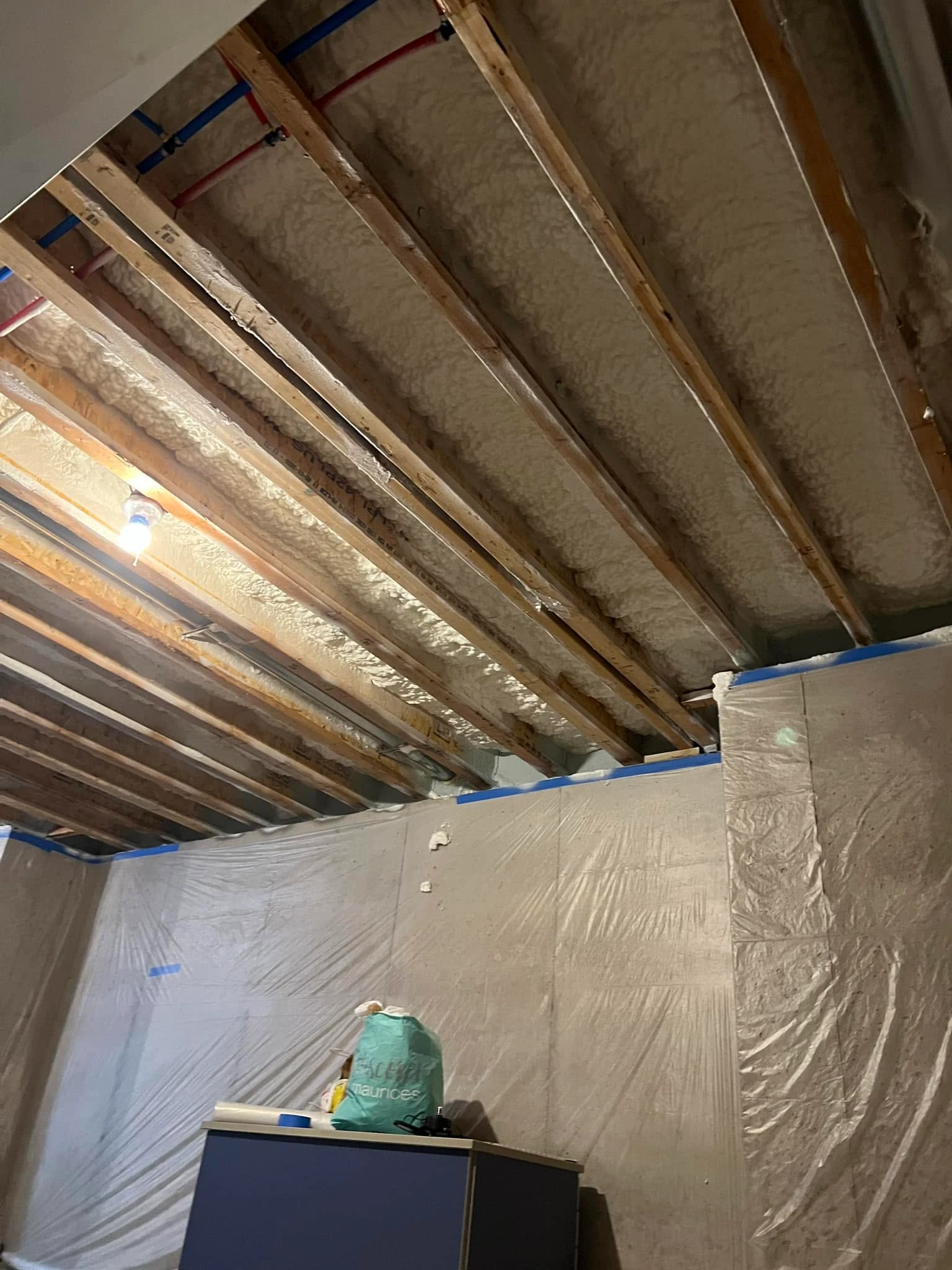
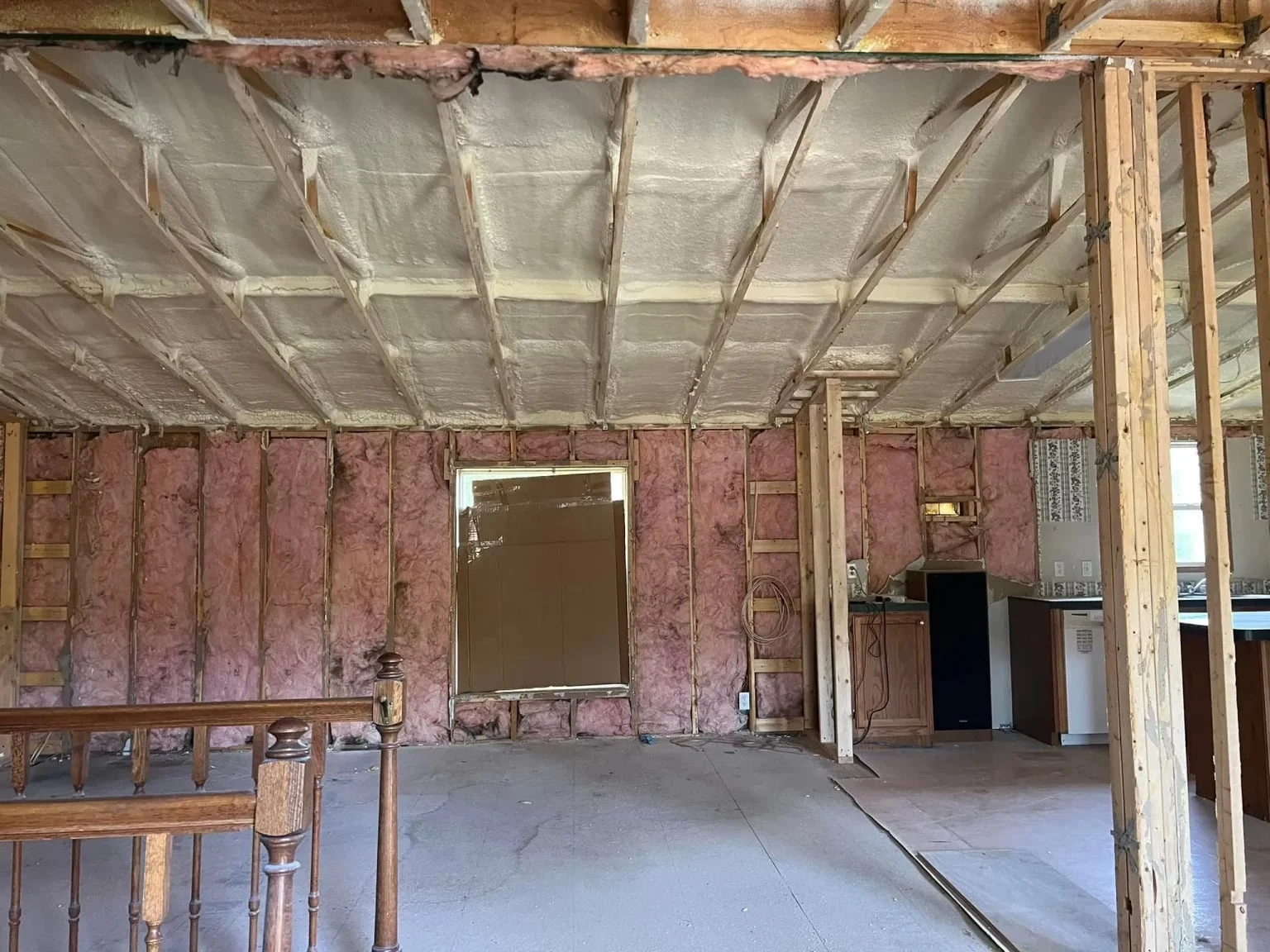
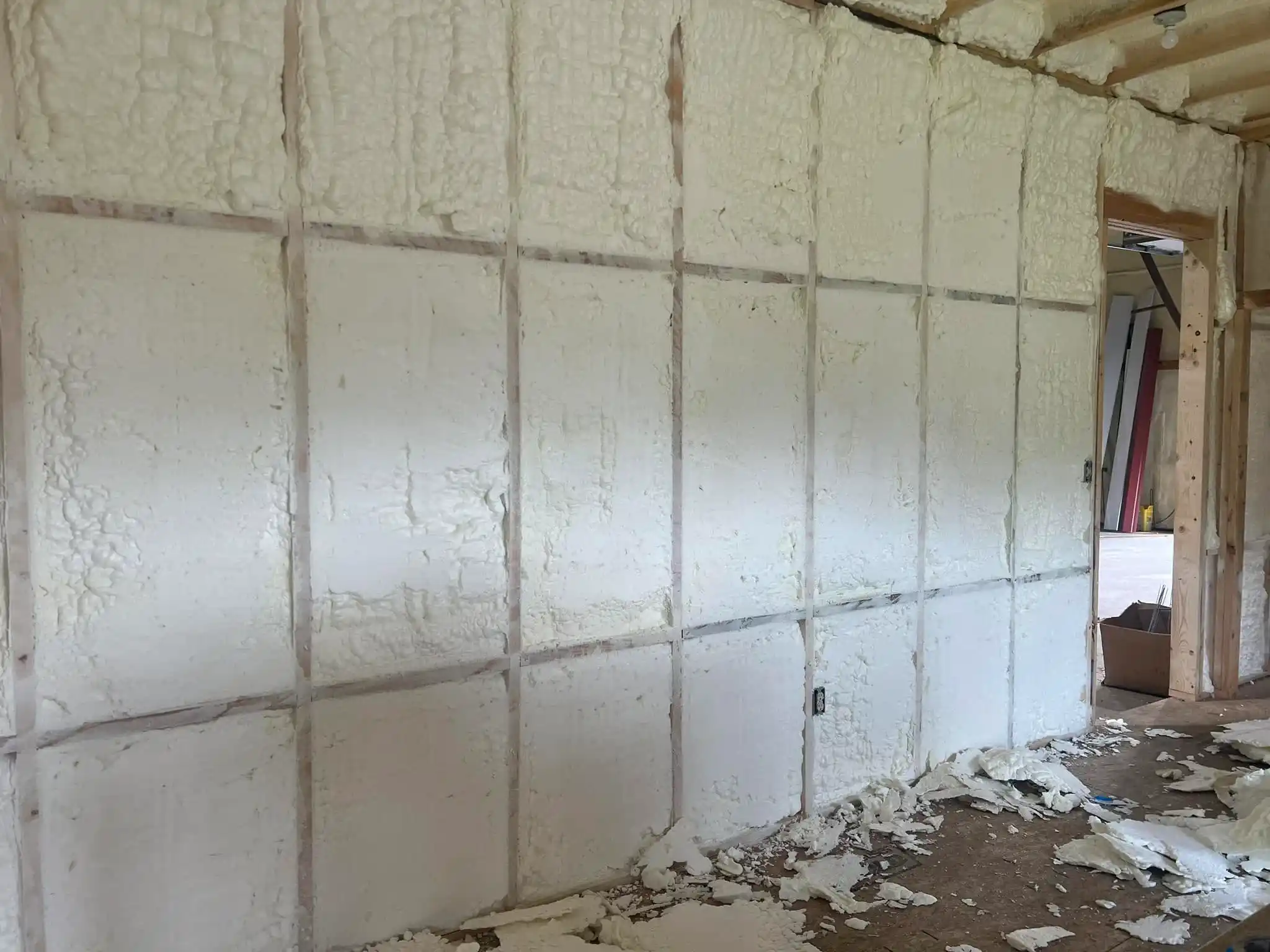
Open cell foam is sprayed as a liquid two-part mixture that expands on contact, filling stud bays, joist spaces, and odd-shaped cavities before curing into a soft, sponge-like solid. Because it grows into every corner, coverage does not depend on cutting and fitting the way batts do.
The performance profile is straightforward:
| Factor | Open Cell Spray Foam | Closed Cell Spray Foam | Blown-In Cellulose |
|---|---|---|---|
| R-value per inch | About R-3.7 | R-6 to R-7 | Varies by depth and settling |
| Air sealing | Excellent, seals as it fills | Excellent, plus acts as vapor retarder | Good when dense packed |
| Moisture behavior | Vapor permeable | Rejects water, adds rigidity | Absorbs and holds moisture if wet |
| Flexibility with framing | Stays slightly flexible | Rigid | Settles slightly over time |
| Sound control | High | Moderate | Moderate |
| Best applications | Attic roof decks, walls, media rooms, interior sound control | Rim joists, crawlspaces, below-grade walls, pole barns | Accessible attics, budget retrofits |
No single product wins every application. That is why many of our Waupaca projects are hybrids, matched to each assembly.
| Application | Our Recommendation | Why |
|---|---|---|
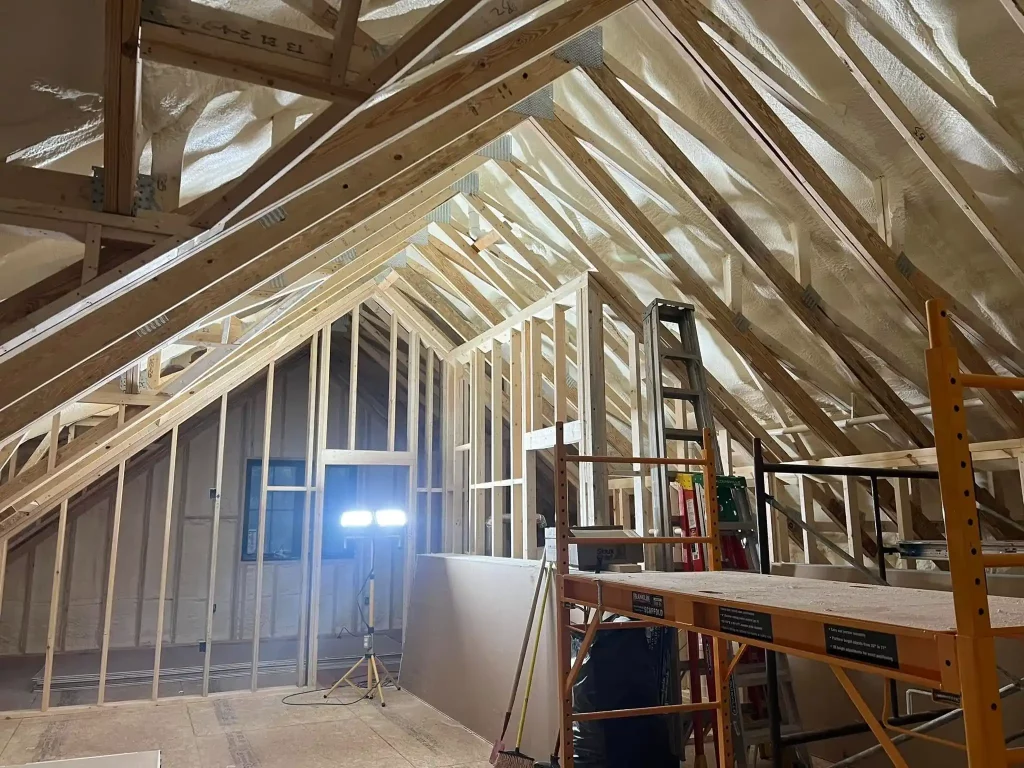
| Attic roof deck (conditioned attic) | Open cell, full depth | Continuous coverage and air sealing in one step |
| 2×4 or 2×6 exterior walls | Open cell or hybrid | Fills the full cavity, seals penetrations |
| Rim joists and box sills | Closed cell | SPS 322.32 requires air-impermeable insulation sealed to framing at these spaces |
| Crawlspace walls | Closed cell | Handles ground moisture and adds durability |
| Home theater or nursery walls | Open cell | Best sound absorption of the three options |
| Flat accessible attic floor | Blown-in cellulose or foam | Fast, code-compliant coverage over the ceiling |
A useful benchmark: the Department of Energy’s insulation and air sealing guidance lists R-60 as the 2021 IECC ceiling target for climate zone 6, which covers Wisconsin. Reaching that number with an open cell means more installed depth, which is exactly the kind of scope conversation we walk through on site.
Open cell spray foam service is quoted by scope, target thickness, and access, so every estimate is project specific. For planning context, here are the typical project ranges from our own quoting across the service area:
| Service | Typical Project Range | Our Typical Average |
|---|---|---|
| Closed cell spray foam | $1,500 to $10,000 | $6,000 |
| Attic insulation | $3,000 to $30,000 | $6,000 |
| Blown-in cellulose | $2,000 to $10,000 | $4,000 |
| Pole barn insulation | $5,000 to $60,000 | $15,000 |
| Commercial insulation | $20,000 to $300,000 | $50,000 |
Our smallest job is a $1,500 minimum. Removal of old insulation, difficult access, greater thickness, and travel distance can all move a quote, and we itemize those factors rather than burying them.
Proseal Spray Foam installs open cell spray foam, closed cell spray foam, blown-in cellulose, attic, pole barn, and commercial insulation across Waupaca, WI and the surrounding 54981 area, and we match the material to the assembly instead of selling one answer for every job. Call us at (715) 227-6295 or email [email protected] and we will walk your project, explain the options in plain language, and put the numbers in writing. Request a quote or schedule an insulation assessment with our team today.
Cured open cell foam is inert once it has fully reacted, and the work area is ventilated during and after application. We keep occupants out of the sprayed zone until the foam has cured and cleared.
Most Waupaca-area residential projects are completed in one to two days on site. Larger whole-home or commercial scopes are scheduled in phases, and we confirm your timeline before the crew arrives.
Open cell suits attics, walls, and sound control where depth is available, while closed cell suits rim joists, crawlspaces, and moisture-exposed assemblies. Many homes benefit from both, placed where each performs best.
Travel distance is one factor we account for, along with project scope, access, and required thickness. We confirm any distance-related adjustment during the estimate so there are no surprises.
Existing insulation usually needs to be removed first so foam can bond directly to the roof deck or ceiling plane. Removal is quoted as a separate line item when it applies.