How Can Better Insulation Support Consistent Indoor Temperatures in Ashwaubenon, WI?
Better insulation supports consistent indoor temperatures in Ashwaubenon, WI by slowing heat transfer through your attic, walls, floors, and crawlspaces…


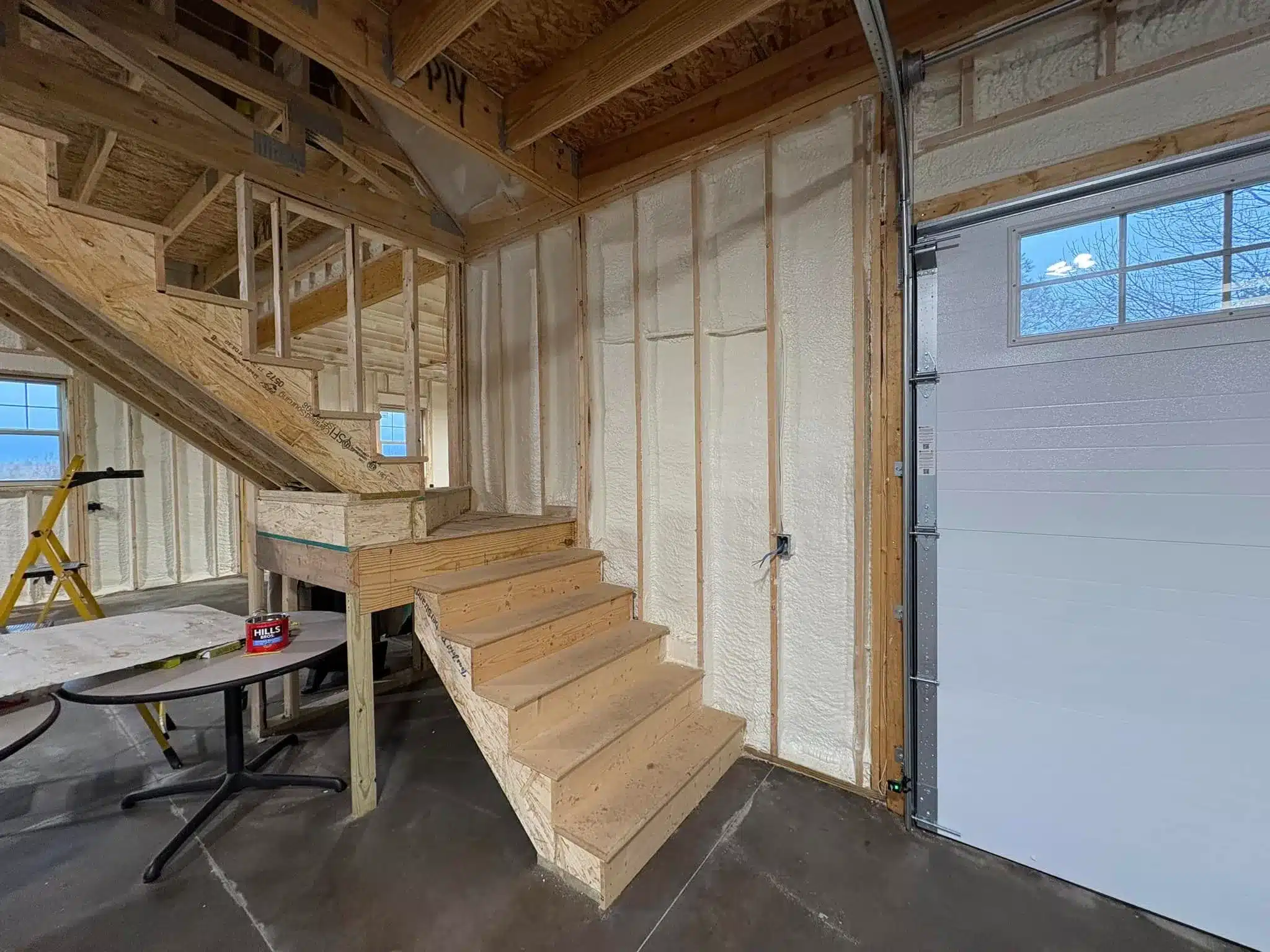
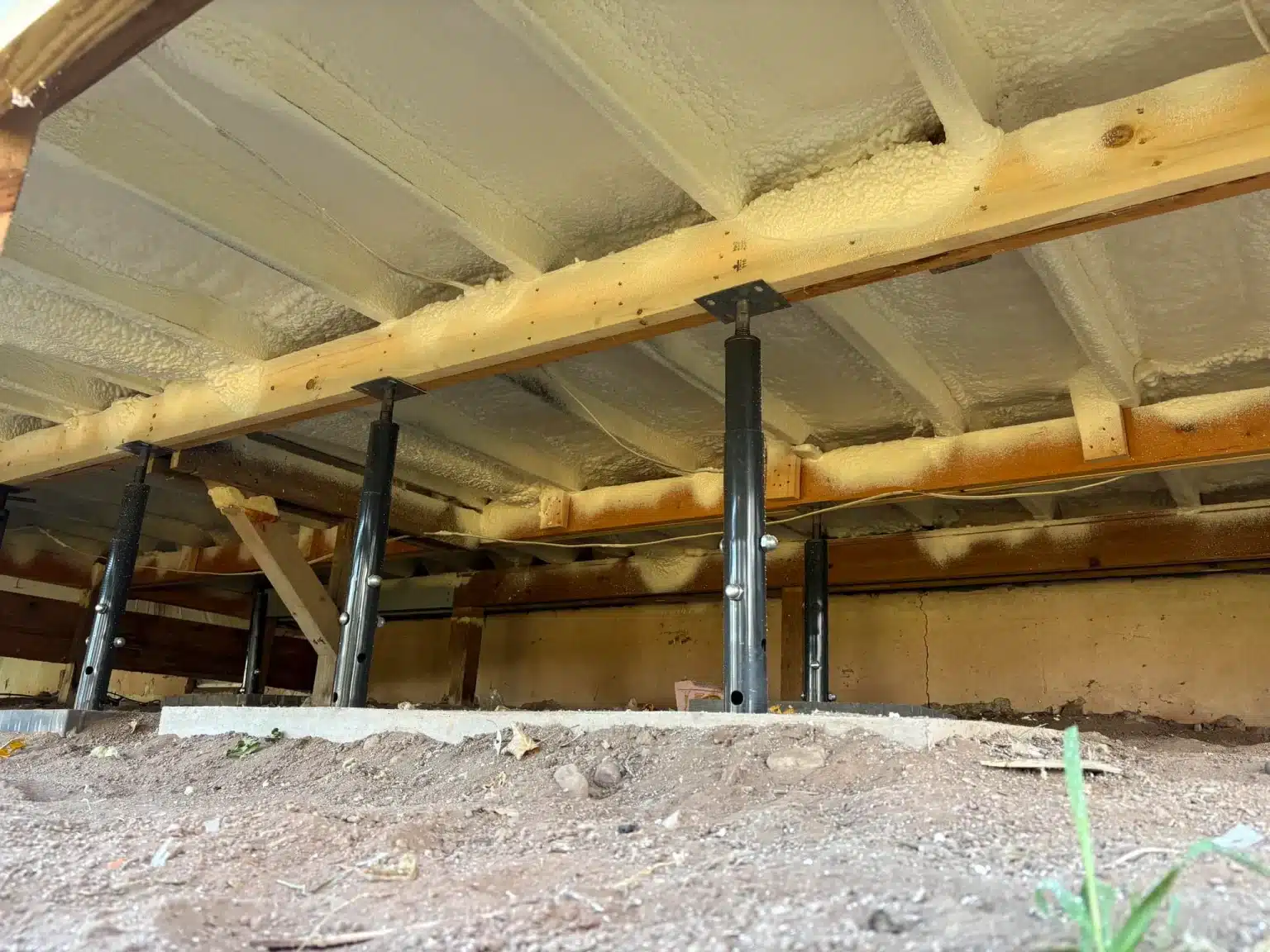
Better insulation supports consistent indoor temperatures in Ashwaubenon, WI by slowing heat transfer through your attic, walls, floors, and crawlspaces while sealing the air leaks that let outdoor air rush inside between heating and cooling cycles. Ashwaubenon homes face one of the widest temperature ranges in the country, from bitterly cold Arctic outbreaks in winter to warm, humid Gulf of Mexico air in summer. Insulation Solutions: The Comprehensive Guide to Efficiency for Homes and Businesses explains how the right approach depends on your building and its weak points: attic insulation upgrades, closed cell spray foam air sealing, blown-in cellulose top-offs, crawlspace insulation, and commercial insulation each solve a different comfort problem, and most homes need the right combination rather than a single product.
Ashwaubenon sits in interior North America, far from any mountain barriers, so it absorbs the full force of continental weather. According to the NOAA State Climate Summaries for Wisconsin, the state is exposed to bitterly cold Arctic air masses in winter and warm, humid air masses from the Gulf of Mexico in summer, which produces a large range of temperatures, with annual averages running from 39°F in northern Wisconsin to 50°F in the south. Proximity to Lake Michigan softens conditions along the shoreline, but the Green Bay area still sees frequent cold snaps, spring downpours, and humid summer stretches.
That constant push and pull is exactly what makes temperature consistency hard. A home with thin insulation loses heat fast when an Arctic front arrives, then picks up heat and humidity in July. The furnace and air conditioner cycle on and off constantly, and rooms at the ends of the system drift several degrees away from the thermostat.
Insulation works by resisting conductive heat flow. As Wikipedia’s technical overview of R-value explains, the higher the R-value, the more the material resists heat passing through it, and R-values of stacked layers are additive. In practical terms, a well-insulated attic passes heat slowly enough that the temperature inside stays stable even while the attic above it swings 40 degrees in a single day. The same principle applies to commercial insulation, where properly selected insulation helps reduce heat transfer across larger building assemblies.
Three effects follow from that:
Ashwaubenon falls in the coldest IECC climate zones, where ENERGY STAR’s cost-effective targets are the highest in the country. Working with an experienced insulation company can help you use these numbers as a concrete benchmark before we ever quote a project:
| Location in Home | Uninsulated Target | If 3–4 Inches Already Exist | Floor / Wall Target |
|---|---|---|---|
| Attic | R-60 | Add R-49 | R-38 (floors) |
| Basement or crawlspace wall | R-15 rigid sheathing | R-15 rigid sheathing | R-19 batt |
| Wood-frame wall (at re-siding) | Add R-5 to R-10 exterior sheathing | Add R-10 exterior sheathing | Blow empty cavities full |
| Insulation Approach | Best For | Approx. R-Value Per Inch | Typical Project Price | Comfort Outcome |
|---|---|---|---|---|
| Closed cell spray foam | Air sealing plus high R-value in walls, rim joists, crawlspaces | ~R-5.5 to R-6.5 | $1,500–$10,000 (avg $6,000) | Airtight envelope, warm surfaces, stable rooms |
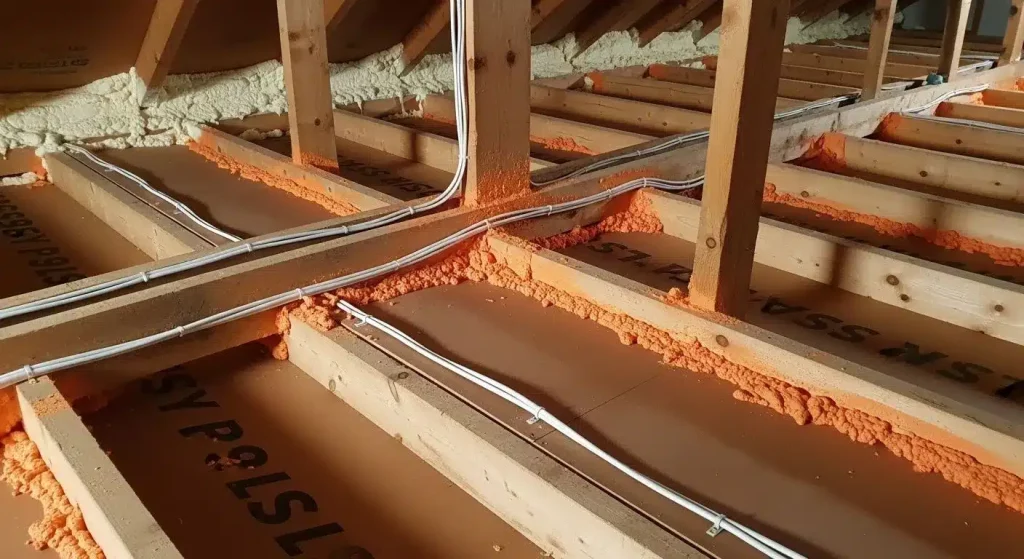
| Blown-in cellulose | Fast attic top-offs over existing insulation | ~R-3.0 to R-3.8 | $2,000–$10,000 (avg $4,000) | Even attic coverage, fewer ceiling drafts |
| Attic insulation (full upgrade) | Homes with compressed or removed old insulation | Varies by material depth | $3,000–$30,000 (avg $6,000) | Big winter heat-loss reduction |
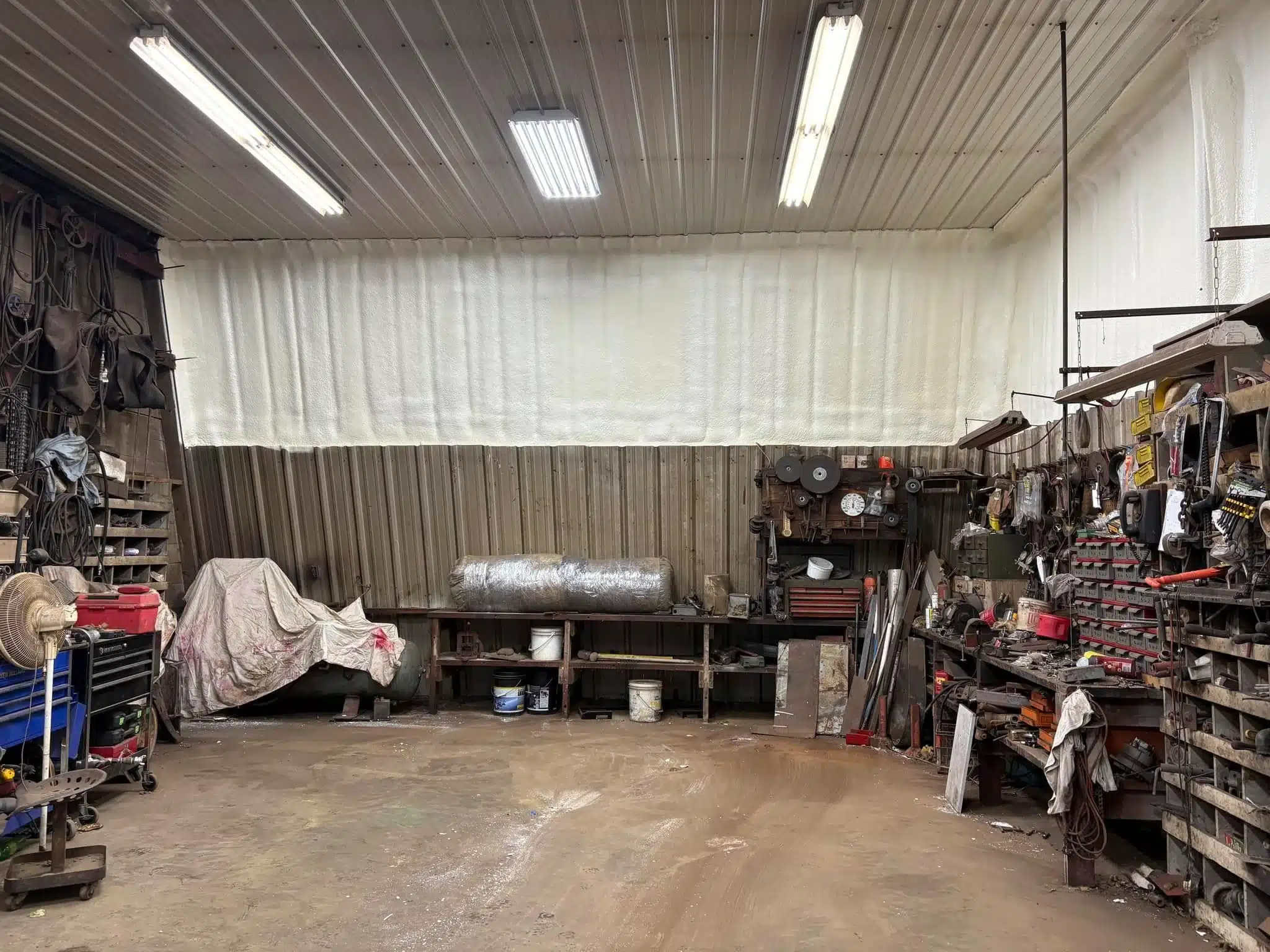
| Pole barn insulation | Shops, garages, agricultural buildings | Varies | $5,000–$60,000 (avg $15,000) | Usable, moderate workspace year-round |
| Commercial insulation | Offices, warehouses, retail build-outs | Varies | $20,000–$300,000 (avg $50,000) | Stable zones, lower operating load |
Two problems make otherwise decent insulation in Ashwaubenon, WI, underperform homes. First, air infiltration, which Wikipedia’s R-value reference flags as a direct performance killer, because moving air strips heat out of insulation and carries it away. Second, thermal bridging: wood studs between wall cavities conduct heat straight through the assembly, so even perfect cavity insulation leaves the framing as a heat highway. One of the primary comfort values of spray foam is that it seals directly against the substrate, closing both problems at once. When we scope a project, we look for these bypasses before recommending more thickness, because an airtight assembly usually beats a thicker, leaky one.
Temperature and humidity are linked, and insulation touches both. The EPA’s moisture control guidance notes that raising the temperature of cold surfaces where moisture condenses, using insulation, directly reduces window and wall condensation, and it lists crawlspace ground covers and ventilation as companion steps. The agency’s home mold and moisture guide recommends keeping indoor relative humidity below 60 percent, ideally between 30 and 50 percent. In an Ashwaubenon winter, where outdoor air can hold very little moisture, insulated walls and sealed rim joists keep interior surfaces warm enough that condensation never starts, which protects both comfort and the building itself.
| Your Situation | Our Recommended Starting Point | Why It Works |
|---|---|---|
| Retrofit home, 1,500–2,500 sq ft | Blown-in attic top-off, then rim joist spray foam | Fastest path to steadier bedrooms and upper floors |
| Retrofit home, 2,500–4,000 sq ft | Closed cell foam at band joists and crawlspace, attic upgrade | Attacks the two biggest leakage zones first |
| New construction | Closed cell in exterior walls plus full-depth attic plan | Builds the airtight, high-R envelope from day one |
| Damp or cold crawlspace | Closed cell walls or ceiling, sealed ground barrier | Warms floors and cuts winter humidity swings |
| Pole barn or shop | Pole barn insulation package | Moderates the space for year-round use |
| Commercial building | Commercial insulation scoped by zone | Stabilizes large volumes and trims operating load |
You will know the plan is right when these things happen:
Proseal Spray Foam helps Ashwaubenon homeowners and building owners hold comfortable, even indoor temperatures through Arctic cold snaps and humid July stretches alike. Our team scopes every project around your building’s weakest points, explains every price factor up front, and installs closed cell spray foam, blown-in cellulose, attic, crawlspace, pole barn, and commercial insulation built for Wisconsin weather. Call us at (715) 227-6295 or email [email protected] to get started.
Your rooms should feel the same in February as they do in June, and we can show you exactly how to get there.
Timeline depends entirely on scope and access. A single attic top-off moves quickly, while whole-envelope foam work or commercial jobs require more days, and difficult access or removal of old insulation adds time that we confirm before work starts.
Closed cell gives you roughly R-5.5 to R-6.5 per inch plus moisture resistance, which suits Wisconsin walls, rim joists, and crawlspaces, while open cell fills deep cavities economically. We match the product to the assembly rather than defaulting to one.
Odor concerns are the question we hear most. We review product selection, re-occupancy timing, and ventilation expectations with you before installation day so there are no surprises.
Yes, driving distance affects project pricing because travel time and logistics are real costs. We confirm any location factor in your written quote so the number you see is the number you pay.
Our minimum job is $1,500, which covers small scopes like rim joist sealing or crawlspace foam work. Larger attic, pole barn, and commercial projects are quoted individually from $1,500 up to $300,000 depending on scope.