Is closed-cell spray foam better than standard fiberglass in Menasha, WI?
Dan Passarella
May 21st, 2026
For homeowners and builders in Menasha, Wisconsin, choosing between closed-cell spray foam and standard fiberglass insulation comes down to one question: how serious are you about long-term energy performance in a cold climate? Menasha sits in IECC Climate Zone 6, where winter temperatures regularly drop well below zero and heating seasons stretch from October through April. In this environment, closed-cell spray foam outperforms standard fiberglass in nearly every measurable category, including R-value per inch, air sealing, moisture resistance, and long-term durability. Fiberglass remains a workable, budget-friendly option for some applications, but it cannot match the all-in-one performance that closed-cell spray foam delivers in a region where thermal efficiency directly affects your comfort and your monthly energy bills.
TL;DR
Closed-cell spray foam delivers roughly R-5.6 to R-7 per inch, compared to fiberglass at roughly R-2.9 to R-4.2 per inch, meaning you get more insulation in less space.
Menasha falls in IECC Climate Zone 6, which requires ceiling insulation of R-49, wall insulation of R-20+5, and basement wall insulation of R-15/19 per the IECC Compliance Guide for Homes in Wisconsin.Closed-cell spray foam acts as both an air barrier and a Class II vapor retarder at 1.5 inches of thickness, eliminating the need for separate air sealing and vapor barrier materials
Fiberglass does not stop air movement on its own; it must be paired with additional air sealing measures to perform effectively.
The U.S. Department of Energy confirms that foam-in-place insulation “can fill even the smallest cavities, creating an effective air barrier.”
Closed-cell spray foam adds structural rigidity to walls and roofs, which is especially valuable in areas prone to high winds and heavy snow loads.
Typical closed-cell spray foam projects range from $1,500 to $10,000, depending on scope, with a $1,500 minimum project size.
In IECC Climate Zones 6 and higher, building science experts specifically recommend high-density closed-cell spray foam for condensation control in walls and roofs.
Understanding the Climate Challenge in Menasha, WI
Menasha, located in Winnebago County along the Fox River, experiences some of the coldest winters in the lower 48 states. According to the University of Wisconsin-Madison State Climatology Office, Wisconsin’s east-central climate division accumulates thousands of heating degree days each year, placing enormous demand on a home’s thermal envelope.
Heating degree days measure how much and how long outdoor temperatures stay below 65 degrees Fahrenheit. The higher the number, the more energy your heating system consumes to maintain indoor comfort. Menasha’s position in Climate Zone 6 means homes here face sustained cold that tests every weakness in a building’s insulation system.
This climate reality matters because insulation performance is not just about R-value on a label. It is about how well the entire system, insulation plus air sealing plus moisture control, holds up under real winter conditions for decades.
Closed Cell Spray Foam vs Fiberglass: Head-to-Head Comparison
Performance Factor
Closed Cell Spray Foam
Standard Fiberglass
R-Value Per Inch
R-5.6 to R-7.0
R-2.9 to R-4.2
Air Sealing
Creates a continuous air barrier
Does not stop air movement
Moisture Resistance
Acts as a Class II vapor retarder at 1.5″
Absorbs moisture; requires a separate vapor barrier
Installation
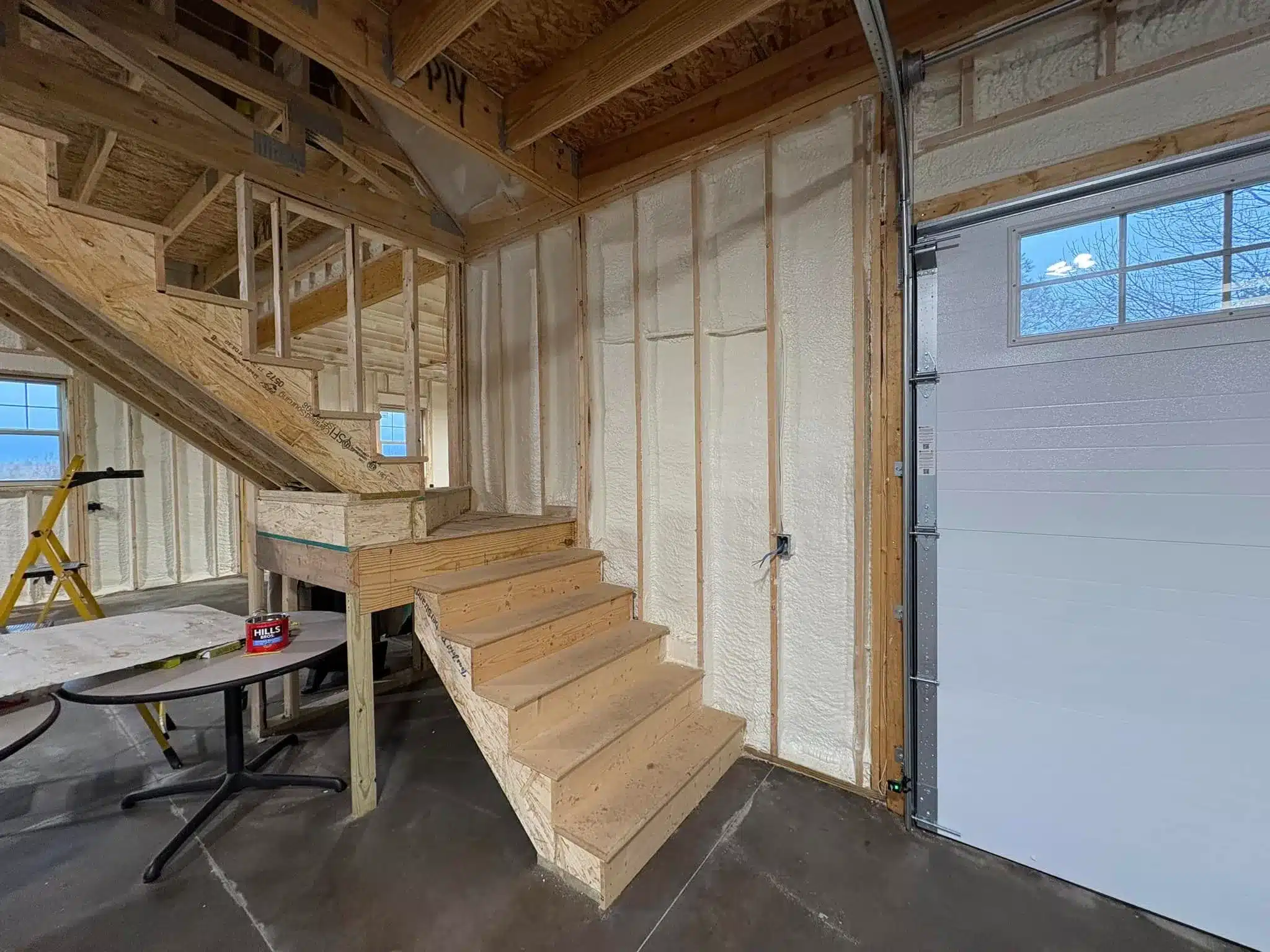
Expands to fill gaps, cracks, and irregular cavities
Must be cut and fitted; gaps are common around obstructions
Structural Benefit
Adds rigidity to walls and roof assemblies
No structural contribution
Longevity
Does not settle or sag over time
Can settle, compress, and leave voids
Sound Control
Reduces airborne sound transfer
Moderate sound reduction
R-Value: The Numbers That Matter
Closed-cell spray foam insulation provides significantly higher thermal resistance per inch than fiberglass. According to Wikipedia’s technical data on spray foam, closed-cell polyurethane spray foam typically achieves an initial R-value of approximately R-3.4 to R-6.7 per inch, with many modern formulations reaching the upper end of that range. Fiberglass batts, by comparison, generally achieve R-2.9 to R-4.2 per inch depending on density.
In practical terms, this means a 2×4 wall cavity filled with closed-cell spray foam can achieve roughly R-21 in just 3 inches, while the same cavity with fiberglass batts maxes out at R-13 to R-15. That difference compounds across every exterior wall, ceiling, and crawl space in your home.
Air Sealing: The Performance Gap
This is where the comparison shifts from a gap to a canyon. The U.S. Department of Energy states that foam-in-place insulation “can fill even the smallest cavities, creating an effective air barrier.” Fiberglass, by contrast, is an air-permeable material. It slows conductive heat transfer but does almost nothing to stop air from leaking through gaps around wiring, plumbing, electrical boxes, and framing irregularities.
According to DOE data, approximately 40% of a home’s energy is lost through air infiltration through walls, windows, and doorways. In a Climate Zone 6 city like Menasha, that translates to a substantial amount of heated air escaping through gaps that fiberglass simply cannot seal.
Moisture Control in Cold Climates
Moisture management is especially important in Wisconsin’s climate. Warm indoor air carries moisture that migrates outward through walls during winter. When that moisture hits cold surfaces inside the wall cavity, it can condense, leading to mold, rot, and degraded insulation performance.
The Building Science Corporation Residential Spray Foam Guide specifically states that “in IECC Climate Zones 6 and higher, high-density closed-cell spray foam provides additional condensation control and will qualify as a Class II vapor retarder at 1.5 inches.” This means closed-cell spray foam handles vapor diffusion within the wall assembly without requiring a separate polyethylene vapor barrier.
Fiberglass insulation requires a separate vapor retarder installed on the warm side of the wall to manage condensation. If that vapor barrier is improperly installed, torn, or missing around penetrations, moisture problems can develop silently behind the walls for years before detection.
Wisconsin Building Code Requirements for Menasha
The IECC Compliance Guide for Homes in Wisconsin outlines minimum insulation requirements for residential construction in Climate Zone 6, which includes Winnebago County and Menasha:
Building Component
Minimum R-Value (Zone 6)
Ceilings with Attic Space
R-49
Wood Frame Walls
R-20+5 or R-13+10
Mass Walls
R-15/20
Floors
R-30
Basement Walls
R-15/19
Slab on Grade
R-10, 4 ft depth
Crawl Space Walls
R-15/19
Meeting these minimums with fiberglass alone requires thick batts plus separate air sealing, vapor barrier installation, and careful detailing around every penetration. Closed-cell spray foam meets or exceeds these requirements in less space while simultaneously providing the air barrier and vapor control that code compliance demands.
Recommendations by Project Type
New Construction in Menasha
For new homes, closed-cell spray foam structure is the clear winner. You can achieve code compliance with less cavity depth, reduce HVAC equipment sizing thanks to tighter construction, and avoid the callbacks and warranty issues that come with fiberglass settling or air leakage. Our team typically recommends closed-cell spray foam for exterior walls, rim joists, and basement walls in new builds around the Menasha area.
Retrofit and Existing Homes
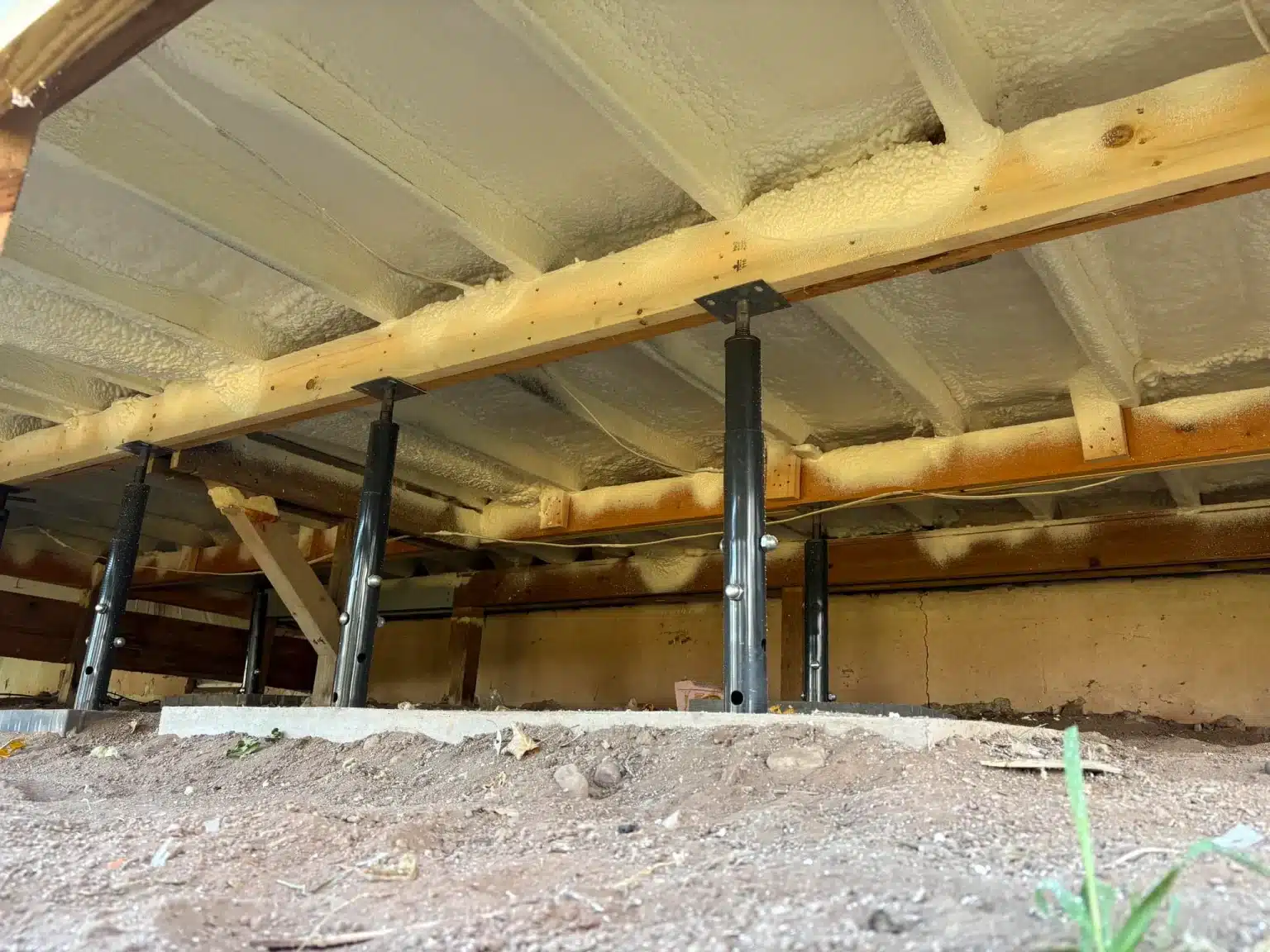
For existing homes, the right approach depends on access and budget. Closed-cell spray foam excels in rim joists, basement walls, crawl spaces, and attic upgrades where maximum R-value per inch matters and space is limited. For large, open attic floors where depth is not a constraint, blown-in cellulose or fiberglass can be a cost-effective supplement.
Pole Barns and Commercial Buildings
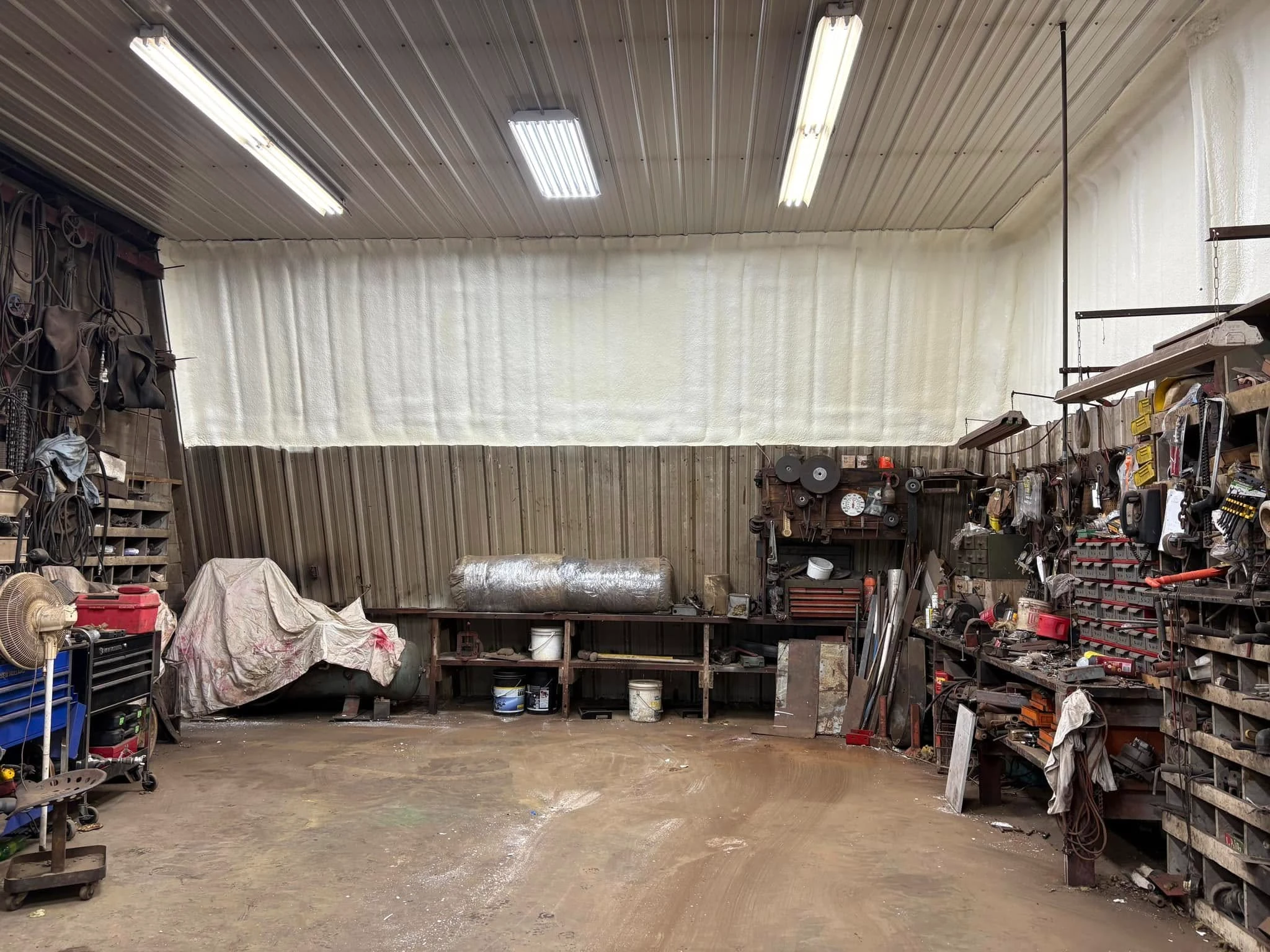
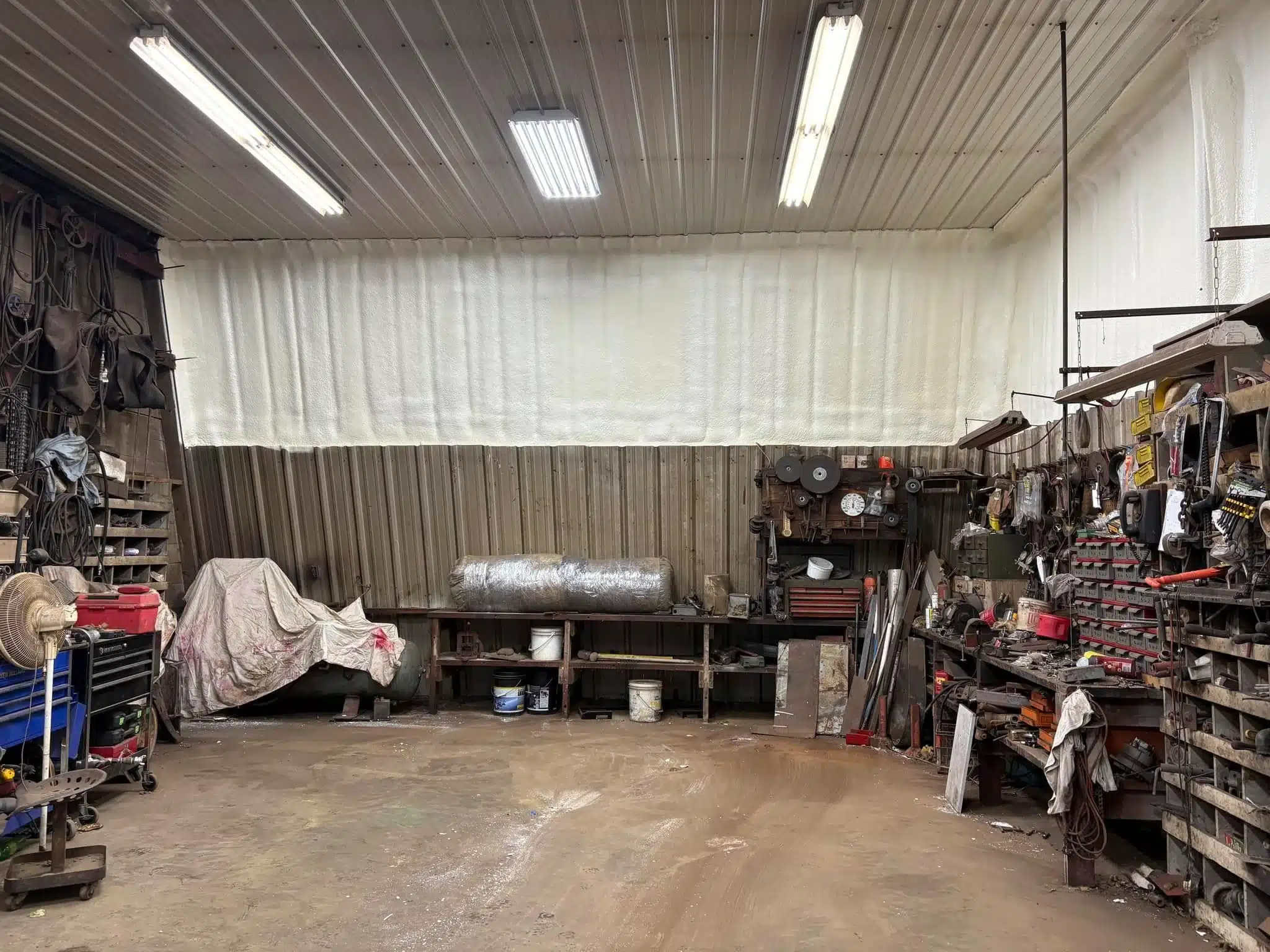
Pole barns and commercial structures benefit enormously from closed-cell spray foam because it adheres directly to metal building surfaces, eliminates condensation on the interior face of steel panels, and provides a continuous insulation layer without thermal bridging.
Signs You Have the Right Insulation Strategy
No drafts or cold spots near exterior walls, outlets, or rim joists during January cold snaps
Consistent indoor humidity between 30% and 50% through the heating season without running a humidifier constantly
Even temperatures between rooms and floors, with no more than a 2-3 degree variance
Energy bills that align with your home’s size and efficiency goals, not shockingly high winter heating costs
No visible condensation on windows, in the attic, or along rim joist areas
A blower door test result that meets or beats the Wisconsin code requirement of 3 ACH50 in Climate Zone 6
Common Mistakes When Choosing Insulation in Menasha
Choosing based on upfront cost alone. Fiberglass appears cheaper on paper, but when you add the cost of separate air sealing, vapor barriers, and the long-term energy penalty from air leakage, closed-cell spray foam often delivers better total value over the life of the home.
Assuming all spray foam is the same. Open-cell and closed-cell are fundamentally different products. In Climate Zone 6, Building Science Corporation specifically recommends closed-cell for walls, roofs, and basement applications. Open cell should not be used below grade or where vapor control is critical.
Ignoring the rim joist. The rim joist is one of the largest sources of air leakage and heat loss in any home. Fiberglass batts in rim joists almost always leave gaps and cannot seal the wood-to-concrete joint. Closed-cell spray foam seals this area completely.
Skipping the blower door test. Without testing, you have no way to know whether your insulation is actually performing. A well-sealed spray foam envelope should achieve well under 3 ACH50.
Ready to Upgrade Your Insulation?
At Proseal Spray Foam, we specialize in closed-cell spray foam insulation for homes and commercial buildings throughout the Menasha area and greater Wisconsin. Our team understands the specific demands of Climate Zone 6 construction, and we tailor every project to deliver maximum thermal performance, proper air sealing, and code-compliant results. Whether you are building new, upgrading an older home, or insulating a pole barn, we have the experience and equipment to get it done right.
Reach us at (715) 227-6295 or [email protected] to discuss your project. We will evaluate your building, explain your options clearly, and deliver a solution that keeps your home comfortable and energy-efficient for decades.
Frequently Asked Questions
How much more does closed-cell spray foam cost compared to fiberglass in Menasha?
Closed-cell spray foam has a higher upfront investment than fiberglass. Our projects range from $1,500 on the low end to $10,000 on the high end, with most residential jobs averaging around $6,000. That said, the energy savings, moisture protection, and elimination of separate air sealing and vapor barrier materials often close the gap over time.
Can closed-cell spray foam be installed in an existing home?
Yes. We can retrofit closed-cell spray foam into existing walls through drilled access holes, apply it to basement walls and rim joists from the interior, and spray it along attic roof decks. It is one of the most effective upgrade options for older homes in the Menasha area.
Does closed-cell spray foam off-gas after installation?
During application and the brief curing period, spray foam emits gases that require proper ventilation and personal protective equipment. Once fully cured, which typically happens within 24 hours, the foam is inert and non-toxic. Our team follows all safety protocols and ensures proper ventilation before reoccupancy.
How thick does closed-cell spray foam need to be for walls in Climate Zone 6?
For condensation control in Climate Zone 6, Building Science Corporation recommends a minimum of 1.5 inches of closed-cell spray foam, which qualifies as a Class II vapor retarder. For full thermal performance, our team typically installs enough to fill the cavity or meet your target R-value.
Is fiberglass ever the better choice in Menasha?
Fiberglass can be a reasonable choice for large, open attic floors where depth is not constrained and budget is the primary driver. It also works as a supplement to closed-cell spray foam in hybrid assemblies where spray foam handles air sealing and vapor control, while fiberglass adds bulk thermal resistance at a lower cost.
Sources
U.S. Department of Energy – Types of Insulation – Comprehensive guide to insulation types, including spray foam and fiberglass, with details on R-values, installation methods, and performance characteristics.
Spray Foam – Wikipedia – Technical overview of spray polyurethane foam properties, R-value ranges, air barrier performance, and building science applications.
IECC Compliance Guide for Homes in Wisconsin – Summary of 2015 IECC building envelope requirements for Wisconsin residential construction, including minimum R-values for ceilings, walls, floors, and basements by climate zone.
I’m Dan Passarella, owner of Proseal Spray Foam, serving Wisconsin since July. I provide spray foam solutions for residential, commercial, and industrial properties, focusing on efficiency, comfort, and quality workmanship.
Better insulation supports consistent indoor temperatures in Ashwaubenon, WI by slowing heat transfer through your attic, walls, floors, and crawlspaces…