What Makes Spray Foam Insulation Useful for Hard-to-Reach Areas in Howard, WI?
Spray foam insulation is useful for hard-to-reach areas because it goes in as a liquid and expands up to 30…


Closed cell spray foam keeps storage areas stable by doing three jobs at once: it insulates at roughly R-5 to R-7 per installed inch, seals the cracks that let outside air move through the building, and blocks water vapor before it can condense on walls, roof panels, and stored goods.For farm owners, warehouse operators, and property owners around Waupaca, Wisconsin, who store equipment, inventory, feed, or temperature-sensitive materials, Closed Cell Spray Foam: An Authoritative Guide explains how the right insulation strategy can mean fewer temperature swings, less condensation, and a lower risk of mold and moisture damage. The right approach depends on your structure type, what you store, and how the space is used, so this guide breaks down how closed cell spray foam performs, how it compares with other options, and how to plan a project that fits your building and budget.
Heat always moves from warmer to cooler spaces, flowing into a storage building during summer and out of it during winter, which forces any HVAC or heating equipment to work harder just to hold a setpoint. HUD’s consumer energy guide explains that insulation resists this conductive heat flow, and that air leaks reduce insulation effectiveness, which is why sealing should happen before or alongside insulating.
Air movement is the bigger problem in most storage buildings. Gaps at seams, joints, soffits, and door frames carry humid summer air and freezing winter air directly into the space. Unsealed metal buildings and pole barns add a second failure mode: warm, humid air contacts cold steel panels and condensation forms. The EPA’s mold course notes that condensation appears exactly this way, when warm humid air meets a cold surface, and that keeping indoor relative humidity below 60 percent, ideally between 30 and 50 percent, is the benchmark for preventing mold on packaging, wood, paper, and inventory.
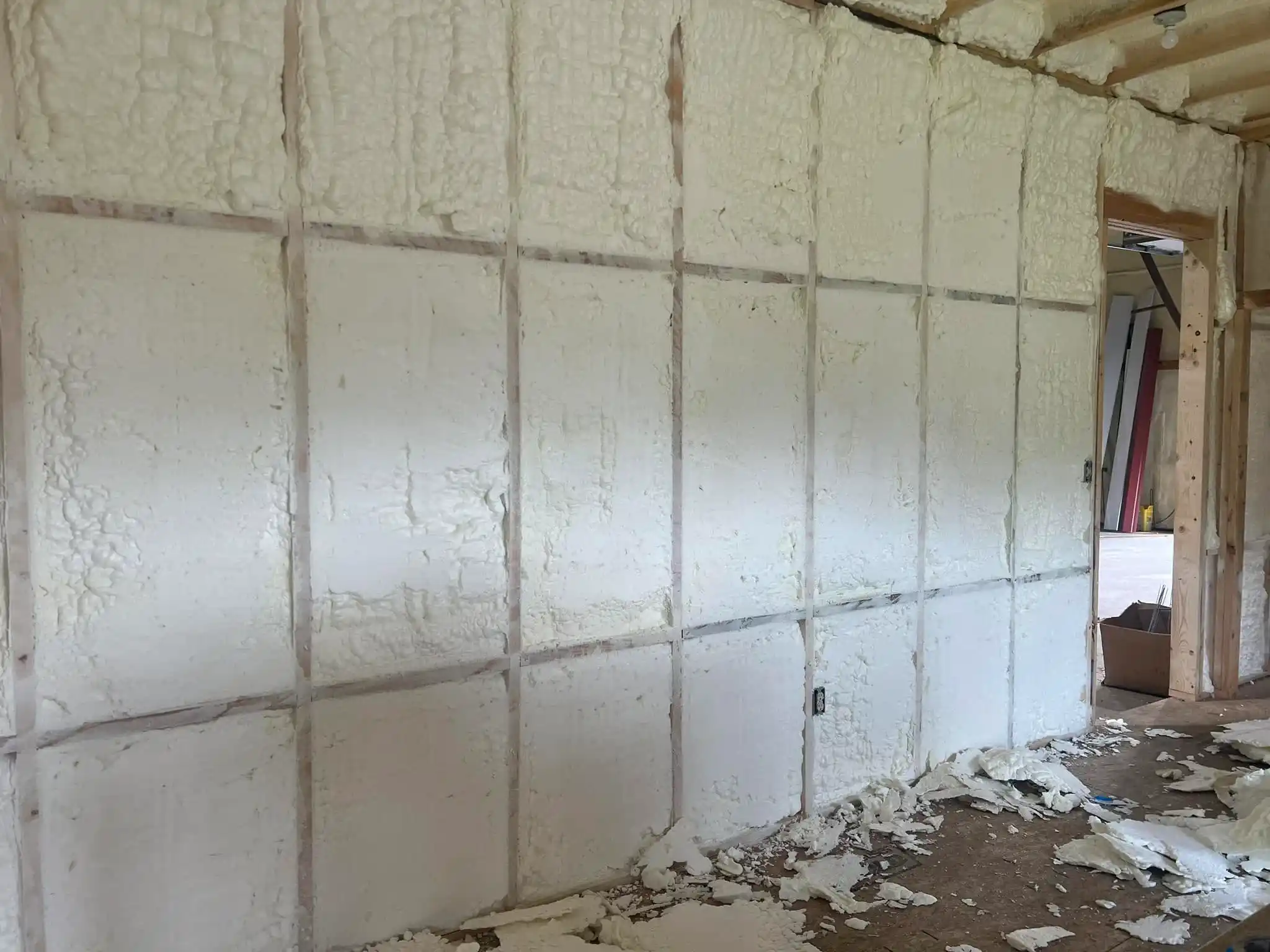
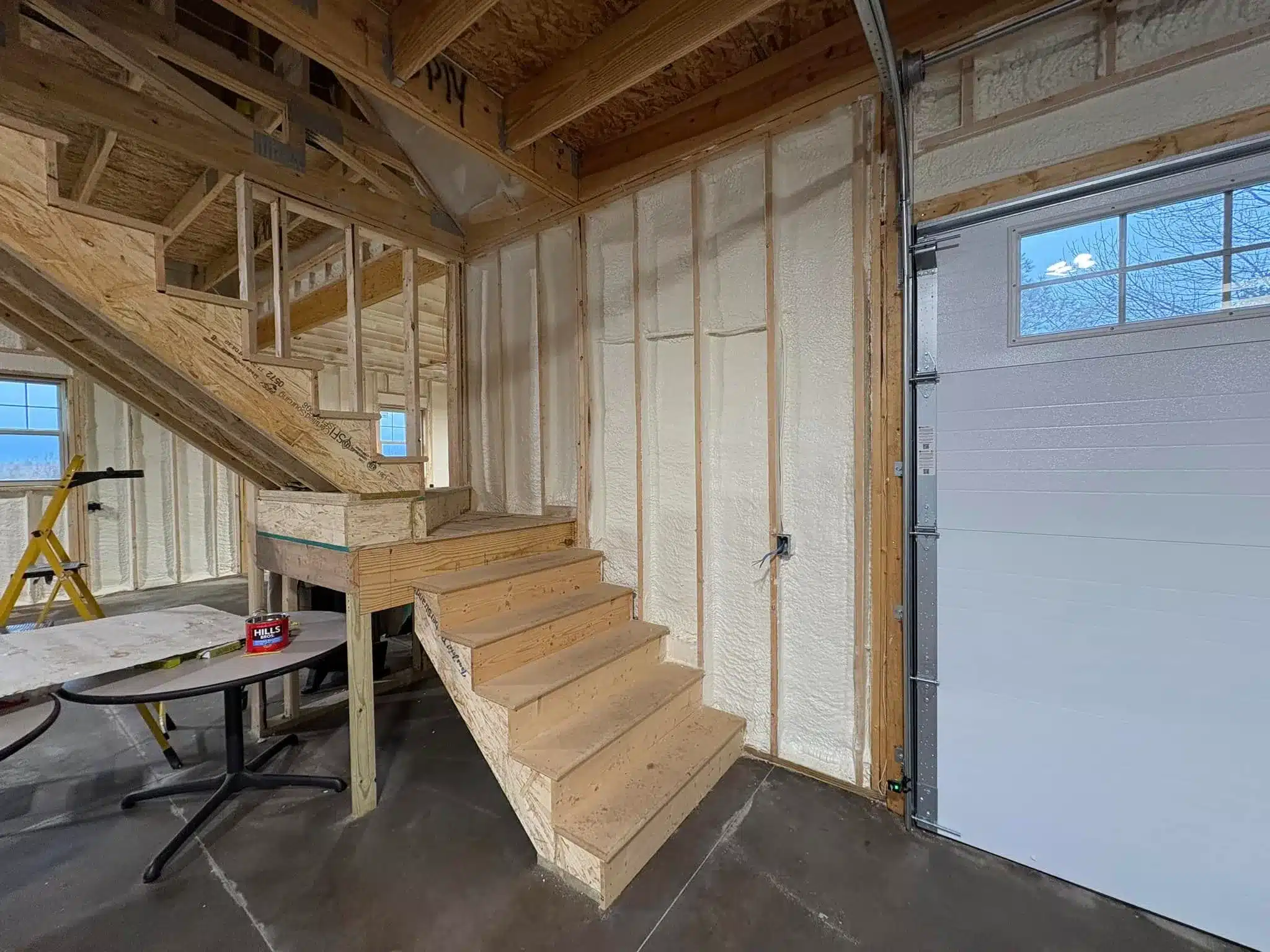
Closed cell spray polyurethane foam starts as two liquid chemical streams that mix at the spray gun, react, and expand up to 30 to 60 times their liquid volume. Because it is sprayed in place, a closed-cell spray foam service forms a continuous layer over walls, around corners, and across contoured surfaces like ribbed steel panels, with no gaps, seams, or compression points.
Closed cell foam is a rigid, medium-density material (1.75 to 2.25 lbs/ft3) with an R-value greater than 6.0 per inch, according to the Spray Polyurethane Foam Basics guide from the industry’s center. Wikipedia’s technical overview cites a long-term thermal resistance between 5.1 and 6 per inch, compared with R-3 to R-4 per inch for glass wool. Higher R-value per inch means a storage building reaches target thermal performance without thick wall assemblies, which preserves interior clearance for racking and equipment.
Once cured, the foam is both insulation and air barrier. Because it adheres directly to the substrate, it stops convective heat transfer, the movement of heat riding on air that leaks through gaps, which is the loss channel responsible for about 40 percent of energy waste in buildings. In a storage area, that translates directly into steadier interior temperatures and less runtime on heaters or cooling equipment. The ENERGY STAR program reports that sealing air leaks and adding insulation can deliver up to a 10 percent saving on annual energy bills.
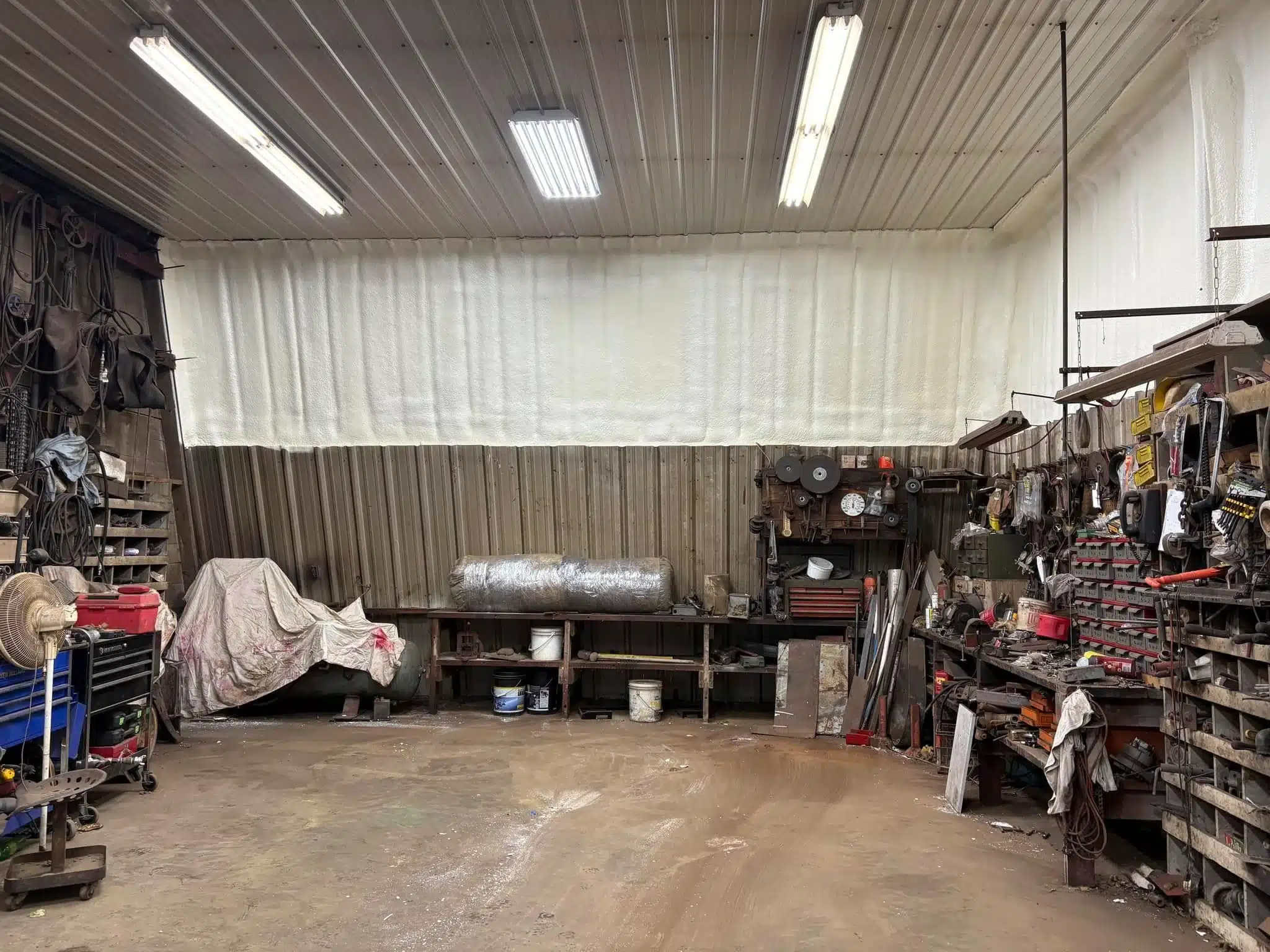
This is where a closed cell separates itself for storage use. At the minimum installed thickness of about 2 inches (50mm), closed cell foam acts as both a vapor barrier and an air barrier, and it resists water rather than absorbing it. Applied to the underside of a metal roof or the inside face of steel siding, it keeps the panel surface warmer and separates humid interior air from cold metal, addressing condensation drips at the source. Fewer wet surfaces means less mold risk, less corrosion, and dry inventory, since the EPA notes that mold grows on virtually any organic material, including wood, paper, and insulation, whenever moisture is present.
| Material | R-Value Per Inch | Air Barrier | Moisture Performance | Best Fit |
|---|---|---|---|---|
| Closed cell spray foam | 5.1 to 6+ | Yes, at any practical thickness | High moisture barrier, resists water | Metal buildings, pole barns, crawl storage, rooflines |
| Open cell spray foam | ~3.5 to 3.8 | Only at full wall thickness | Higher moisture permeability, not for water contact | Sound control in conditioned interior spaces |
| Glass wool / fiberglass batts | 3 to 4 | No | Requires separate vapor management | Framed walls where vapor control is added separately |
| Blown-in cellulose | ~3 to 4 | No | Settles over time, vapor handled separately | Accessible attics and framed cavities |
Blown-in cellulose remains a sensible budget option for accessible attic spaces, and we install it as well. But in a storage building where the envelope is steel or where contents are moisture-sensitive, closed cell foam is the only option on this list that combines insulation, air sealing, and vapor control in a single application Spray foam – Wikipedia.
Project pricing follows scope more than anything else. Based on our current project data:
| Project Type | Typical Range | Typical Average |
|---|---|---|
| Closed cell spray foam (residential scale) | $1,500 to $10,000 | $6,000 |
| Pole barn insulation | $5,000 to $60,000 | $15,000 |
| Commercial insulation | $20,000 to $300,000 | $50,000 |
| Blown-in cellulose (attics/accessible spaces) | $2,000 to $10,000 | $4,000 |
Several factors move a quote up or down. Difficult access, removal of old insulation, longer travel distance, and greater thickness or higher R-value targets all increase pricing, while a faster turnaround can lower it. Our minimum job is $1,500, and every project starts with an on-site assessment so the number you see reflects your actual building, not a generic guess.
| Audience | Recommended Approach | Key Notes |
|---|---|---|
| Farm and agricultural storage owners | Closed cell on the roofline and upper walls of pole barns and machine sheds | Stops condensation drip on equipment, feed, and seed; typical pole barn projects average $15,000 |
| Small business and retail inventory storage | Full air sealing plus code-target R-value on walls | Stable humidity protects cardboard, labeling, and packaged goods |
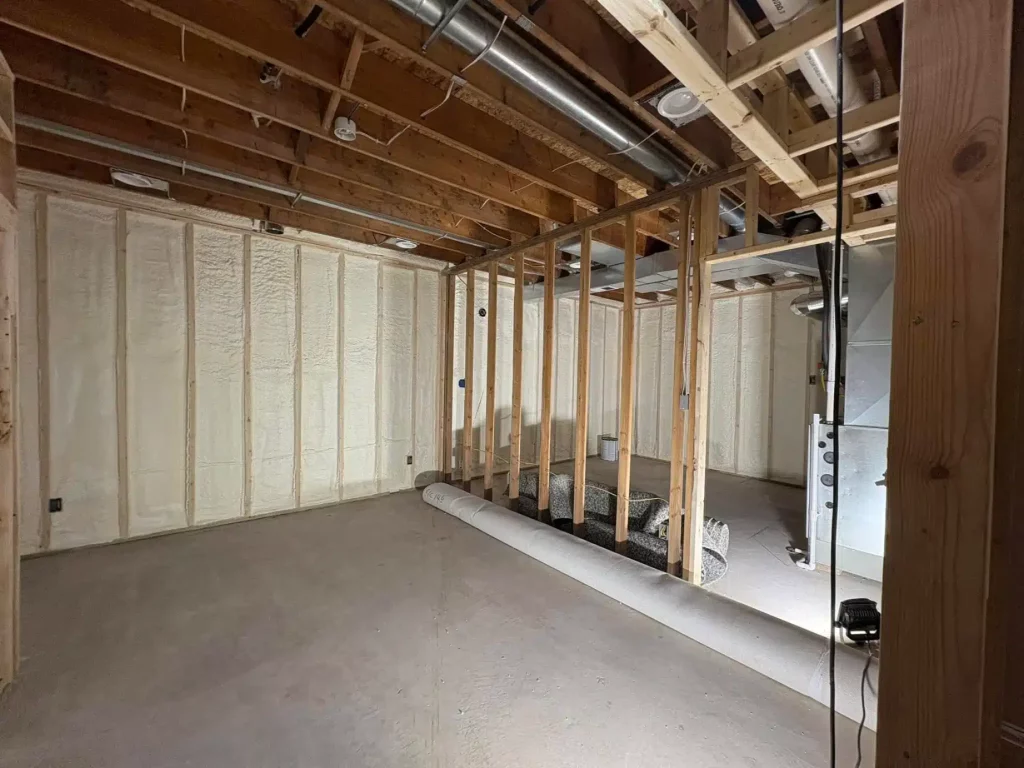
| Homeowners with garages or basement storage | Closed cell at rim joists, crawl spaces, and shared walls | Combines R-value and vapor control in thin assemblies |
| Commercial warehouse operators | Phased roof deck and perimeter wall application | Commercial projects scale from $20,000 to $300,000, so phasing protects cash flow |
| Seasonal or unconditioned storage users | Roofline-first application | Condensation control delivers the fastest visible improvement |
You are working with the right insulation partner when you see these indicators:
At Proseal Spray Foam, we help property owners in Waupaca, WI and the surrounding 54981 area turn leaky, sweating storage buildings into dry, temperature-stable spaces. Our team assesses your structure, recommends the right thickness and material, and gives you transparent pricing before any work starts. Call us at (715) 227-6295 or email [email protected] to talk through your project.
Request a Quote | Schedule a Storage Area Assessment
Protect your inventory, your equipment, and your building with insulation that does three jobs at once.
At roughly 2 inches of installed thickness, medium-density closed cell foam acts as both a vapor barrier and an air barrier. Greater thickness raises the R-value for heated or cooled storage spaces.
Yes, in most cases. It seals humid air away from cold steel and keeps the panel surface warmer, which is exactly the condition the EPA identifies as the cause of condensation.
Occupants should stay out of the space during application, cleanup, and for a period after, following manufacturer guidance. Once cured, the foam is completely inert.
Typical pole barn insulation projects run $5,000 to $60,000 with a $15,000 average, based on our project data. Scope, access, and target R-value drive the final number, and our minimum job is $1,500.
It can if ventilation is ignored. Our assessments account for moisture sources and existing airflow, and we recommend ventilation adjustments as part of the plan.