How Can Better Insulation Support Consistent Indoor Temperatures in Ashwaubenon, WI?
Better insulation supports consistent indoor temperatures in Ashwaubenon, WI by slowing heat transfer through your attic, walls, floors, and crawlspaces…


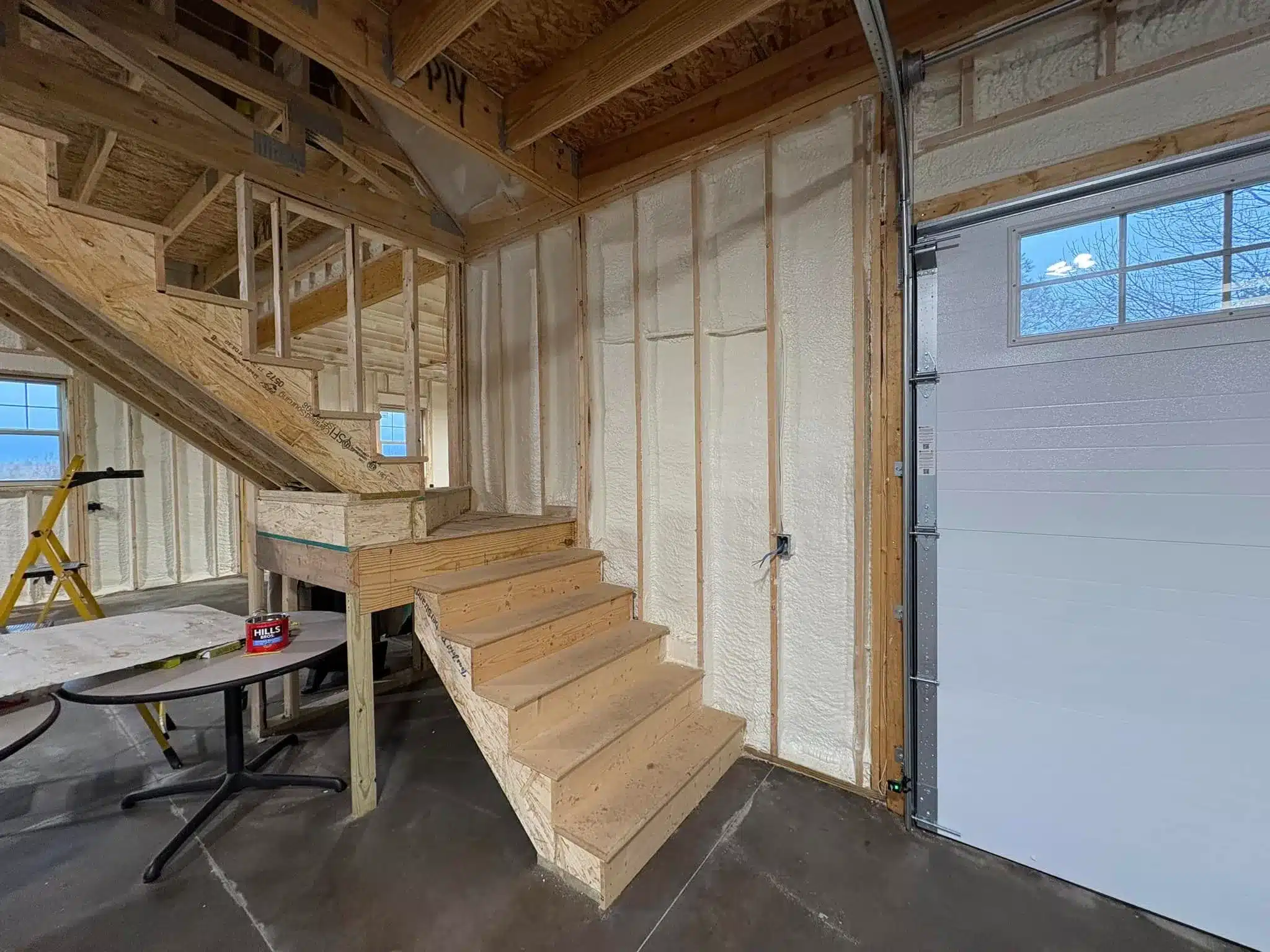
Spray foam insulation is useful for hard-to-reach areas because it goes in as a liquid and expands up to 30 to 60 times its applied volume, filling irregular gaps, cavities, and voids that batts and rigid boards simply cannot reach. For homeowners and builders in Howard, WI, where long, heating-dominated winters make every leak in the building envelope expensive, that single application delivers both insulation and air sealing at once. Spray Foam Types and Benefits vary by application and building conditions. The right material depends on the space: closed cell spray foam suits shallow, moisture-prone areas like rim joists and crawl spaces, open cell fills larger attic and wall volumes at lower density; and drill-and-fill retrofit methods insulate closed wall cavities without tearing out drywall. Below, we break down where spray foam earns its keep, how it compares to alternatives, what drives project pricing in our area, and how to tell when a contractor has the right approach for your home or building.
Howard sits in a northern, heating-dominated climate zone, which means your home spends more of the year losing heat than gaining it. According to the Department of Energy, northern climate zones experience long, cold winters, and insulation solutions need to match that reality. When heat escapes through gaps you cannot see, you pay for it every month of the heating season.
The hidden spaces are usually the worst offenders. The ENERGY STAR program notes that 9 out of 10 homes in the U.S. are under-insulated, and if you added up all the leaks, holes, and gaps in a typical home’s envelope, it would be equivalent to leaving a window open every day of the year. In snowy Wisconsin climates, those same leaks contribute to ice dams along roof edges, cold floors above crawl spaces, and dusty, drafty rooms.
The problem with these spaces is access. Rim joists sit behind stored belongings in basements. Crawl space walls are wet, dark, and barely tall enough to kneel in. Attic slopes and knee walls are cramped and awkward. Finished wall cavities are, by definition, sealed behind drywall. These are precisely the areas where research shows up to 40% of a building’s energy can be lost to air infiltration, and precisely the areas where traditional insulation installation is slowest, messiest, and least complete.
Spray polyurethane foam solves the access problem physically. Two liquid components mix at the spray gun, then expand and harden in place, adhering to wood, masonry, metal, and most building surfaces. As described in Wikipedia’s overview of spray foam, this expansion lets the material fill cracks, crevices, and voids and conform to irregular substrates, producing high insulating value with virtually no air infiltration.
That behavior gives foam three distinct advantages in confined spaces:
Not every awkward space is the same, and neither is the application. Here is how the major hard-to-reach areas compare:
| Area | Access Challenge | What Spray Foam Does There | Best Fit |
|---|---|---|---|
| Rim joists and band joists | Tight perimeter bays, exposed concrete, wiring penetrations | Seals and insulates each joist bay in one pass; DOE recommends spray foam to “picture frame” every bay from inside unfinished basements | Closed cell |
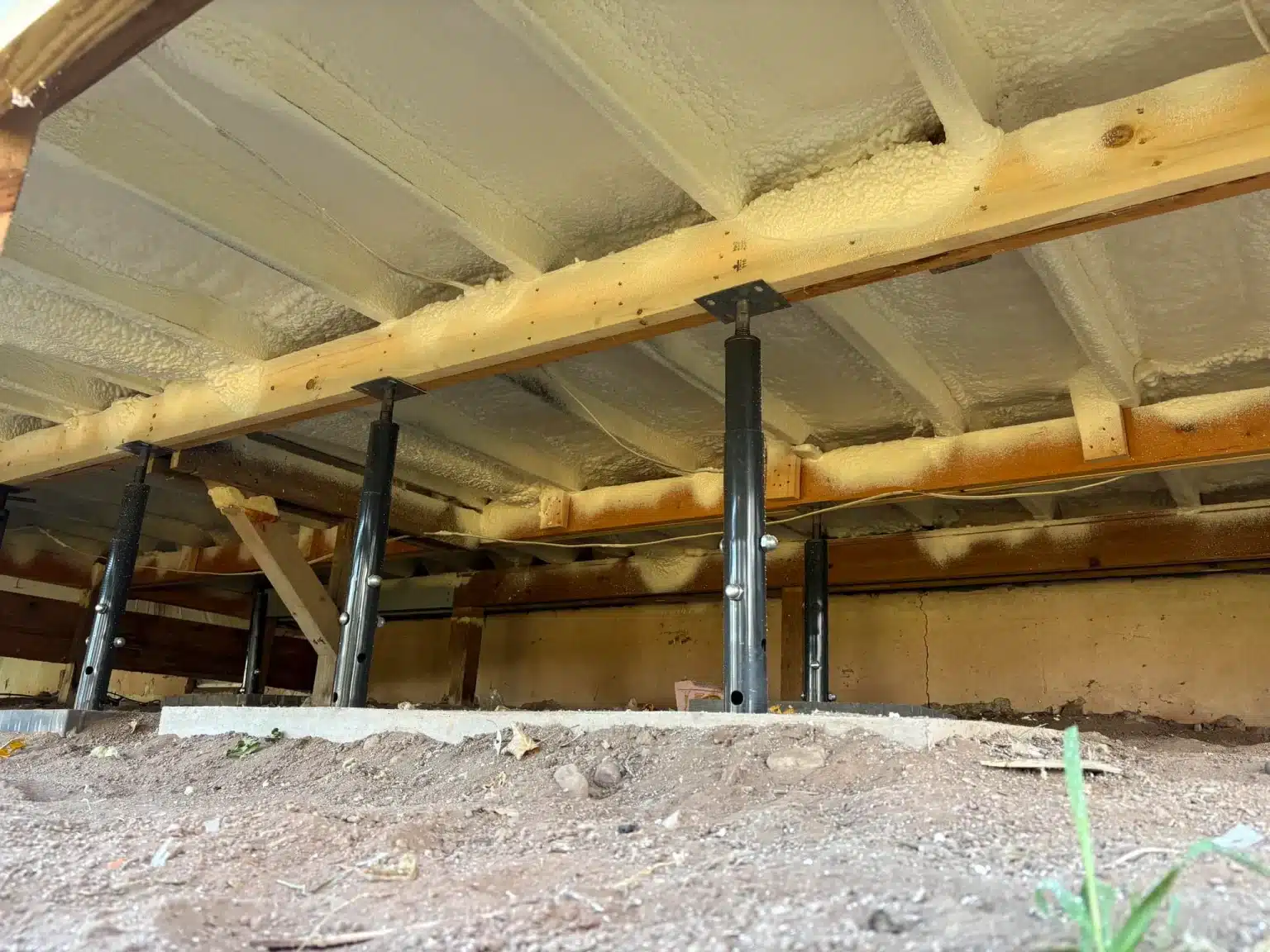
| Crawl spaces | Low clearance, ground moisture, cold floors above | Acts as insulation and, at adequate closed cell thickness, a vapor barrier on foundation walls per IECC guidance for unvented crawl spaces | Closed cell |
| Attic slopes, knee walls, hatches | Narrow angles, roof framing, foot traffic obstacles | Fills rafter bays and odd geometry continuously; common leak points per SPFA include attic hatches and open soffits | Open cell or closed cell |
| Finished wall cavities | Completely enclosed behind drywall | Drill-and-fill retrofit injects foam through small holes, then holes are sealed | Retrofit foam methods |
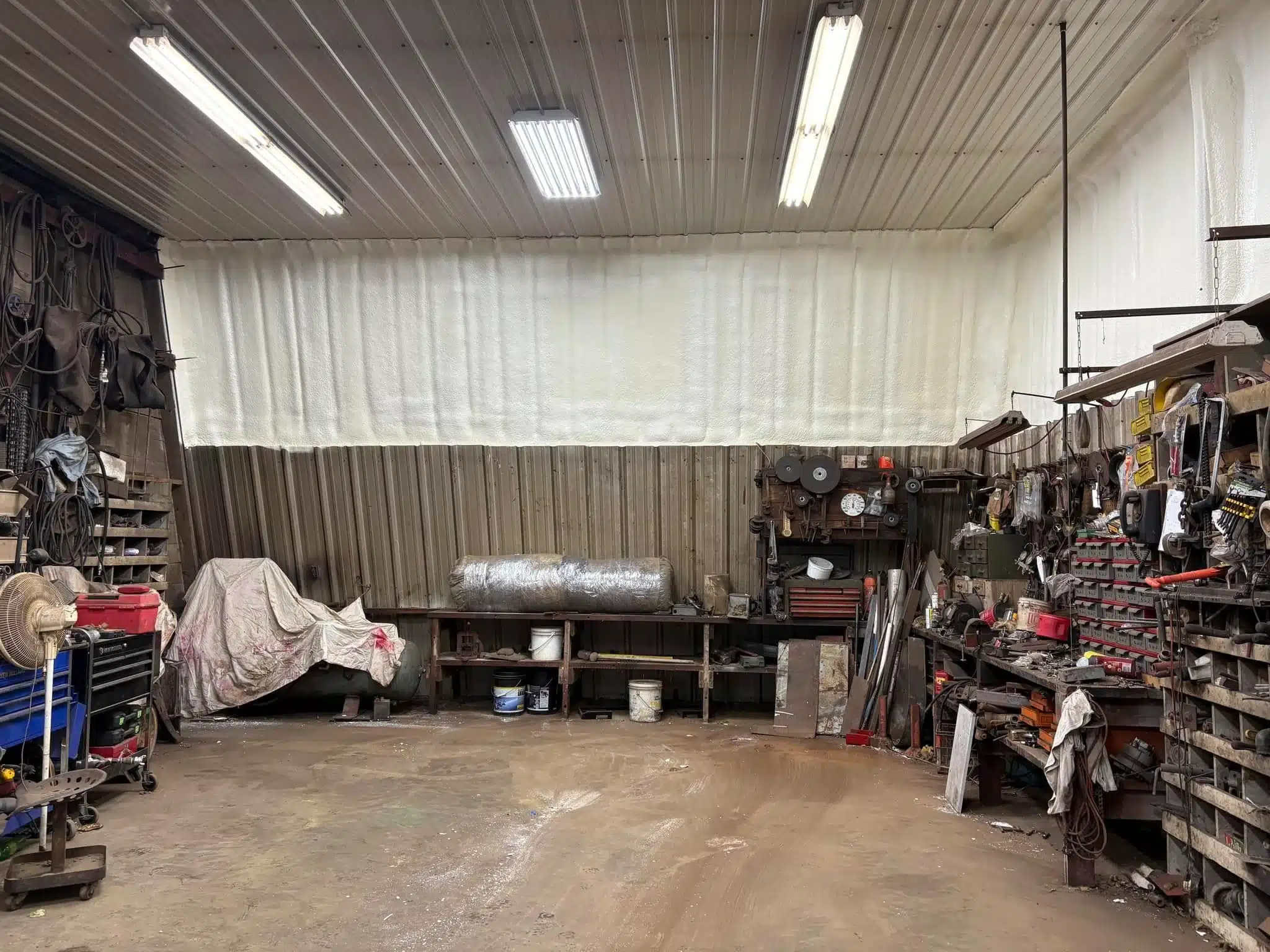
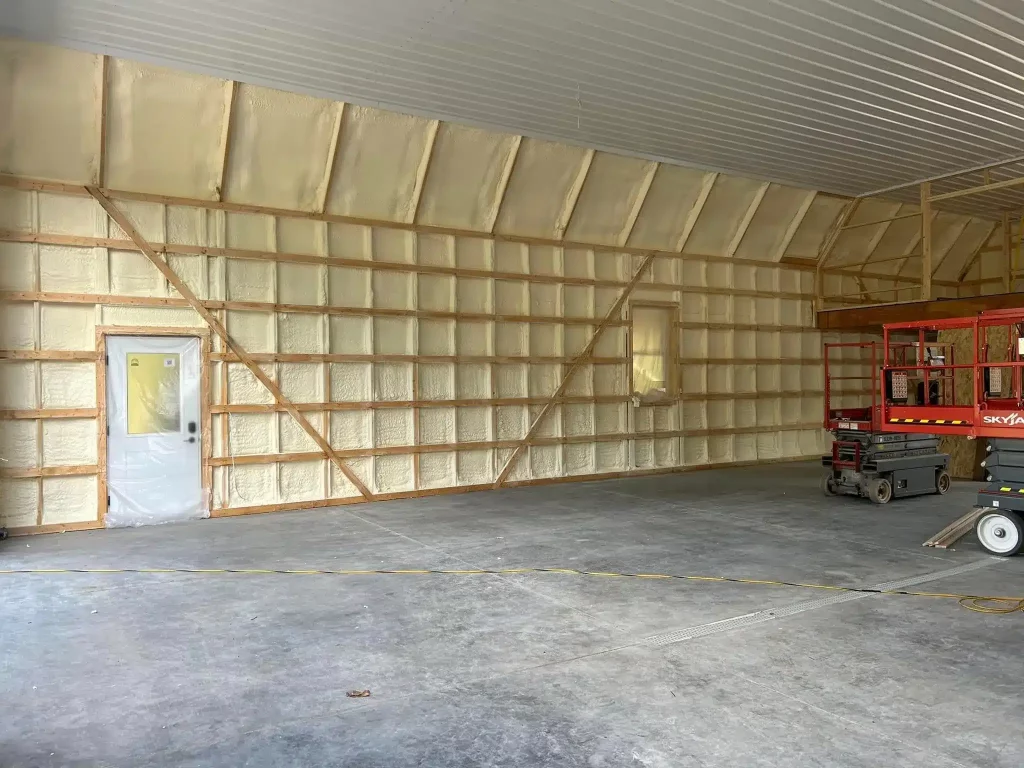
| Pole barns and commercial cavities | Large spans, steel framing, irregular transitions | Bonds directly to the deck or framing without fasteners, closing thermal bridges | Closed cell |
Homeowners in Howard, WI ask us constantly which foam belongs in which space. Here is the short version:
| Attribute | Closed Cell Spray Foam | Open Cell Spray Foam |
|---|---|---|
| R-value per inch | R-5.1 to R-6 | About R-3.8 |
| Moisture performance | Vapor barrier at adequate thickness (50 mm minimum) | Air-permeable; not a vapor barrier in thin layers |
| Rigidity | Rigid, adds stiffness | Semi-rigid, sponge-like |
| Sound dampening | Moderate | Strong; often used in interior walls |
| Best hard-to-reach uses | Crawl spaces, rim joists, below-grade walls, pole barns | Attic slopes, open rafter bays, interior sound walls |
In a cold climate like ours, closed cell is usually the right call anywhere moisture is present or cavity depth is limited, because it delivers more R-value per inch and manages vapor at the same time. Open cell earns its place in larger, drier volumes where you want full fill and sound control without excessive weight on the roof deck.
Pricing for spray foam insulation in Howard, WI, is driven primarily by overall scope, and several factors push it higher: difficult access, removal of old insulation, travel distance, and greater thickness or higher R-value targets. Based on our typical project data for the area:
Because difficult access genuinely slows production, it is one of the factors that increases pricing, so a cramped crawlspace will not price the same as an open attic of equal square footage. We quote by scope after seeing the space, not by guesswork.
| Audience / Context | Recommended Approach | Key Notes |
|---|---|---|
| Retrofit homeowners with drafts or cold floors | Closed cell at rim joists and crawl space walls, drill-and-fill in closed walls | Highest-impact fixes for existing homes; no demolition required |
| New construction builders | Closed cell at rim joists and cavities needing vapor control, open cell in full attic rafters | Meets code targets in heating-dominated zones and supports smaller HVAC sizing |
| Crawlspace owners | Closed cell on foundation walls | Addresses cold floors, moisture, and duct losses in one application |
| Pole barn and shop owners | Closed cell on roof deck and girts | Bonds without fasteners and cuts thermal bridging through steel framing |
| Commercial property managers | Closed cell in transitions, chaseways, and irregular cavities | Common SPFA-listed leak points include duct chaseways and recessed lights |
If you have a crawlspace nobody wants to enter, a rim joist that bleeds cold air, or wall cavities you assumed could never be insulated, our team at Proseal Spray Foam handles exactly these projects across Howard, WI every week. We bring the spray rigs, the material knowledge, and the patience for tight spaces that make these jobs fast and clean. Call us at (715) 227-6295 or email [email protected] to talk through your project.
Start with the spaces you have been avoiding the longest, because that is where the comfort shows up first.
Yes. In enclosed wall cavities, drill-and-fill methods use small holes drilled between studs to inject foam, and the holes are sealed afterward. Accessible voids like rim joists and crawl space walls are sprayed directly through a hose with no demolition.
Closed cell is usually the better fit in our cold climate because it delivers higher R-value per inch in shallow cavities and acts as a vapor barrier at adequate thickness. Open cell is better suited to larger, dry volumes like attic rafter bays.
Occupants stay out during application and the curing period. Once cured, spray foam is completely inert and non-toxic, so odors are limited to the installation window, not the life of the product.
Timeline depends on scope and access, which is why difficult access is a pricing factor we confirm on site. Small areas like rim joists wrap up quickly, while full attic or crawlspace projects take longer, and we give you the schedule in writing before work begins.
Closed cell spray foam projects typically run $1,500 to $10,000, averaging $6,000, with a $1,500 minimum. Difficult access, old insulation removal, and higher thickness targets increase pricing, so the final number depends on the scope we measure on site.