

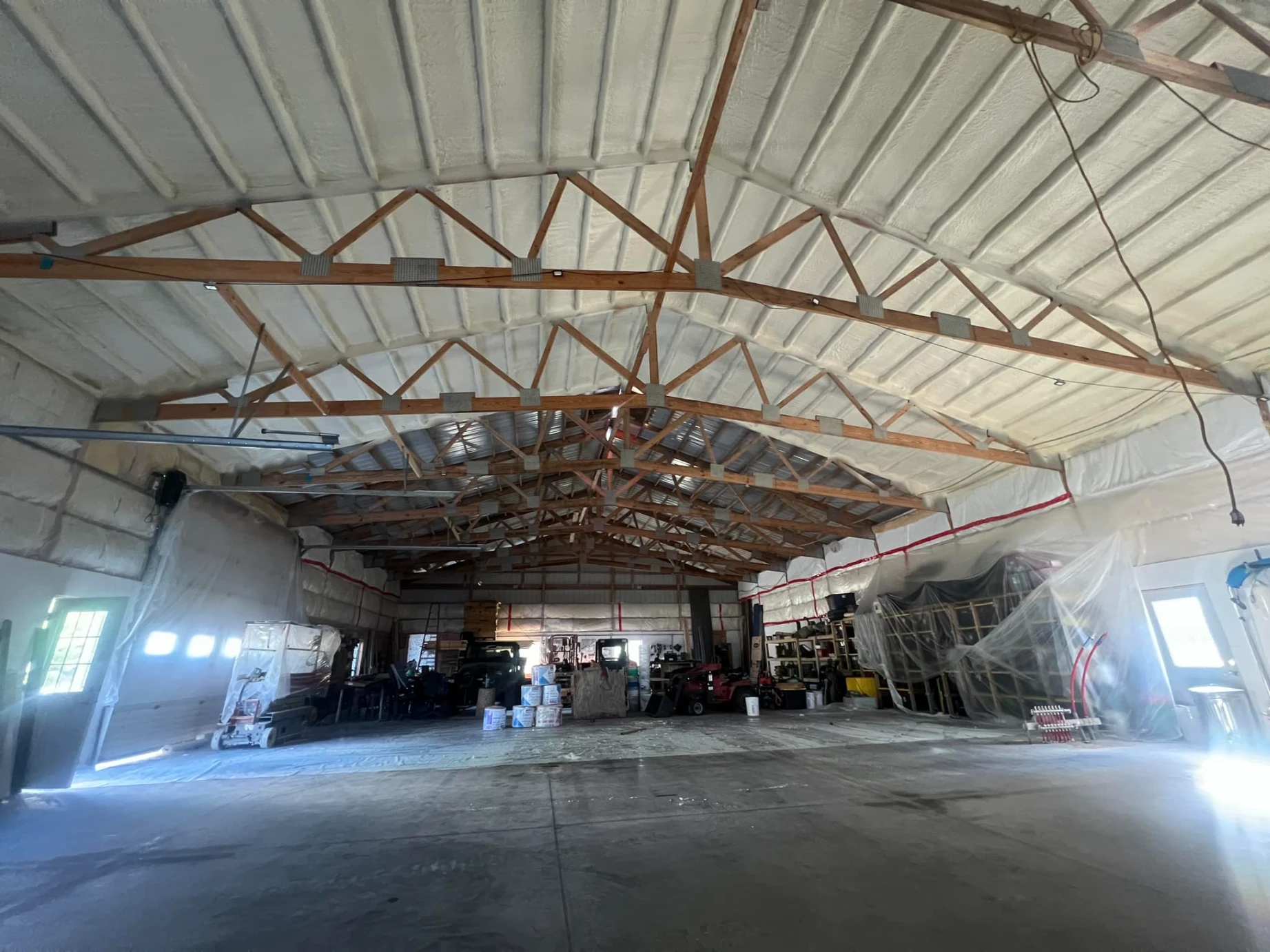
Pole barn insulation in Wausau, WI typically costs between $1.00 and $4.50 per square foot, with most property owners spending a typical low of $5,000, an average of $15,000, or up to a high of $60,000 for a full project, depending on the building size, insulation type, and R-value targets. For a standard 40×60 pole barn, a full insulation project using closed-cell spray foam often lands between $10,000 and $20,000. Wausau sits in Climate Zone 6A, one of the colder zones in the continental U.S., which means insulation requirements are more demanding and the cost of skipping proper insulation shows up fast in heating bills and condensation damage. These conditions apply just as strongly across the broader region, with property owners in nearby communities like Waupaca, Appleton, Oshkosh, Green Bay, Stevens Point, and Fond du Lac facing the same climate challenges and insulation needs.
Understanding where your money goes makes it easier to budget and compare quotes. Pole barn insulation costs are driven primarily by the type of material, the thickness applied, and the total square footage being covered. According to This Old House, material type alone can swing the price per square foot from under a dollar to over four dollars. Whether your pole barn is located in Wausau or anywhere from Waupaca to Appleton, these cost drivers remain consistent.
Spray foam is the most popular choice for pole barns because it seals gaps, resists moisture, and adheres directly to metal and wood surfaces. Here is how the main options compare:
| Insulation Type | Cost Per Sq Ft | R-Value Per Inch | Best Application |
|---|---|---|---|
| Closed-Cell Spray Foam | $2.00 to $4.50 | R-6.5 to R-7 | Walls, ceilings, and condensation control |
| Open-Cell Spray Foam | $1.00 to $2.00 | R-3.5 to R-3.7 | Interior walls, sound-dampening |
| Fiberglass Batts | $0.50 to $1.50 | R-2.9 to R-3.8 | Budget builds, non-conditioned spaces |
| Rigid Foam Board | $1.00 to $2.50 | R-3.8 to R-6.5 | Under the roof panels, perimeter walls |
Closed-cell spray foam stands out for Wausau properties because it acts as both an insulation layer and a vapor barrier. In a climate where winter temperatures regularly drop below zero, that vapor barrier matters a great deal for preventing condensation on the interior of metal roofing and siding. The same holds true for pole barns throughout the Fox Valley area, including Oshkosh and Fond du Lac, where frigid winters create identical moisture and condensation risks. As noted by Bob Vila, spray foam’s ability to create an air-tight seal makes it particularly effective for metal buildings where traditional insulation materials often fall short.
Several variables push a pole barn insulation project to the higher or lower end of the cost range:
Every building is different, but these realistic scenarios give you a sense of what to expect based on building size and insulation goals. Typical low projects come in around $5,000, average projects around $15,000, and high-end projects around $60,000. These estimates apply to Wausau as well as surrounding areas like Waupaca and Stevens Point, where labor and material costs are comparable.
| Building Size | Insulation Scope | Foam Type & Thickness | Estimated Cost Range |
|---|---|---|---|
| 30×40 (1,200 sq ft) | Walls and ceiling | Closed-cell, 2″ walls / 3″ ceiling | $5,000 to $7,200 |
| 30×50 (1,500 sq ft) | Walls and ceiling | Closed-cell, 2″ walls / 3″ ceiling | $5,000 to $8,800 |
| 40×60 (2,400 sq ft) | Full building | Closed-cell, 2.5″ walls / 3.5″ ceiling | $10,000 to $15,000 |
| 40×60 (2,400 sq ft) | Workshop only (800 sq ft) | Closed-cell, 2″ walls / 3″ ceiling | $5,000 to $7,500 |
| 60×80 (4,800 sq ft) | Full building, conditioned | Closed-cell, 3″ walls / 4″ ceiling | $25,000 to $60,000 |
These estimates assume typical central Wisconsin labor rates. Buildings with complex rooflines, multiple interior partitions, or limited access for equipment will trend toward the higher end.
Wausau averages roughly 155 heating degree-days per year and sees winter lows well below zero. That places serious demand on any building envelope. According to the Wisconsin Department of Safety and Professional Services, Wisconsin adopted the 2021 IECC with amendments that require specific R-values based on climate zone. These same requirements govern pole barn construction across Green Bay, Appleton, Fond du Lac, and the rest of north-central Wisconsin, where buildings face nearly identical winter conditions.
For Wausau property owners in Zone 6A, the code requires:
If you plan to heat your pole barn as a workshop, man cave, or living space, meeting these minimums is not optional. Failing to insulate properly means your heating system works overtime, your energy bills spike, and moisture buildup threatens structural components. The International Code Council classifies Zone 6A as a severe cold climate, requiring higher R-values than most other regions in the continental United States.
A pole barn without proper insulation in central Wisconsin creates several expensive problems:
The cost of remediation after these problems develop far exceeds the upfront cost of proper insulation, which typically falls between $5,000 and $15,000 for most Wausau projects. Pole barn owners in Waupaca, Oshkosh, and Stevens Point report the same pattern of costly repairs when insulation is deferred or done incorrectly. Data from the U.S. Department of Energy Building Energy Codes program shows that proper insulation reduces heating and cooling energy consumption by 30 to 50 percent in climate zones like Wausau’s.
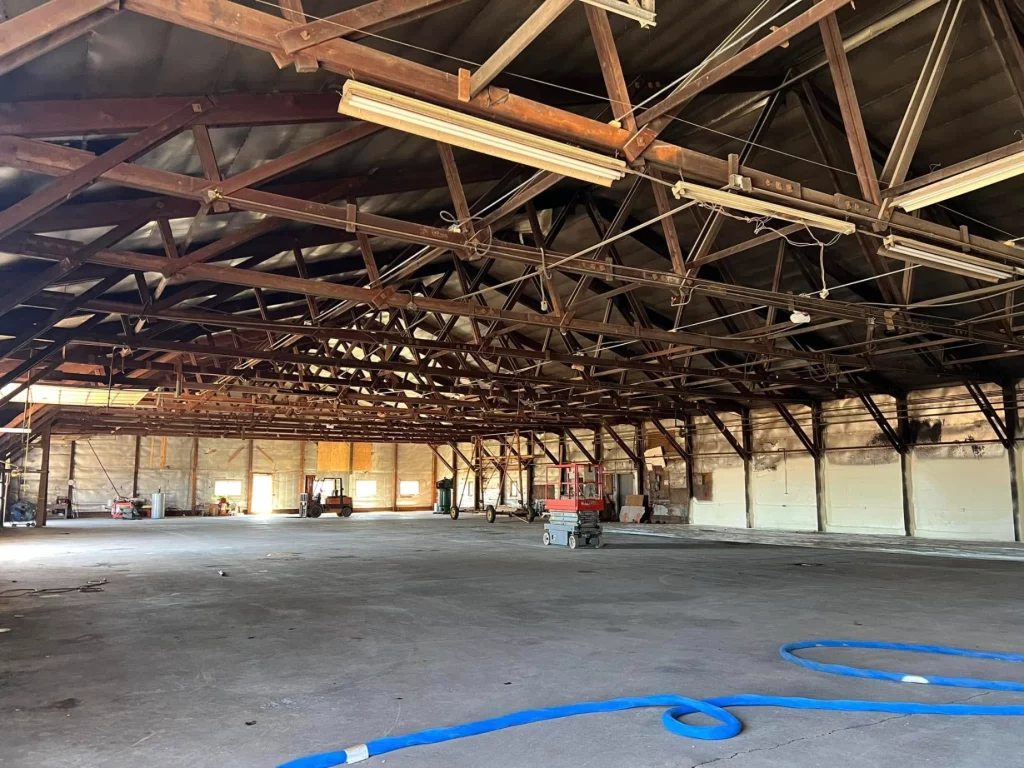
More foam is not always better. The right thickness depends on how you plan to use the building and what your budget allows. The Building America Solution Center provides detailed guidance on climate-specific insulation requirements, including recommendations for Zone 6A properties.
If the pole barn is used for storage and will not be heated, a 1-inch application of closed-cell spray foam on the roof underside and upper walls is often sufficient to prevent condensation. This typically costs $0.80 to $1.50 per square foot for a basic thermal break, and often lands at the $5,000 low end for a standard-sized barn.
For a workshop or recreational space heated to around 55 degrees during winter, 2 inches of closed-cell foam on walls and 3 inches on the ceiling delivers roughly R-14 walls and R-21 ceiling. This approach balances cost and comfort and usually falls in the $1.50 to $2.50 per square foot range, with total project costs around the $15,000 average for a mid-sized building.
If the pole barn will be heated to 68 degrees or higher and used as living space, a home office, or a climate-controlled shop, you should target R-20+ walls and R-38 to R-49 ceilings. That requires 3 to 3.5 inches of closed-cell on walls and 5 to 6 inches on ceilings (or a combination of spray foam and fiberglass batts in the ceiling cavity). Total project costs in this scenario typically run $2.50 to $4.50 per square foot and can reach the $60,000 high end for large or complex buildings.
| Usage Goal | Recommended Foam Depth | Approx. Cost Per Sq Ft | Total for 40×60 Barn |
|---|---|---|---|
| Condensation control only | 1″ closed-cell | $0.80 to $1.50 | $1,900 to $5,000 |
| Occasional heating (50-55°F) | 2″ walls, 3″ ceiling | $1.50 to $2.50 | $5,000 to $15,000 |
| Year-round comfort (65-70°F) | 3″ walls, 5″ ceiling | $2.50 to $4.50 | $15,000 to $60,000 |
Graph Suggestion: Bar chart comparing cost per square foot against foam thickness, with a secondary axis showing the corresponding R-value achieved.
Ideal candidates for insulating now:
Situations where insulation can wait:
The question most Wausau property owners should really be asking is not just what insulation costs, but what it costs to get it wrong. Choosing the cheapest option or undersizing foam thickness to save money upfront often leads to a second insulation project within a few years. We see this regularly: a property owner installs 1 inch of foam to save on the initial bill, then calls back after their first winter because the building still will not hold heat, and condensation is still forming in cold spots. A do-over project almost always costs more than getting the right specification the first time, because the original foam may need to be corrected or overlaid, and labor costs do not decrease just because the work is a repeat visit. Starting with a proper $15,000 average investment often avoids a far more expensive follow-up project that can push costs toward $60,000. This is a lesson that pole barn owners from Fond du Lac to Green Bay learn the hard way when cutting corners on insulation depth.
Every pole barn is different, and guessing at your insulation cost based on online averages can lead to budget surprises. At Proseal Spray Foam, we provide detailed estimates specific to your building dimensions, usage goals, and Wausau’s Climate Zone 6A requirements. We measure and calculate the right foam depth for your R-value targets for insulation and give you a straightforward price with no hidden fees. We serve pole barn owners throughout the region, including Appleton, Oshkosh, Green Bay, Stevens Point, Waupaca, and Fond du Lac.
Request a Quote: Contact us at [email protected] or call (715) 227-6295 to schedule your on-site assessment.
Schedule a Consultation: Not sure what insulation level you need? Our team will walk through your building and recommend the right approach based on how you plan to use the space.
The right insulation pays for itself in energy savings, comfort, and building longevity. Let us help you get it done right the first time.
Angi – Spray Foam Insulation Cost – National cost data including new construction vs. retrofit pricing for pole barns and metal buildings with regional labor rate variations.
Bob Vila – Types of Insulation Comparison – Expert comparison of insulation materials including R-values, applications, and cost-effectiveness for different building types.
Wisconsin Department of Safety and Professional Services – Uniform Dwelling Code – Official Wisconsin administrative code covering insulation requirements and protective covering standards for residential and commercial buildings.
U.S. Department of Energy – Building Energy Codes – Summary of Wisconsin’s adopted energy code requirements by climate zone, including R-value minimums for walls, ceilings, and floors.
Building America Solution Center – Climate Zones – Department of Energy resource for climate zone mapping and corresponding insulation R-value recommendations with design temperature data.
International Code Council – IECC Climate Zone Map – Official climate zone classifications and building envelope requirements used by Wisconsin and other states for energy code compliance.
Most pole barn insulation projects take one to two days depending on the building size. A 30×50 barn with standard wall and ceiling insulation is typically completed in a single day. Larger buildings or those requiring surface prep on existing structures may take two days or more.
Yes, and this is a common approach for barns used primarily for storage. Insulating the ceiling reduces heat loss through the roof and controls condensation on metal panels. However, if you plan to heat the space regularly, uninsulated walls will still account for significant heat loss and comfort issues.
In most cases, exposed spray foam on walls and ceilings must be covered with a 15-minute thermal barrier such as drywall or an approved intumescent coating, per building code. There are exceptions for certain agricultural buildings and unconditioned storage spaces. Your contractor can confirm what applies to your specific project and local code enforcement.
For pole barns, spray foam typically delivers better value despite the higher upfront cost. Fiberglass batts are difficult to install properly on curved or irregular surfaces common in pole barns, and they do not seal air leaks or stop condensation. Spray foam adheres directly to metal and wood, seals gaps, and provides a vapor barrier in a single application.
It can, but it depends on how your property is assessed. Adding insulation that converts a storage building into a usable heated space may increase the assessed value of the structure, which could raise property taxes. Consult your Marathon County assessor for specifics on how improvements to outbuildings are treated in your district.