
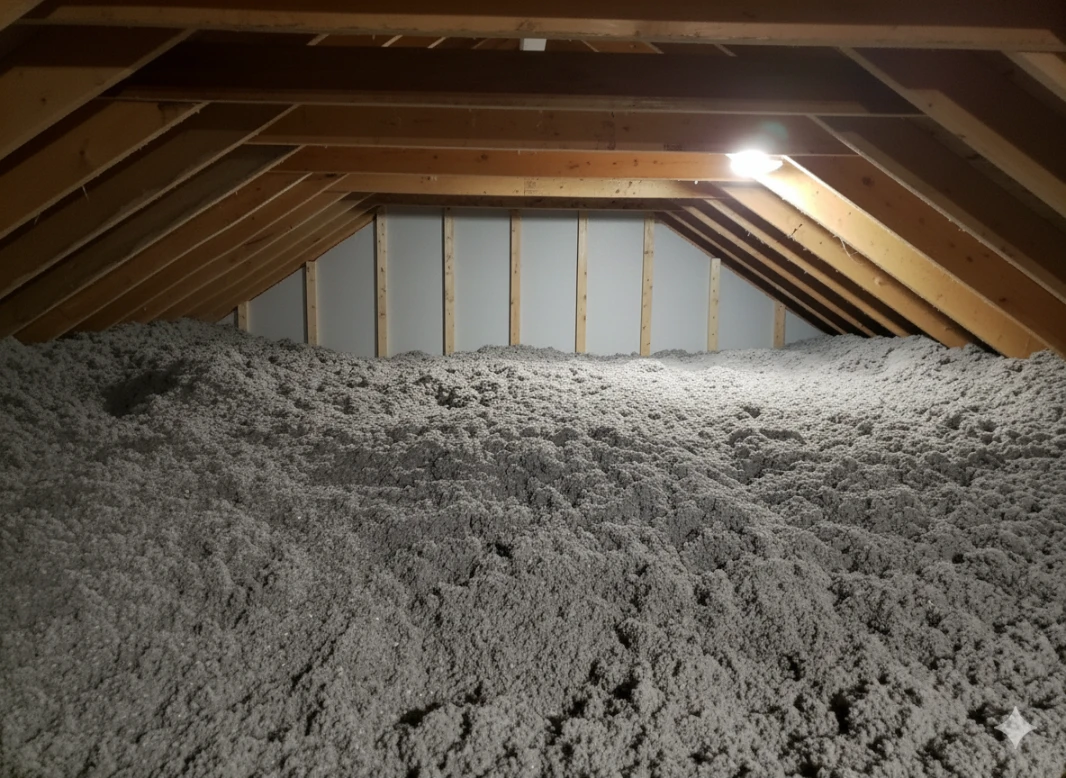
Most homeowners pay between $2,000 and $10,000 for a full-blown blown-in cellulose insulation installation. Based on our pricing data from Forbes Home, a typical low project costs $2,000, the typical average project price is $4,000, and a typical high project price is $10,000, depending on the area being insulated, the depth required, and local labor rates. Material-only costs run between $0.40 and $1.00 per square foot, while professional installation labor adds another $0.50 to $1.50 per square foot on top. For homeowners across the Fox Valley and surrounding communities like Oshkosh, Green Bay, Stevens Point, and Fond du Lac, these costs tend to align closely with national averages, making blown-in cellulose a reliable and budget-friendly option for improving home comfort.
Blown-in cellulose is made primarily from recycled paper, typically newsprint, treated with borate-based fire retardants for safety. It is installed using a specialized blowing machine that fills cavities and evenly covers surfaces, making it ideal for attics, walls, and hard-to-reach spaces that batt insulation cannot reach.
According to the U.S. Department of Energy, cellulose has a higher density than fiberglass, which gives it better resistance to airflow and slightly better sound-damping qualities. It also settles less over time than other loose-fill options, maintaining its thermal performance for longer.
The R-value, which measures thermal resistance, sits at approximately R-3.5 to R-3.8 per inch for blown-in cellulose. This is competitive with fiberglass and outperforms it in real-world conditions because cellulose fills gaps and voids more completely, reducing convective air loops inside wall and ceiling cavities.
Where you install cellulose matters significantly for overall pricing. Attics are the most common and most affordable application, while walls require more labor and specialized equipment.
| Project Area | Cost Per Sq Ft | Typical Project Cost | R-Value Achieved (10″ depth) |
|---|---|---|---|
| Attic (open blow) | $0.90 – $1.50 | $2,000 – $4,000 | R-35 to R-38 |
| Wall cavities (dense pack) | $1.50 – $2.30 | $4,000 – $10,000 | R-35 to R-38 |
| Floor/crawl space | $1.20 – $2.00 | $2,000 – $6,000 | R-30 to R-38 |
| Existing wall retrofit | $2.00 – $3.00 | $4,000 – $10,000 | R-35 to R-38 |
Dense-pack wall installations cost more because the cellulose must be pneumatically packed at a higher density to prevent settling inside closed cavities. This requires drilling access holes, blowing the material to a calculated density, then patching and finishing the holes, which adds labor time and finishing costs.
Understanding the split between materials and labor helps homeowners evaluate quotes and spot pricing that seems off.
| Cost Component | Price Range | Percentage of Total |
|---|---|---|
| Cellulose material (bags) | $0.40 – $1.00 per sq ft | 35% – 45% |
| Labor and equipment | $0.50 – $1.50 per sq ft | 40% – 50% |
| Prep work and cleanup | $200 – $600 flat | 10% – 15% |
| Access holes and patching (walls) | $300 – $800 flat | Additional for wall retrofits |
As noted by Fixr, the basic cost to install blown-in cellulose insulation runs $1.67 to $2.92 per square foot, with final costs varying based on site conditions, accessibility, and whether the job involves new construction or a retrofit into existing walls. Similarly, Bob Vila reports that the national average cost to install blown-in insulation, including cellulose, falls in a comparable range, with labor typically accounting for a larger share of the total than materials alone. In the Appleton and Green Bay markets, labor rates are competitive compared to larger metro areas, which helps keep overall project costs in line with or slightly below the national average.
Cost matters, but so does performance. Here is how blown-in cellulose stacks up against fiberglass and spray foam on price and value.
| Insulation Type | Cost Per Sq Ft | R-Value Per Inch | Air Sealing | Best Application |
|---|---|---|---|---|
| Blown-in cellulose | $0.90 – $2.30 | 3.5 – 3.8 | Moderate | Attics, walls, retrofit |
| Fiberglass (blown-in) | $0.80 – $1.80 | 2.2 – 2.7 | Low | Attics, open spaces |
| Open-cell spray foam | $1.50 – $3.50 | 3.5 – 3.7 | High | Walls, crawl spaces |
| Closed-cell spray foam | $2.50 – $5.00 | 6.0 – 6.5 | Very High | Basements, rim joists |
According to This Old House, spray foam is typically the most expensive insulation option, costing two to three times more than cellulose. However, spray foam also acts as an air barrier, which cellulose does not do on its own. Cellulose still provides meaningful air-flow resistance due to its dense, fibrous composition, and it outperforms fiberglass in this regard in side-by-side comparisons.
For homeowners focused on balancing upfront cost with long-term energy savings, cellulose occupies a strong middle ground. It costs less than half of closed-cell spray foam while delivering comparable R-value per inch and better overall thermal performance than fiberglass in real-world installations. Whether you live in Fond du Lac, Stevens Point, or anywhere in between, cellulose remains one of the most practical insulation upgrades available for the investment.
Every project is different. These are the primary variables that push your final price up or down.
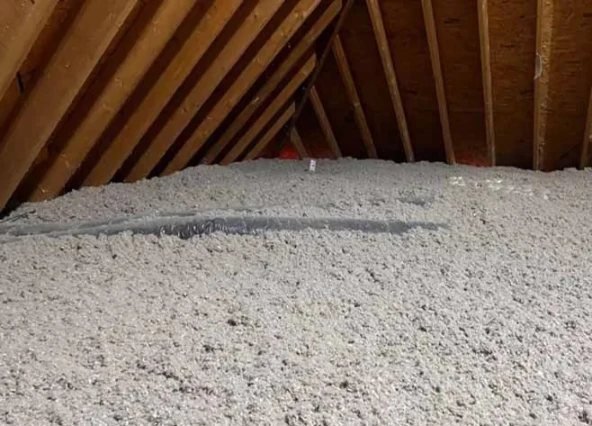
Here is what actual homeowners might expect to pay for blown-in cellulose installations across different project types.
| Scenario | Location | Project Size | Estimated Cost |
|---|---|---|---|
| Attic top-off over existing insulation | Midwest suburb (Appleton area) | 1,200 sq ft | $2,000 (Low) |
| Full attic insulation, new construction | Southeast | 1,500 sq ft | $4,000 (Average) |
| Dense-pack wall retrofit, existing home | Northeast | 800 sq ft of wall | $6,000 – $10,000 (High) |
| Attic removal and replacement | Pacific Northwest | 1,000 sq ft | $4,000 – $7,000 |
| Full attic and crawl space combo | Oshkosh / Green Bay region | 2,000 sq ft total | $8,000 – $10,000 (High) |
| Attic and floor insulation bundle | Fond du Lac / Stevens Point | 1,800 sq ft total | $5,000 – $7,000 (Average to High) |
These examples reflect installed costs from professional contractors and include materials, labor, equipment, and standard cleanup. Prices will vary based on your specific home conditions and local market rates.
This insulation is a strong fit if:
This insulation is NOT the best choice if:
Most homeowners researching cellulose pricing are trying to decide whether the investment is worth it. The better question is what continuing to live with under-insulated spaces costs you every single month.
According to the U.S. Department of Energy’s Guide to Home Insulation, adding insulation to attics, floors, and crawl spaces can save homeowners up to 20% on heating and cooling costs, or roughly 10% on total energy costs. For a household spending $2,400 annually on heating and cooling, that is $480 per year left on the table.
Over a 20-year period, inadequate insulation can cost a homeowner $9,600 or more in wasted energy, not to mention the comfort loss, HVAC wear and tear, and potential moisture damage from temperature differentials inside wall and ceiling assemblies. A blown-in cellulose project at the typical average price of $4,000 pays for itself in energy savings within 5 to 7 years in most climates, then continues delivering returns for the life of the home. This is especially true in Wisconsin’s climate, where homeowners in Appleton, Green Bay, Oshkosh, and Fond du Lac face harsh winters that make proper insulation not just a comfort upgrade but a necessity. Residents in Stevens Point and the surrounding region see the same benefits, with proper cellulose insulation making a noticeable difference during long, cold heating seasons.
Understanding cellulose pricing is helpful, but every home has unique conditions that affect the final cost. At Proseal Spray Foam, we evaluate your specific insulation needs, measure your current R-value, and provide transparent pricing with no hidden fees. We proudly serve Appleton and surrounding areas, including Green Bay, Oshkosh, Stevens Point, and Fond du Lac, so whether you need an attic top-off, a full wall retrofit, or a complete insulation overhaul, our team delivers professional installations backed by deep experience in both cellulose and spray foam solutions.
Request a Quote | Call us at (715) 227-6295 | Email [email protected]
Properly installed blown-in cellulose can last 30 to 50 years without significant degradation. Because it is treated with borate fire retardants and pest deterrents, it resists mold, insects, and settling better than many other loose-fill materials. The main risk to longevity is moisture exposure, so ensuring proper ventilation in your attic is essential. This holds true for homes across the Appleton, Green Bay, Oshkosh, Stevens Point, and Fond du Lac areas, where seasonal humidity fluctuations make proper installation all the more important.
While you can rent blowing machines from home improvement stores and install cellulose in open attics, wall dense-pack applications require professional equipment and expertise to achieve the correct density. DIY attic installs can save 30 to 50% on labor costs, but you risk uneven coverage, inadequate depth, and void spots that reduce thermal performance.
Cellulose does settle slightly over time, typically losing 1 to 2% of its installed depth. Quality contractors account for this by installing slightly more than the target R-value requires. Dense-pack installations in walls settle even less because the material is pneumatically compressed to a specific density that resists further settling.
Yes. All cellulose insulation sold in the United States must meet ASTM C739 fire safety standards and is treated with borate-based fire retardants during manufacturing. Cellulose has a Class 1 fire rating, meaning it resists ignition and does not fuel flame spread. In fact, some fire tests show that cellulose-insulated walls burn more slowly than fiberglass-insulated walls.
Cellulose significantly outperforms fiberglass for sound-dampening. Its higher density and smaller fiber size absorb sound waves more effectively, reducing noise transmission between rooms and from outside. This makes it a popular choice for interior walls between living spaces, home offices, and media rooms where noise control matters as much as thermal performance.