
Many homeowners live in a constant cycle of adjusting the thermostat to fight off drafts and high utility bills. Traditional insulation materials often fail to address the primary cause of energy loss: air leakage. This guide provides a deep look into spray polyurethane foam (SPF), a high-performance solution that creates both a thermal barrier and an airtight seal. You will learn about the different varieties of foam, the science behind its performance, and how it impacts the long-term health and efficiency of a structure.
This resource serves as a roadmap for understanding every facet of the technology. You will find information on the foam’s chemical composition, the specific benefits of open-cell and closed-cell options, and a step-by-step overview of the installation process. Proseal Spray Foam provides this information based on extensive field experience to help you make an informed decision for your property. By the end of this guide, you will understand how to choose the right material for your climate and how to maximize the return on your investment in home comfort.
Spray polyurethane foam is a liquid insulation that expands into a solid cellular plastic. It is created by a chemical reaction between two primary components: an “A-side” (typically isocyanate) and a “B-side” (a resin containing polyols, catalysts, blowing agents, and flame retardants). These two liquids are kept separate until the moment they are sprayed through a specialized gun. Once mixed at the nozzle, the material reacts instantly, expanding to fill cracks, crevices, and large voids before hardening.
This material differs from fiberglass batts or cellulose because it does not just sit in the wall cavity. It adheres directly to the substrate, whether that is wood, metal, or masonry. This creates a continuous bond that eliminates the gaps where air usually escapes. According to the U.S. Department of Energy, air sealing is one of the most critical steps in reducing energy consumption, as air leakage can account for a significant portion of a home’s heating and cooling costs.
Unlike traditional materials that can sag or settle over time, spray foam maintains its shape and performance for the life of the building. It does not provide a food source for mold or pests, making it a durable choice for long-term structural integrity.
Before any foam is applied, the surface temperature must be monitored. If the wood or concrete is too cold or contains too much moisture, the foam will not adhere properly. Professional installers always use a moisture meter and an infrared thermometer to ensure the conditions are within the manufacturer’s specified range.
Choosing the right type of foam is the most important decision in the process. There are two main categories: open-cell and closed-cell. Each has unique physical properties that make it suitable for specific areas of a home.
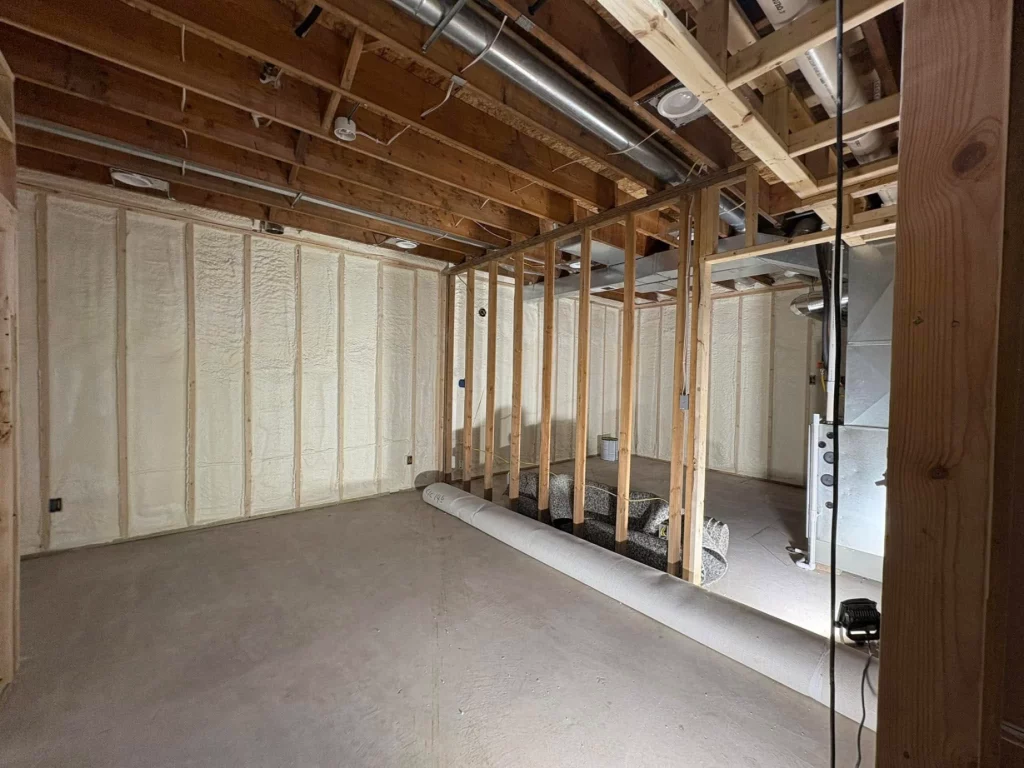
Open-cell foam consists of tiny cells that are not completely closed. It is characterized by its soft, spongy texture and high expansion rate. When sprayed, it can expand up to 100 times its original liquid volume.
Closed-cell foam is much denser and more rigid. Its cells are packed tightly together and filled with a gas that helps the foam expand. This gas also contributes to a higher insulating value.
| Feature | Open-Cell (Low Density) | Closed-Cell (High Density) |
|---|---|---|
| Density | 0.5 lbs per cubic foot | 2.0 lbs per cubic foot |
| R-Value per Inch | 3.5 – 3.8 | 6.0 – 7.0 |
| Expansion Rate | High (Up to 100x) | Low (Approx. 30x) |
| Air Barrier | Yes (at 3.5+ inches) | Yes (at 1+ inch) |
| Vapor Barrier | No | Yes (at 2+ inches) |
| Water Resistance | Absorbs water | Repels water |
| Best For | Interior walls, attics | Basements, crawl spaces, exteriors |
Key Takeaway: Open-cell foam is often the more cost-effective choice for interior applications and soundproofing, while closed-cell foam is the superior choice for areas where space is limited or where moisture and structural strength are concerns.
To understand why spray foam is so effective, you must understand the three ways heat moves: conduction, convection, and radiation. Traditional insulation mostly tackles conduction (heat moving through solid objects). However, convection (heat moving through air) is often the bigger culprit in home discomfort.
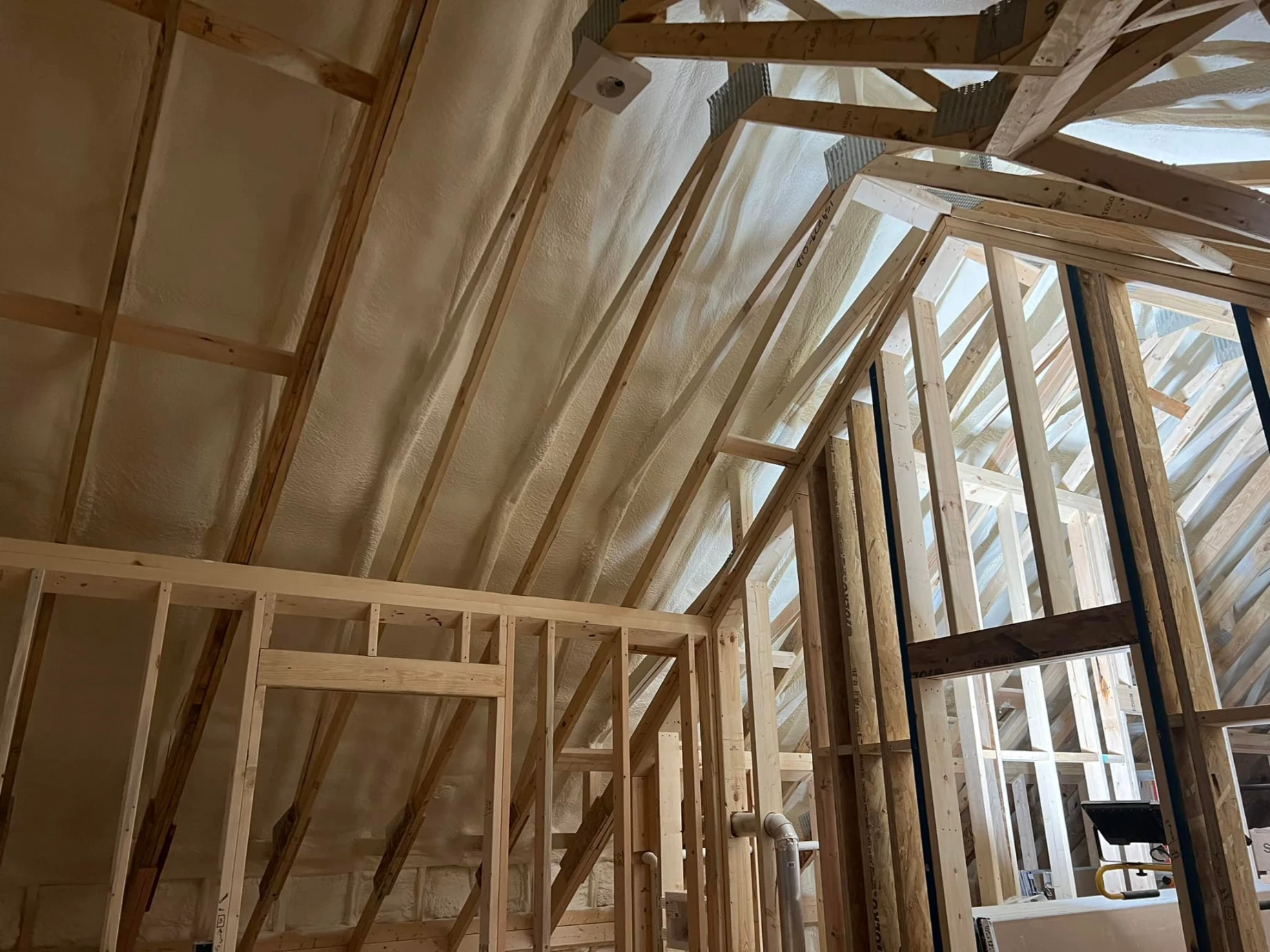
In the winter, warm air rises and escapes through the top of the house. This creates a vacuum at the bottom of the house that pulls in cold air through the crawl space or basement. This is known as the stack effect. Spray foam stops this cycle by creating an airtight “envelope.” When you seal the attic floor or the roofline with foam, the warm air stays inside, and the furnace does not have to work nearly as hard.
Air leaks do more than just waste energy; they carry moisture. When warm, humid air hits a cold surface inside your wall, it condenses into water. This leads to mold, mildew, and wood rot. By sealing these leaks, spray foam prevents condensation from forming in the first place.
Additionally, an airtight home keeps out outdoor pollutants. A study by the Environmental Protection Agency (EPA) suggests that sealing the building envelope can lead to significantly better indoor air quality by preventing the entry of pollen, dust, and car exhaust.
When you use spray foam to create a “tight” house, you must ensure your HVAC system is properly sized. Often, a home becomes so efficient that it needs mechanical ventilation (like an ERV or HRV) to bring in fresh air and maintain healthy humidity levels.
A complete home comfort strategy requires looking at the house as a system. Different zones require different approaches to insulation.
The attic is the primary source of energy loss. You have two options here:
Exterior walls are often the largest surface area of the home. Spraying foam during a renovation or new construction ensures that every stud bay is sealed. The rim joist—where the house frame meets the foundation—is a notorious spot for air leaks. Using closed-cell foam on rim joists is one of the fastest ways to stop cold floors on the first story.
These areas are prone to moisture. Closed-cell foam is the standard here because it does not absorb water and acts as a barrier against soil gases like radon. If a crawl space is prone to flooding, open-cell foam should be avoided, as it can act like a sponge and hold moisture against the wooden floor joists.
While the upfront cost of spray foam is higher than fiberglass or cellulose, the long-term savings are substantial. Data from Energy Star indicates that homeowners can save an average of 15% on heating and cooling costs by air sealing and insulating their homes. In many cases, especially in extreme climates, these savings can be even higher.
Market research also shows that energy-efficient upgrades increase property value. According to a report from the National Association of Home Builders (NAHB), energy efficiency is one of the top features buyers look for in a new home. A well-insulated home is not just more comfortable; it is more marketable.
A professional installation by Proseal Spray Foam follows a specific sequence to ensure safety and effectiveness.
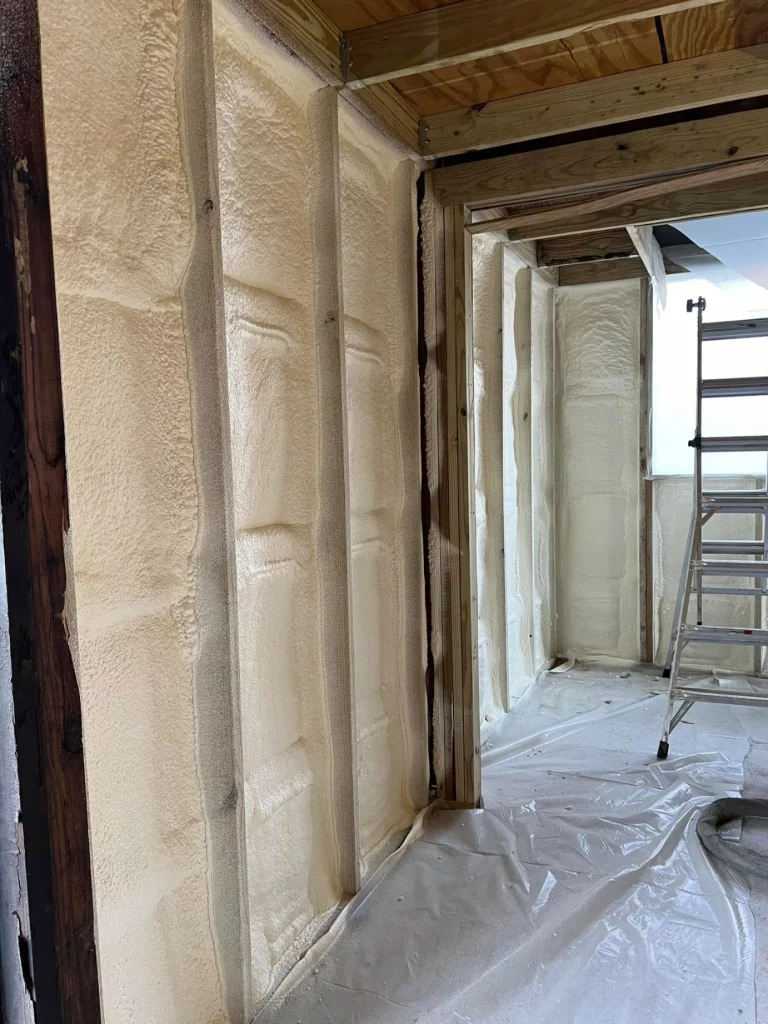
The team protects all surfaces that should not be covered in foam, such as windows, doors, and finished floors. Spray foam is highly adhesive and difficult to remove once cured.
The work area must be ventilated. Installers wear full-body suits and fresh-air-supplied respirators. During the spraying and the 24-hour curing period, occupants and pets must usually leave the premises to avoid exposure to vapors.
The installer sprays the foam in “lifts” or layers. For closed-cell foam, each lift is usually no more than two inches thick to prevent the material from overheating during the chemical reaction.
Once the foam has hardened, any excess material that extends past the studs is trimmed back using a specialized saw. This ensures the drywall can be installed flat against the framing.
It is much easier to run wires and pipes before the foam is sprayed. If you plan to add surround sound or extra outlets later, consider running conduit through the walls before the insulation team arrives.
Despite its benefits, spray foam requires precision. Mistakes during installation can lead to performance issues or lingering odors.
Key Takeaway: The quality of the installation is just as important as the quality of the material. Always verify that your contractor uses high-end proportioners and monitors the chemical temperatures throughout the day.
The most immediate way to measure the success of your project is through a blower door test. This test uses a large fan to depressurize your home, allowing a technician to measure exactly how much air is leaking.
You should also see a noticeable difference in your utility bills within the first two billing cycles. Beyond the numbers, the “comfort factor,” the disappearance of cold spots, and the reduction in how often your furnace kicks on is the most common feedback from homeowners.
The industry is moving toward even more environmentally friendly products. Many manufacturers are transitioning to “Low GWP” (Global Warming Potential) blowing agents. These newer formulas significantly reduce the carbon footprint of the foam while maintaining the same high R-value. Research highlights the industry’s commitment to sustainability and the development of bio-based resins derived from renewable sources like soy or recycled plastics.
Spray polyurethane foam is a transformative technology that goes beyond simple spray foam insulation. By creating a custom-fit, airtight seal, it addresses the fundamental ways that homes lose energy and lose comfort. Whether you are looking to lower your monthly expenses, improve your indoor air quality, or add structural strength to your property, this material offers a comprehensive solution.
Use this guide as a reference when evaluating your home’s needs. Remember that the best results come from a combination of the right material and an expert installation. Focus on the areas of your home where air leakage is most prevalent—the attic and the rim joists—and consider the long-term benefits of a high-performance building envelope.
Deciding on the right insulation for your home is a significant investment in your future comfort and energy security. Proseal Spray Foam is available to help you evaluate your project and provide a professional assessment of your needs. If you have questions about which foam type is best for your specific climate, or if you are ready to schedule a consultation, please reach out to the team. You can contact Proseal Spray Foam at (715) 227-6295 or via email at [email protected] for more information.
Spray foam is designed to last for the life of the building. It does not settle, sag, or degrade like fiberglass. As long as it is protected from direct UV sunlight and is not physically damaged, it will maintain its insulating properties indefinitely.
When installed correctly and allowed to cure for the recommended 24 hours, spray foam is inert and safe. It helps improve health by reducing the entry of allergens and preventing mold growth. Always follow the contractor’s re-entry guidelines to ensure all vapors have dissipated.
While small “DIY kits” exist for sealing tiny gaps around windows, they are not suitable for large-scale insulation. Professional rigs ensure the chemicals are heated and pressurized correctly, which is impossible with low-pressure DIY cans. Large-scale jobs require professional expertise to avoid safety hazards and ensure a proper cure.
No, spray foam itself does not cause rot. In fact, by preventing condensation, it often protects wood. However, if there is a pre-existing roof leak, closed-cell foam can sometimes hide it. This is why it is vital to ensure the roof and flashing are in good condition before insulating.
The cost depends on the type of foam, the thickness required, and the difficulty of accessing the area. On average, it costs more than traditional materials, but the energy savings typically allow the system to pay for itself within 3 to 7 years.
Open-cell spray foam is an excellent sound-dampening material. It helps reduce “airborne” noises like voices or music. While closed-cell foam provides some sound reduction, its rigid nature is not as effective at absorbing sound as the softer open-cell version.